





Brown Bone Inlaid Table
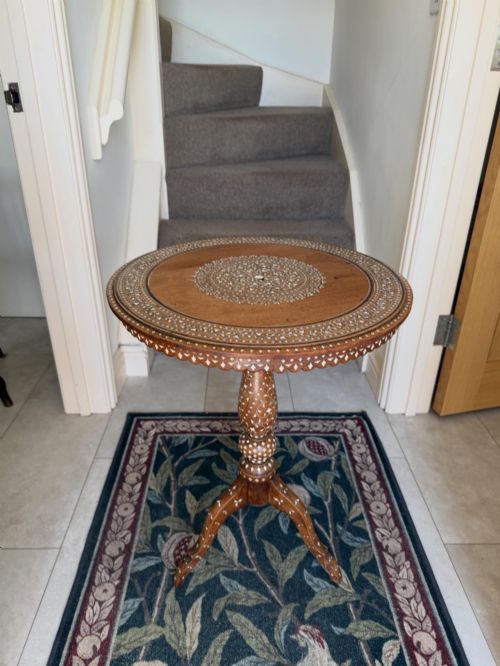
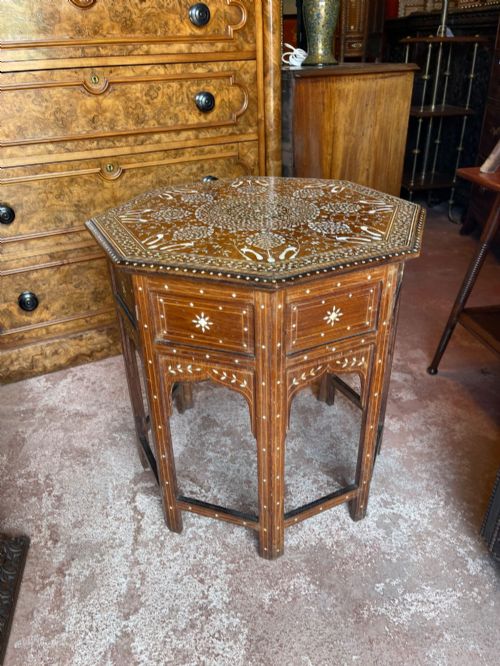
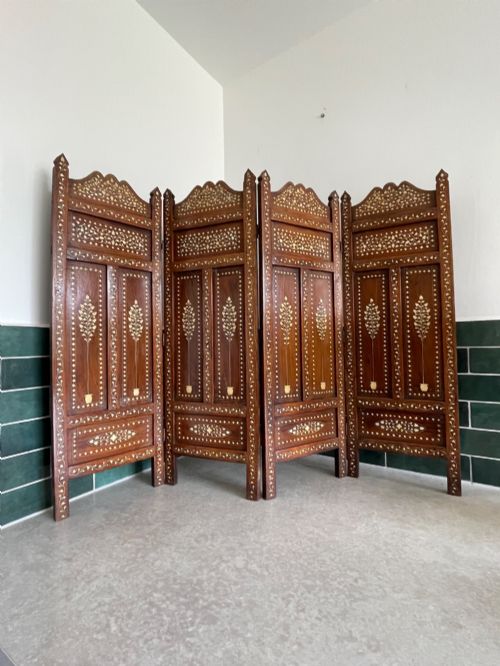
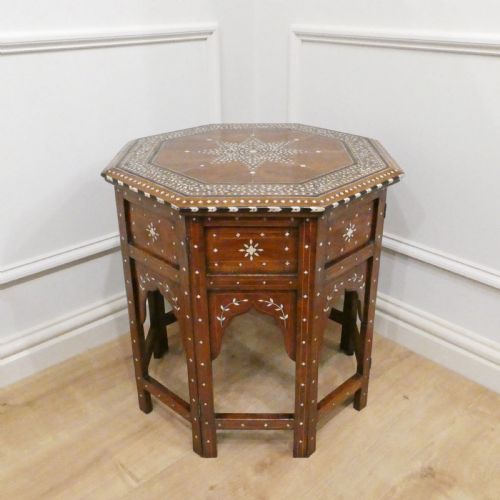
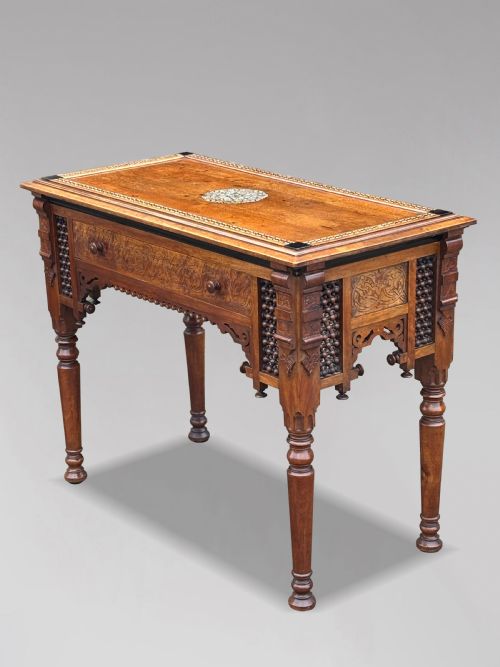
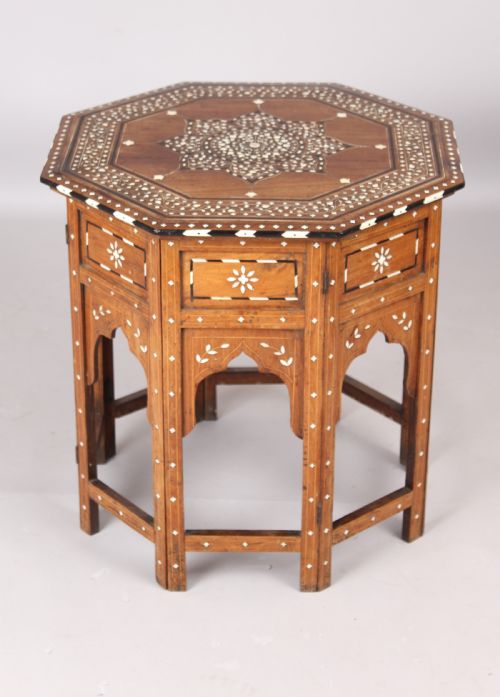
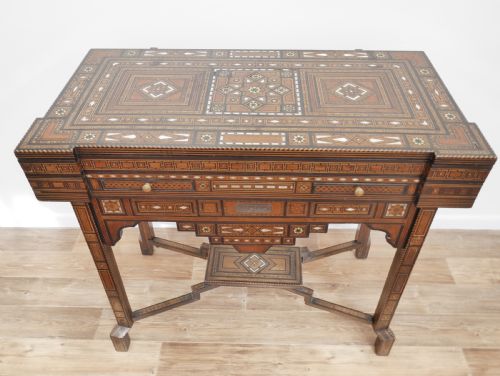
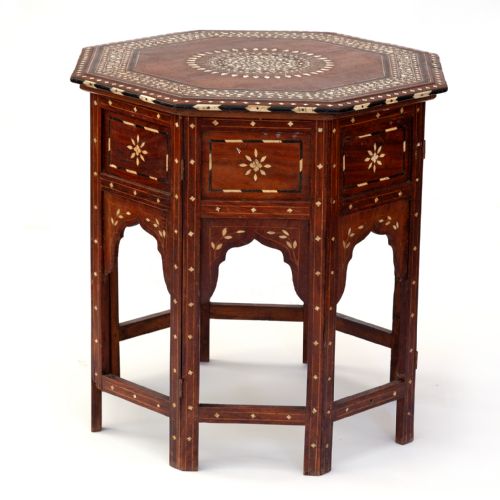
These brown bone inlaid table pieces bring intricate geometric craftsmanship into a room, offering tactile surface detail that draws the eye.
Brown Bone Inlaid Table
A brown bone inlaid table unites dense exotic timbers with hand-carved fragments of animal bone, creating striking contrasting patterns across the surface. These pieces often arrive from regional traditions such as Hoshiarpur, featuring intricate geometric or floral motifs across octagonal, square, and folding forms.
The selection frequently spans the nineteenth and early twentieth centuries, encompassing Anglo-Indian and Moorish Revival styles alongside Italian Renaissance revival examples. Buyers regularly encounter occasional side tables, games tables, and pedestal formats designed for display and utility.
Makers utilised various regional woods as a dark ground, allowing the creamy white bone and occasional mother-of-pearl highlights to stand out sharply. The resulting objects range from compact tripod stands to larger folding tables intended for versatile placement.
What varies in quality
The density and complexity of the carved bone decoration dictate the visual refinement of an example, with finer pieces displaying unbroken geometric symmetry and minimal filler material. Superior execution shows crisp edges around every individual bone segment and secure seating within the timber ground.
The choice of primary wood also influences the character of the piece, as denser tropical hardwoods provide a stable and rich dark backdrop for the pale inlay. The intricacy of the underlying carpentry, particularly in folding mechanisms and pedestal bases, separates standard production from master craftsmanship.
Listings feature woods including rosewood, teak, walnut, sandalwood, and sheesham paired with bone and mother-of-pearl.
Dumont
The Brown Bone Inlaid Table Glossary
- Bone inlay
- A decorative technique where small carved pieces of animal bone are embedded into a wooden substrate to form patterns. This method creates high-contrast visual designs across furniture surfaces.
- Hoshiarpur
- A North Indian city renowned for its skilled woodcarving and intricate bone inlay traditions. Pieces from this origin often feature dense floral and geometric compositions.
- Octagonal
- Having eight sides and eight angles. This geometric plan is frequently used for folding and occasional tables in Anglo-Indian design.
- Moorish Revival
- An architectural and decorative style incorporating traditional Islamic design elements into nineteenth-century European and colonial furniture. It often utilises complex lattice work and contrasting inlay.
- Tripod
- A piece of furniture supported by three legs. This configuration appears frequently on smaller occasional tables and stands.
Brown Bone Inlaid Table: Frequently Asked Questions
What woods are used in these tables?
The listings show dense hardwoods including teak, rosewood, walnut, and sheesham serving as the dark structural ground for the inlay.
These timbers provide the necessary weight and stability to support the intricate surface decoration without warping.
How do I identify a Hoshiarpur table?
Hoshiarpur tables typically feature dense geometric or floral bone inlay set into dark timber surfaces, often taking octagonal or folding forms.
This regional style reflects nineteenth and early twentieth-century craftsmanship from North India.
Are these tables suitable for everyday use?
These pieces function well as occasional or side tables for display purposes, provided they receive gentle care.
Their intricate inlaid surfaces require protection from excessive moisture and heavy daily wear.
What periods do these pieces date from?
The available items predominantly date from the late nineteenth century and the early twentieth century, with occasional examples from the sixteenth century.
This broad timeline spans various revival movements and colonial manufacturing periods.