
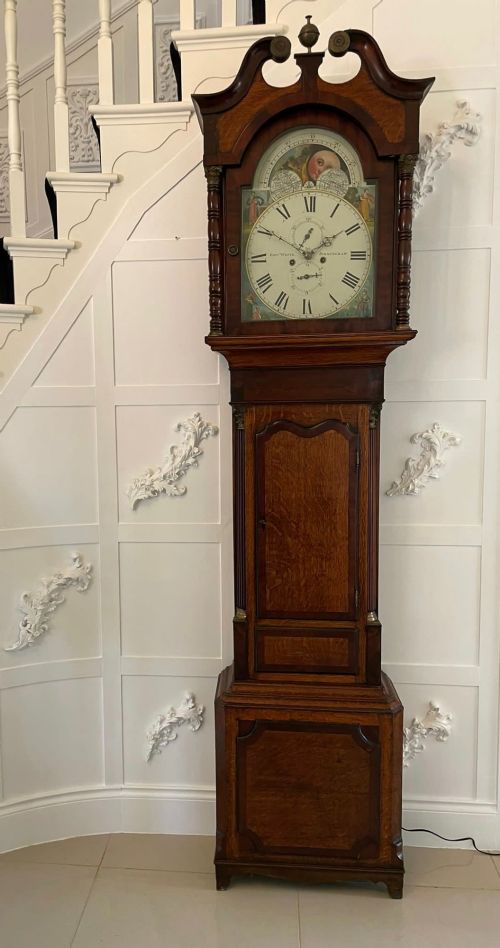
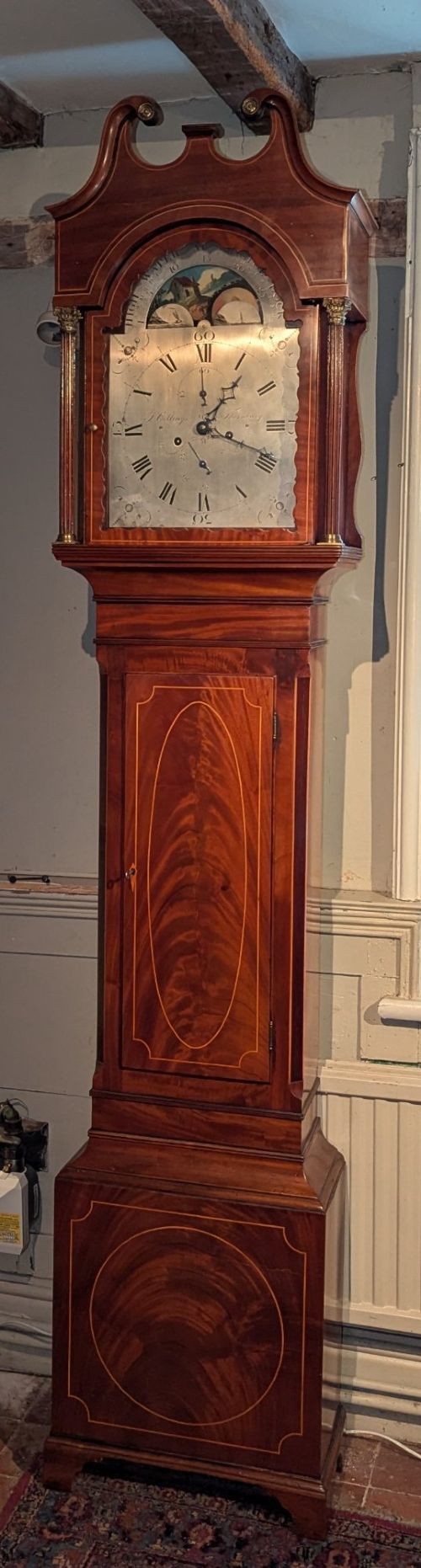
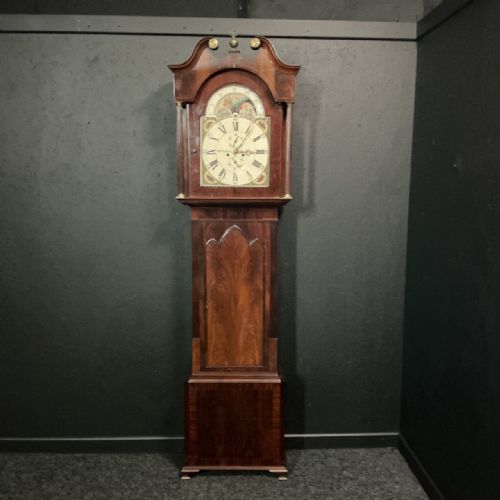




Moon Dial Longcase Clock
A moon dial longcase clock tracks both the passing hours and the lunar cycle through a painted mechanical disc.

Moon Dial Longcase Clock
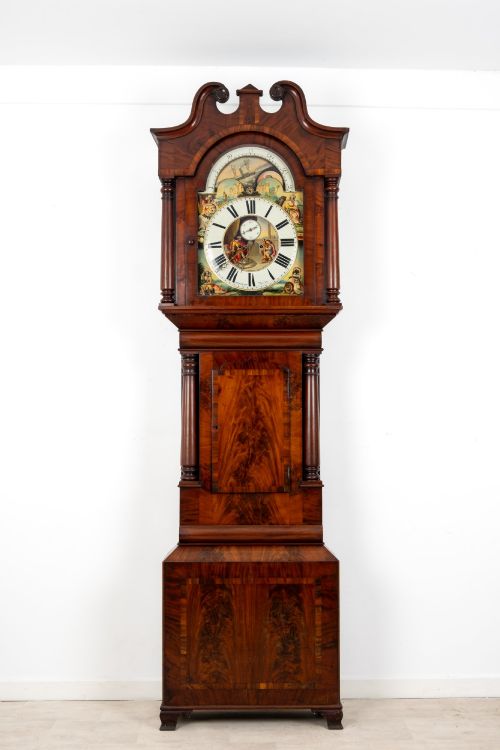
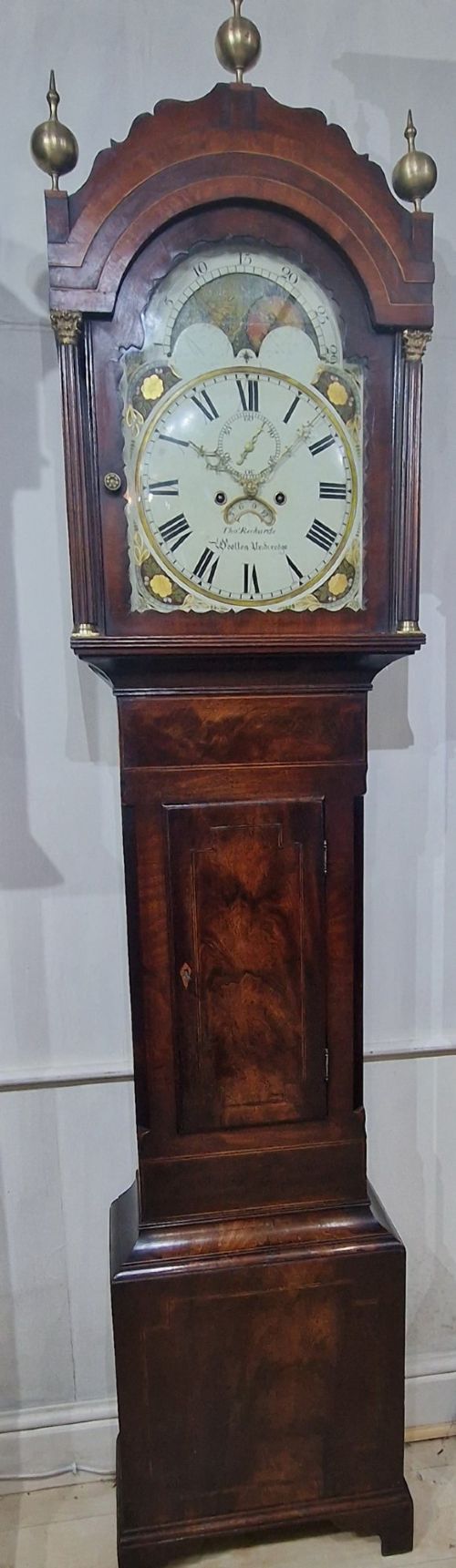
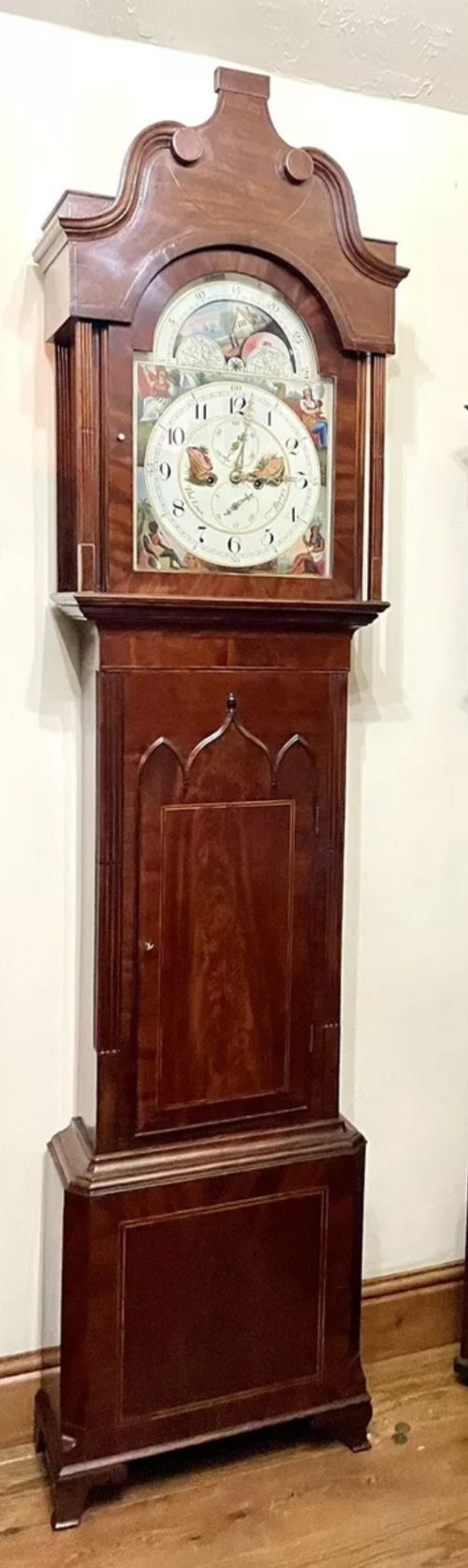
A moon dial longcase clock combines tall wooden casework with a mechanical dial that displays the phases of the moon alongside the hours. The search phrase covers tall floor-standing timepieces dating from the Georgian period through to the Victorian era and the early twentieth century. Most examples found here originate from the eighteenth and nineteenth centuries, constructed in regional British workshops by provincial clockmakers.
The form relies on a weight-driven movement housed inside a trunk, protected by a glazed door and topped by a hood containing the dial. Oak and mahogany serve as the primary timbers for the cases, frequently enhanced with inlay or crossbanding. The painted iron or brass dials often exhibit rolling moons or penny moons situated in the arch above the chapter ring.
How they were made
Cabinetmakers built the tall wooden cases using native oak and imported mahogany, sometimes selecting flame mahogany veneers for the trunk doors and base panels. Brass and iron formed the mechanical gear trains, escapements, and motion work inside the movement, driven by hanging lead or cast iron weights.
The arched dials combined painted iron sheets with hand-lettered numerals and detailed lunar illustrations executed in oil pigments. Regional makers fitted these components into housing frames constructed with traditional joinery, securing the waist doors with working brass locks and hinges.
Listings span the Georgian, Victorian, and Edwardian eras, utilising mahogany, oak, brass, and painted iron.
What varies in quality
The refinement of the cabinetwork distinguishes individual examples, seen in the choice of figured timber, the crispness of carved details, and the precision of string inlay. Cases constructed from dense mahogany with well-proportioned hoods sit at a higher level than simpler regional oak housings.
Dial execution dictates value on another plane, where intricate hand-painted lunar scenes and finely engraved maker signatures on brass chapter rings demonstrate superior workshop output. The complexity of the movement, ranging from standard time-and-strike gear trains to musical mechanisms, further separates standard production from exceptional pieces.
Parkinson Bros Batley·Edward Shepley·Edward White Birmingham·Will Lassell Toxteth Park·Thomas Lees Bury·John Banks Oldham·Thos Russell Lancaster·Furnival Oldham·Thomas Dean Leigh·Grocott Holywell·Stanyer Nantwich·Richardson Manchester·R Lawson Leigh·John Wood Grantham·Edward Glase Bridgnorth·James Rayner Hull·Henry Smith·Robert Darling Melrose·William Mercer Liverpool·David Griffith Carnarvon·John Wyat Altringham
The Moon Dial Longcase Clock Glossary
- Penny moon
- A simple mechanism showing a single lunar phase painted on the dial face through a small aperture. This variation appeared on eighteenth-century provincial clocks.
- Rolling moon
- A mechanical disc featuring two painted moons that rotate behind twin convex arches to display the lunar cycle. The mechanism advances incrementally via the clock movement.
- Chapter ring
- The circular band on the dial face bearing the hour numerals. These rings were frequently fashioned from silvered brass.
- Hood
- The upper glazed section of the longcase enclosing the dial and motion work. Provincial examples often feature swan neck pediments or glazed side pillars.
Moon Dial Longcase Clock: Frequently Asked Questions
How do moon dials work?
A toothed wheel connected to the motion work rotates a disc twice during each lunar month to track the phases.
The painted dual moons disappear and reappear behind curved horizons on the dial arch to indicate the current phase.
Where were these clocks made?
Makers across regional British towns and cities produced these timepieces during the Georgian and Victorian eras.
Provincial clockmakers sourced local timber while ordering specialised painted dials from urban centres.
How do I set the moon phase?
Owners advance the lunar disc manually using fingers or a small tool according to the current calendar moon.
The mechanical gear train then maintains the cycle automatically as long as the clock remains wound.
What is an eight day movement?
An eight day movement requires winding via the dial winding holes once every week using a crank key.
This system uses two suspended weights rather than the shorter daily drop found in thirty-hour clocks.