

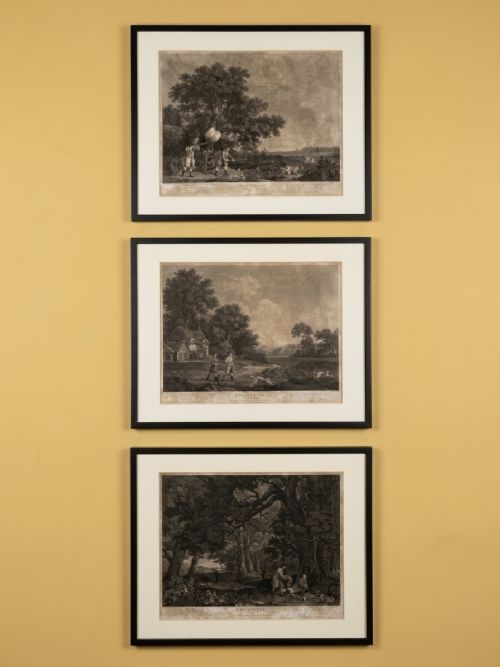


Monochrome Dog Engraving
A monochrome dog engraving captures canine character in stark black and white, offering collectors a striking window into historical portraiture.
Monochrome Dog Engraving
A monochrome dog engraving comprises printed canine portraits created across the nineteenth and twentieth centuries. These works range from Victorian representations of named bull bitches to Edwardian drypoint etchings.
The versions most frequently met on this page include original drypoint etchings and prints from the nineteen-tens and nineteen-twenties. Subjects span specific breeds such as Cocker Spaniels and Scottish Terriers.
Framed prints and wall art dominate the forms available, often preserved under glass within wooden frames. Each piece records historical canine subjects through ink upon paper.
How they were made
Makers utilised ink applied to plates to create etched and engraved lines upon paper. Drypoint techniques allowed artists to produce velvety burrs and rich tonal variations within the monochrome palette.
Completed works were typically placed behind glass and housed within wooden frames to protect the delicate paper from environmental damage. This combination of paper, ink, wood and glass defines the physical construction.
Monochrome Dog Engraving Retail Price Guide 2026
Typical asking prices for monochrome dog engraving among the pieces listed under this phrase on Sellingantiques today, from the lower quarter to the upper quarter. They describe what is for sale here now, not the wider market.
Listings feature paper, ink, wood and glass across Victorian and Edwardian periods.
What varies in quality
The fineness of the etched lines and the depth of the ink impression separate superior impressions from weaker pulls. Drypoint work shows distinct burr that yields rich velvety blacks, which dulls on worn plates.
Paper condition and the preservation of the original wooden framing and glass contribute significantly to the overall integrity of the piece. Crispness of detail in the depiction of canine coats distinguishes finer examples.
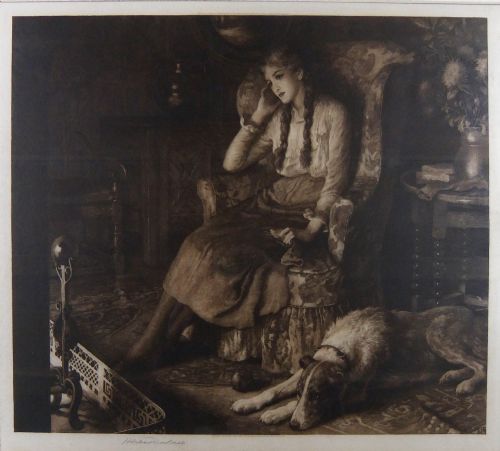
Herbert Dicksee
The Monochrome Dog Engraving Glossary
- Drypoint
- A printmaking process where the artist scratches directly into the metal plate with a needle, raising a rough ridge of metal called a burr. This burr holds extra ink to create soft, rich lines.
- Etching
- A method where acid bites lines into a metal plate protected by a ground, creating the design before printing. It produces crisp and varied linear work.
- Edwardian
- A stylistic period spanning the reign of King Edward VII until nineteen-ten. Pieces from this era often reflect the refined sensibilities of the early twentieth century.
- Victorian
- The period covering the reign of Queen Victoria, marked by diverse artistic revivals and detailed portraiture. Works from the nineteenth century frequently document named animals with specific pedigrees.
Monochrome Dog Engraving: Frequently Asked Questions
What is a monochrome dog engraving?
A monochrome dog engraving is a printed canine portrait executed in black ink upon paper, dating from the nineteenth and twentieth centuries.
These works utilise etching and drypoint techniques to capture specific breeds and named animals within framed presentations.
How are these prints framed?
These works are typically mounted behind glass within wooden frames to protect the paper from dust and moisture.
Original framing helps preserve the historical integrity of the piece over time.
What periods do these pieces span?
The available pieces span from the nineteenth century through the Edwardian era into the nineteen-twenties.
Victorian examples often document named dogs with specific pedigrees, while later twentieth-century works showcase detailed drypoint technique.
How do I care for my print?
Keep the framed work away from direct sunlight to prevent the ink and paper from fading.
Maintain stable indoor humidity to protect both the paper and the wooden frame from warping.