
Monastery Trestle Table
A monastery trestle table brings robust architectural presence and generous dining space into a room.
Monastery Trestle Table
When searching for a monastery trestle table, a buyer encounters substantial dining surfaces rooted in historical refectory and farmhouse forms. These pieces generally span several centuries, with robust examples appearing from the seventeenth century through to the early twentieth century.
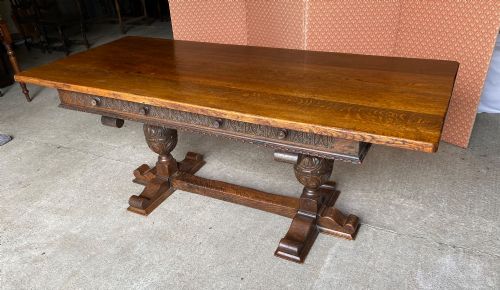
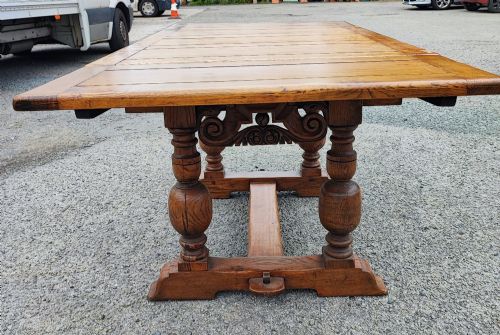
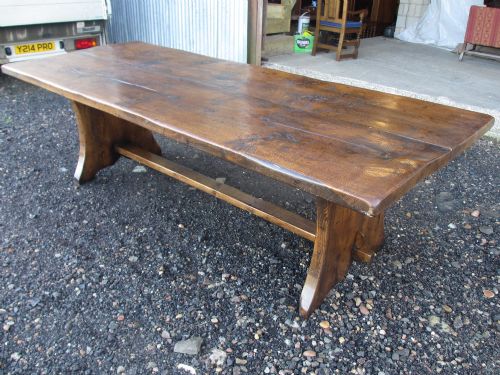
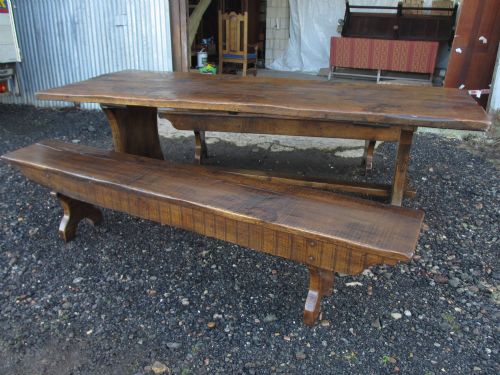
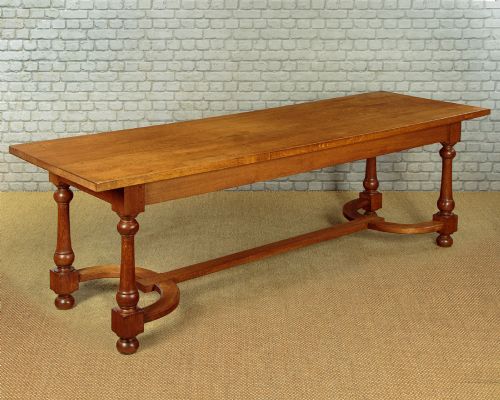
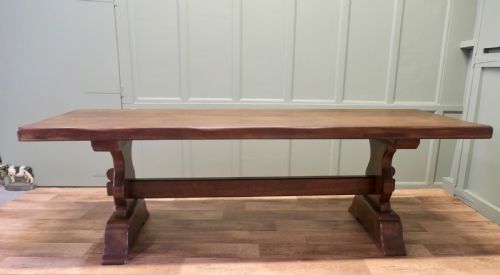
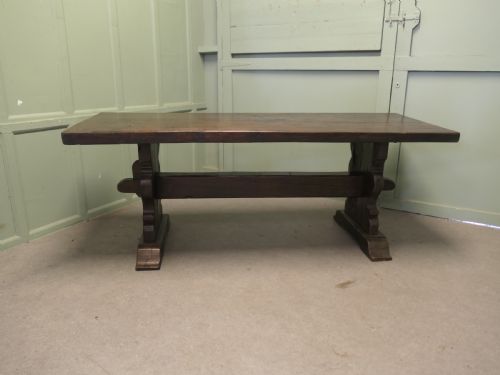
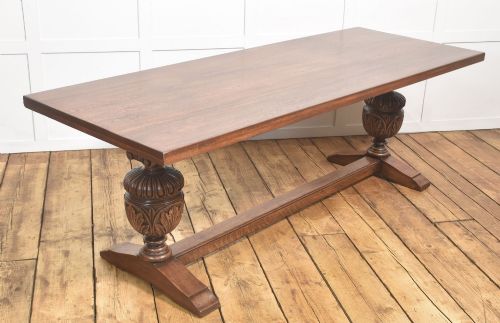
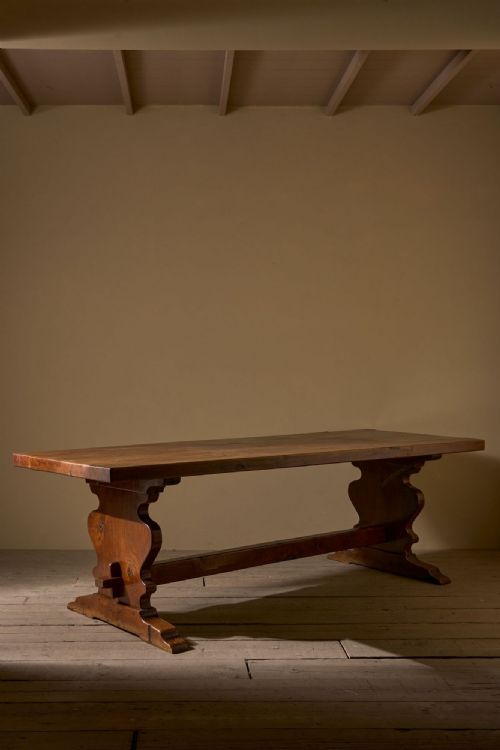
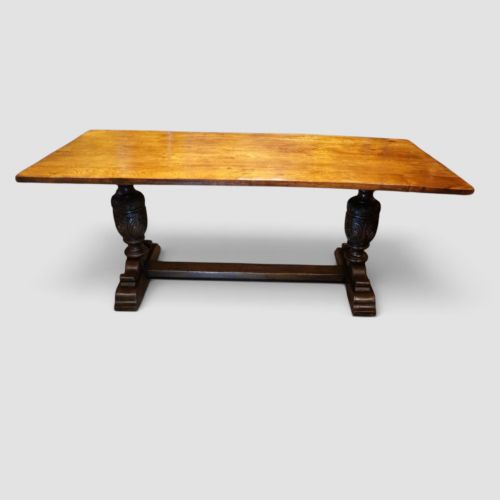
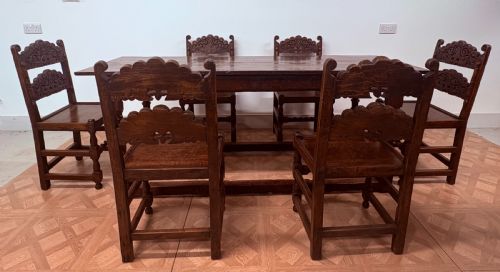
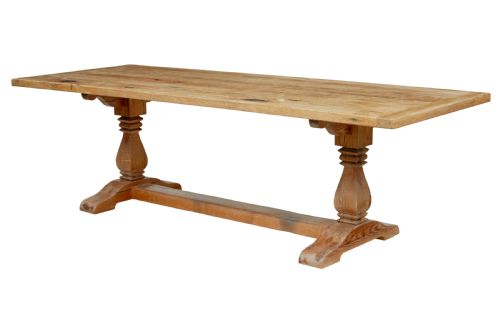
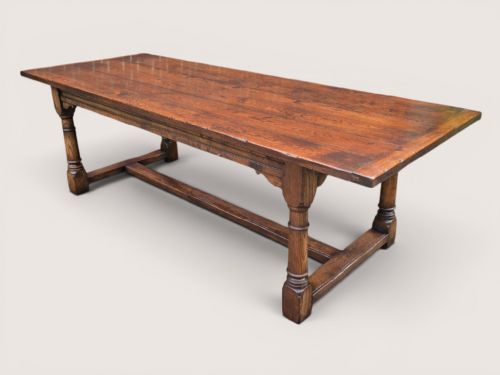
The version most commonly met on this page is the oak refectory or farm table, often featuring sturdy plank tops and shaped trestle or pedestal ends. French provincial and English country styles dominate the selection, offering long formats suited to communal seating.
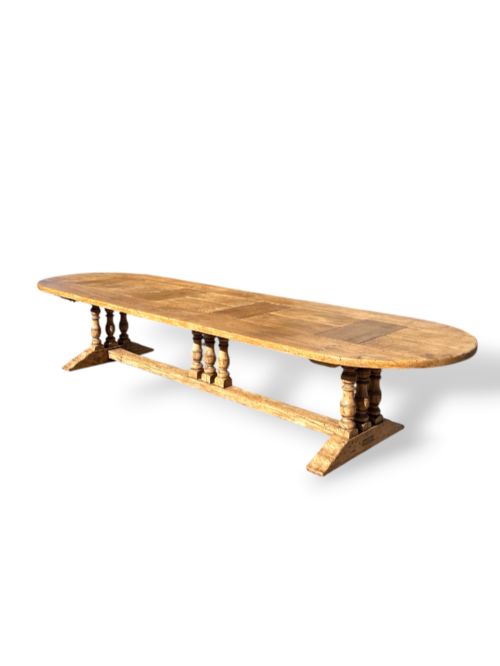
Many listings present large proportions designed to accommodate numerous diners comfortably, drawing on seventeenth-century traditions or later revival periods. Walnut and pine also appear alongside the predominant oak constructions.
How they were made
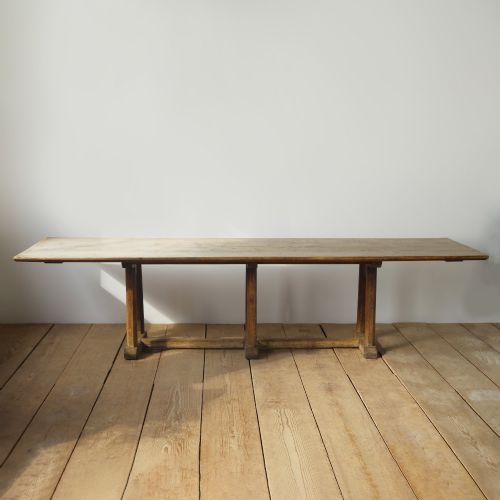
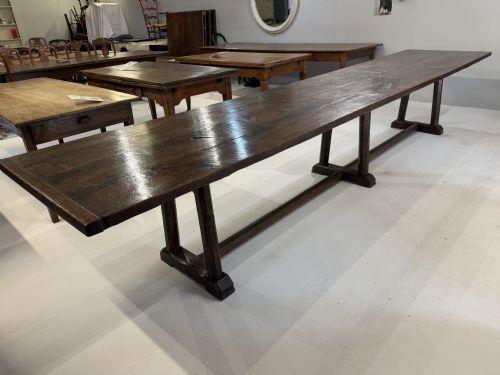
Makers constructed these surfaces primarily from solid timbers, utilising thick oak planks for the tops alongside walnut, elm, and pine. Planks were joined to span considerable lengths, sometimes supported by substantial trestle bases or heavy stretchers.
Iron and brass components occasionally reinforced the structural joints of the heavy framework. Surfaces frequently display the grain and natural character of the timber, sometimes finished with a bleached treatment.
Listings feature solid oak, walnut, elm, and pine across various centuries, including seventeenth-century pieces and later revival styles.
What varies in quality
The distinction between tiers rests upon the integrity of the timber and the proportion of the structure. Original period construction commands attention through the harmonious balance of the top and its supporting trestle base.
Subtlety of hand-carved detailing and the patination accumulated on the wood over centuries elevate certain examples. Grain selection and the stability of multi-plank tops define the higher end of the range.
The Monastery Trestle Table Glossary
- Refectory table
- A long dining table traditionally used in monastic dining halls. These pieces evolved to provide stable, communal surfaces for large households.
- Trestle ends
- Upright supports connected by a horizontal stretcher that hold up the table top. This design maximises legroom along the length of the table.
- Draw leaf
- An extension mechanism where secondary leaves pull out from beneath the main top. This allows the surface length to increase when needed.
- Plank top
- A surface constructed from several long boards joined edge to edge. Early examples often display visible grain variations and pegged joints.
- Patina
- The surface sheen and colour developed by wood over years of handling and polish. This quality signals age and organic wear.
Monastery Trestle Table: Frequently Asked Questions
How do I seat twelve people?
Look for long formats exceeding three or four metres in length. Trestle bases help maximise legroom along the sides.
French farmhouse and refectory styles generally provide the necessary proportions for large gatherings.
Are these tables solid oak?
Many examples utilise solid oak planks for the main surface and structural frame. Elm, walnut, and pine also appear frequently across the listings.
Checking the material details reveals whether a piece uses native hardwoods or lighter secondary timbers.
What is a trestle base?
A trestle base consists of vertical supports connected by a stretcher rather than traditional corner legs. This architectural arrangement offers strong weight-bearing capabilities.
Historical models often feature shaped ends or pegged joints securing the framework.
How do I date an antique table?
Dating relies on timber characteristics, construction methods, and stylistic revival periods. Seventeenth-century originals differ in joinery from later nineteenth-century interpretations.
Examining the underside and the wear on the planks helps clarify the age.