
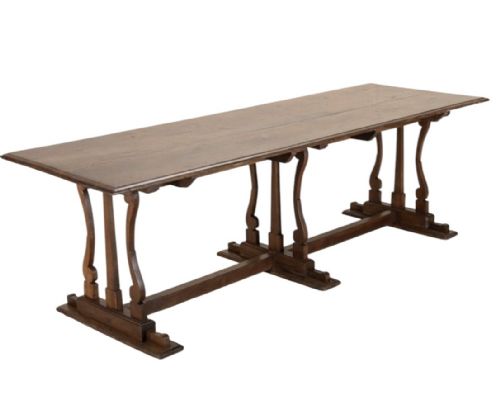


19th Century Monastery Table
A 19th century monastery table offers substantial timber and historic character, bringing enduring utility and authentic period presence to a large dining space.
19th Century Monastery Table
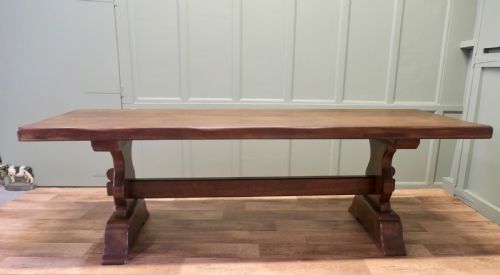
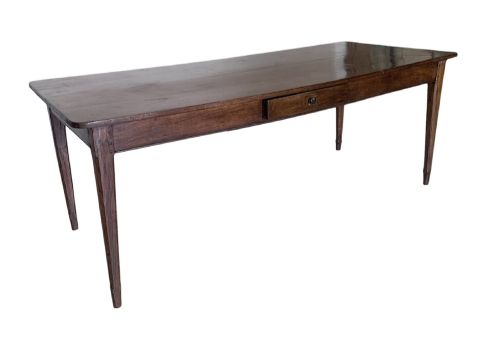
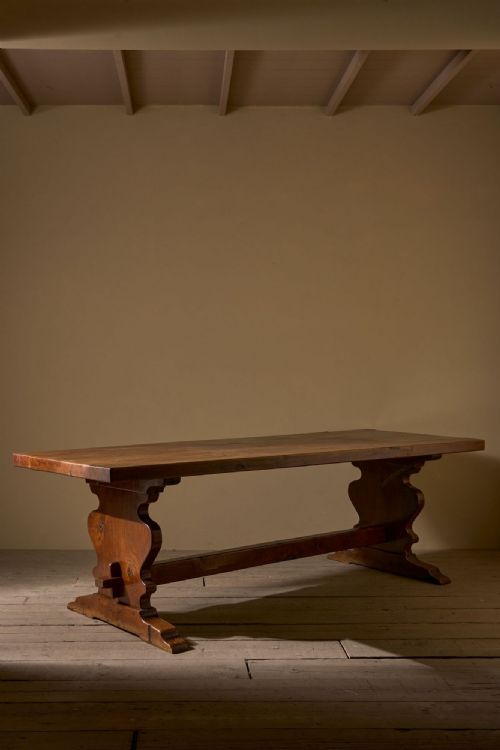
A 19th century monastery table is a substantial dining form rooted in centuries-old refectory design, built to accommodate large gatherings with a long, commanding surface. The pieces catalogued here span the nineteenth century and the early twentieth century, taking the form of large dining tables designed for communal use.
The typology embraces both plain utilitarian boards and more decorative iterations influenced by Gothic revival and Renaissance revival styles. These tables serve as the anchor of a room, combining heavy structural timbers with functional length.
How they were made
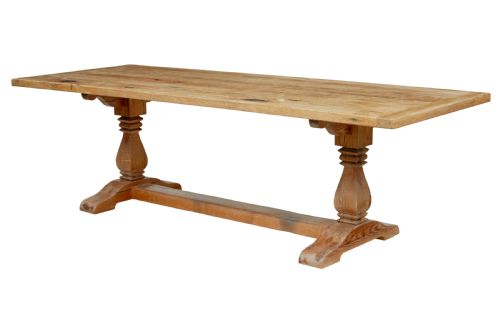
The construction of a 19th century monastery table relies heavily on solid hardwoods like oak and walnut, alongside resilient pine and occasional elm. Joinery is robust, utilising thick top planks secured to sturdy trestle or refectory bases designed to bear considerable weight.
Iron components sometimes appear within the structural bracing or hardware, reinforcing the heavy wooden frames. Surface preparation ranges from natural timber finishes to bleached oak treatments that lighten the appearance of the dense grain.
Some tables bear the quiet scars of historic spills and generations of cutlery, reminding every diner they share a seat with the past.
What varies in quality
Quality in a 19th century monastery table is defined by the selection of the primary timber and the integrity of the planking. Single-piece or two-plank tops display superior material selection compared to multi-board tops joined from smaller scraps.
The presence of period carving, such as Gothic revival detailing or Renaissance motifs, distinguishes more ambitious workshop outputs from plain utilitarian boards. Structural heft and the balance between the heavy top and the supporting trestle base dictate the overall architectural success of the piece.
The 19th Century Monastery Table Glossary
- Refectory table
- A long dining table traditionally used in monastic dining halls. These forms prioritise length and sturdy stretcher bases to allow communal seating.
- Trestle table
- A table consisting of two or more support frames connected by a longitudinal beam or stretcher. This design maximises legroom along the length of the surface.
- Gothic Revival
- A nineteenth-century design movement drawing inspiration from medieval architecture. Pieces incorporate pointed arches, tracery, and heavy carved details.
- Plank top
- A table surface constructed from individual boards running the length of the table. Two-plank configurations utilise exceptionally wide timber cuts.
19th Century Monastery Table: Frequently Asked Questions
How were monastery tables used originally?
These large tables served primarily as communal dining surfaces within monastic refectories and large households. They accommodated many diners at once for daily meals and formal gatherings.
Over time, the form transitioned into domestic settings while retaining its capacity for hosting large groups. Their robust construction allowed them to withstand heavy daily use across generations.
What woods are typical for these tables?
Oak and walnut dominate the surviving examples, prized for their strength and durability. Pine and elm also appear frequently, particularly in regional or provincial workshops.
Each timber brings a distinct grain and weight to the piece. Oak provides a dense, traditional finish, while walnut offers a darker, finer figure.
How do I fit a large table into a modern room?
A large refectory table requires ample clearance around all sides to allow chairs to pull out comfortably. Measuring the room in advance ensures the heavy proportions do not overwhelm the floor space.
Pairing the table with simpler seating or benches helps balance the visual weight of the timber. Positioning the piece away from direct heat sources protects the old wood from drying out.
How do I distinguish regional styles?
French provincial and Italian examples often feature specific timber selections like walnut or elm alongside lighter decorative carving. English and general nineteenth-century pieces tend to rely on heavy solid oak and strict structural lines.
Stylistic markers such as Gothic revival tracery point towards specific nineteenth-century revival movements rather than medieval origins. Examining the joinery and wood species helps clarify the geographical background of the workshop.