



Traditional Walnut Trestle Table
Traditional walnut trestle table forms provide sturdy centrepieces, bringing rich timber grain and classic framing into dining rooms and studies.
Traditional Walnut Trestle Table
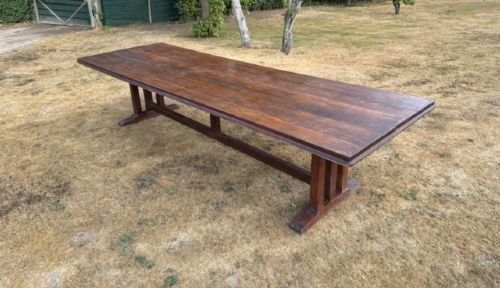
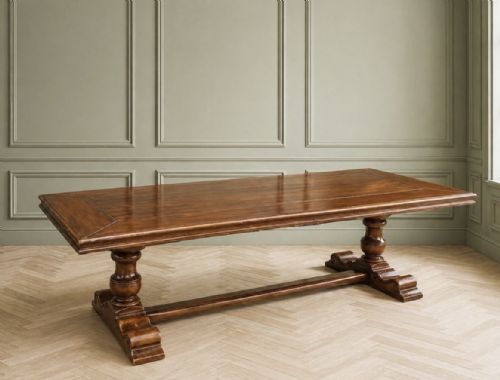
A traditional walnut trestle table relies on robust timber construction, often drawing on styles from the nineteenth century up through the nineteen-thirties. Buyers searching for a traditional walnut trestle table typically encounter dining tables, refectory pieces, and monastery formats featuring substantial walnut timber.
Beyond large dining formats, the selection includes smaller pieces such as coffee tables, desks, and nests of tables. These variations adapt the classic timber frame and stretcher design to different domestic scales while retaining period character.
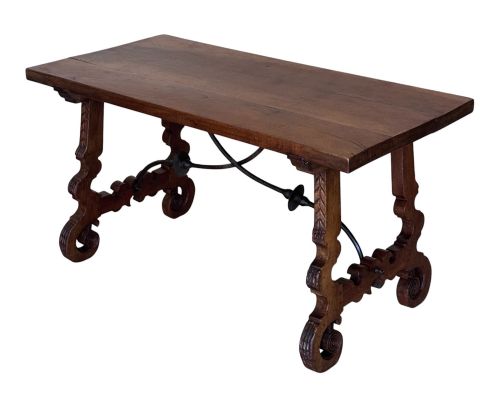
Design influences across the listings span Edwardian, French Country, Rustic Farmhouse, and Spanish Revival aesthetics. Such stylistic diversity means proportions and stretcher arrangements shift from simple pale walnut H stretchers to heavier baroque framing.
How these tables were constructed
Construction relies predominantly on solid walnut, sometimes complemented by wrought iron elements in Spanish revival or provincial interpretations. Makers selected timber for its rich grain patterns, which take on deep patinas through age and daily use.
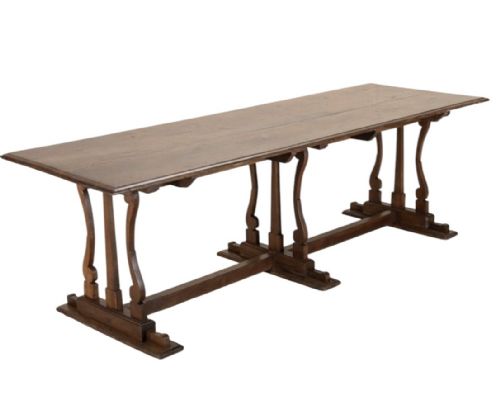
Support systems range from traditional trestle ends to H stretchers and refectory bases, ensuring rigid stability for large dining surfaces. Joinery techniques connect the heavy top boards securely to sturdy uprights and floor stretchers without excess ornamentation.
Some tables hide their heavy timber bulk behind surprisingly slender pale walnut H stretchers, keeping dining room floors feeling light.
What separates the finest examples
Quality rests in the selection of the walnut timber and the integrity of the structural joinery supporting the top. Superior examples display harmonious grain matching across expansive surface boards and precise cutting in the stretcher framing.
The finesse of the period styling dictates distinction, whether through restrained Edwardian lines or heavier Spanish baroque detailing. Tables that maintain balanced proportions between the top and the trestle base command greater visual presence.
The Traditional Walnut Trestle Table Glossary
- Refectory table
- A long dining table historically used in communal halls and adapted for domestic dining. These pieces feature elongated tops supported by trestle bases or sturdy side legs connected by stretchers.
- H stretcher
- A horizontal timber brace shaped like the letter H that connects the legs of a table for added stability. This structural element is often visible beneath the top and dictates the rigidity of the base.
- Walnut
- A dense, hard timber prized for its rich dark brown colour and varied grain patterns. It forms the primary material for the tables listed here, offering durability and a smooth finish.
- Trestle
- A structural support consisting of a horizontal beam fixed to two splayed legs at each end. This design allows maximum legroom along the length of the table.
Traditional Walnut Trestle Table: Frequently Asked Questions
How do I clean walnut wood?
Dust surfaces regularly with a soft, dry cloth to prevent grit accumulation.
Apply a mild beeswax polish periodically to nourish the timber and maintain its natural lustre without using harsh chemical cleaners.
Are these tables suitable for daily dining?
Solid walnut construction and sturdy trestle framing provide exceptional stability for everyday meals.
Use heat mats and coasters to protect the polished timber surface from moisture rings and thermal marks.
What is an H stretcher base?
An H stretcher uses a central connecting rail between the two trestle ends, resembling the letter H.
This configuration braces the legs against lateral movement and strengthens the overall frame of the table.
How do I date a walnut table?
Examine the timber colour, stretcher style, and construction marks to align the piece with listed periods like Edwardian or nineteenth century.
Subtle details in the edge moulding and hardware help distinguish between nineteenth-century formats and nineteen-thirties reproductions.