
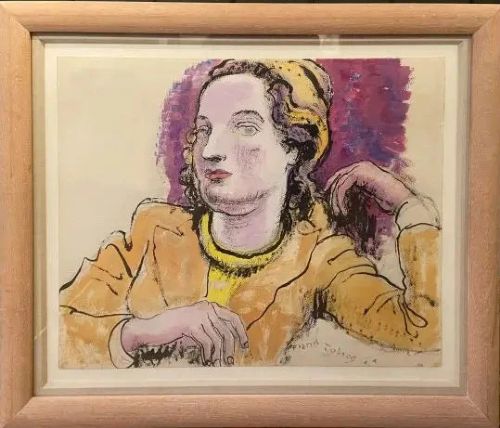
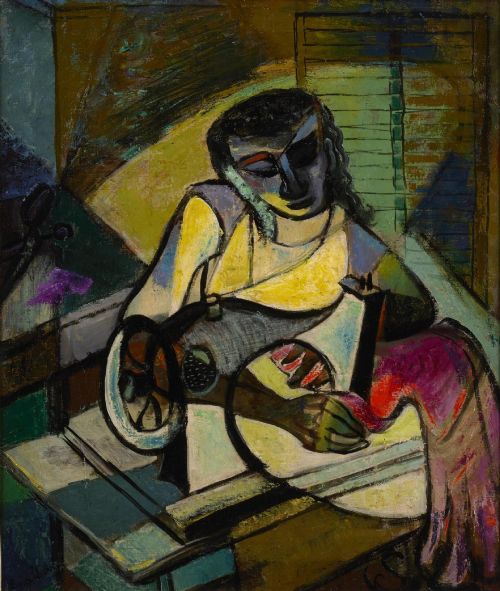


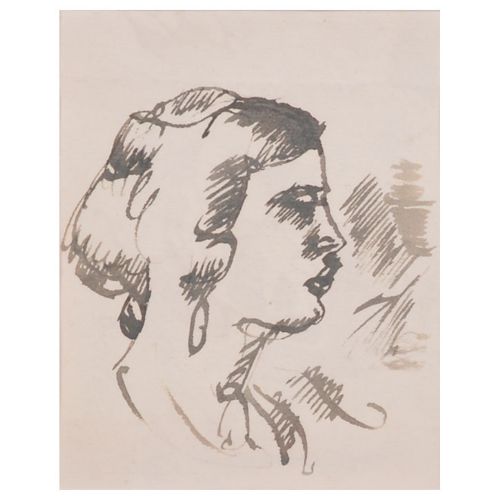


Modernist Female Portrait
A modernist female portrait captures character through bold lines and unconventional composition, offering a striking focal point for any interior.
Modernist Female Portrait
A modernist female portrait brings together subjects from across the early to mid-twentieth century, capturing women in domestic, bohemian, and coastal settings. These pieces range from intimate studies to larger gallery works, reflecting the evolving visual language of the period.
The selections available here lean towards mid-century interpretations alongside earlier twentieth-century depictions. You will encounter works originating from British and French studios, spanning decades from the Edwardian era through to nineteen fifty.
The physical formats vary between oils on canvas, ink on paper, and gouache. Many arrive within period frames, particularly gilt wood, which complements the distinctive palette of the modernist approach.
Materials and technique
Artists working in this field relied primarily on oil paint applied to canvas or paper supports. The medium allowed for textured brushwork and layered tones that define the character of each subject.
Works on paper frequently utilise ink or gouache to achieve sharper lines and immediate contrast. These lighter mediums capture rapid observational sketches as well as finished compositional studies.
Several ladies depicted appear caught mid-thought during quiet moments of repose or bohemian leisure.
Assessing quality
The strength of the composition and the confidence of the mark-making dictate the visual weight of each piece. Stronger examples demonstrate a distinct command over form and proportion rather than strict academic realism.
The preservation of the original surface, whether oil on canvas or ink on paper, influences the visual impact. Works that retain their unblemished pigments and stable framing present the intended aesthetic more clearly.
Frank Dobson·Lena Gurr·Raymond Moritz·Pinchus Krémègne·Yetta Kane·John Duncan Fergusson·Bernard Meninsky
The Modernist Female Portrait Glossary
- Modern British
- A designation for art produced in Britain during the twentieth century that absorbed European modernist movements. It embraces varied interpretations of figure and landscape.
- School of Paris
- A term describing the multinational community of artists residing and working in Paris during the decades prior to the mid-century. It represents a melting pot of avant-garde portraiture and bohemian life.
- Gouache
- An opaque water-based medium that dries to a matte finish. It allows artists to build solid blocks of colour with high saturation.
- Expressionism
- A modernist style where the artist distorts visual reality to evoke emotional moods. Portraits in this manner prioritise subjective feeling over objective likeness.
Modernist Female Portrait: Frequently Asked Questions
What defines a modernist female portrait?
These works break away from strict nineteenth-century academic realism to focus on expressive brushwork, simplified forms, and psychological depth. Artists prioritized personal interpretation and mood over a photographic likeness.
Subjects range from studio models and bohemian figures to intimate personal studies created across Britain and France.
How should I hang these paintings?
Give these works adequate wall space so their distinct palettes and brushwork can be appreciated without visual competition. Pairing them with understated surroundings allows the character of the sitter to command attention.
Consider natural light levels in the room to protect paper and canvas works from prolonged direct exposure.
How do I care for oil on canvas?
Keep paintings away from damp environments and fluctuating temperatures which can cause canvas to slacken and paint layers to crack. Dust the surface gently with a soft, dry brush when needed.
Avoid using liquid cleaners or chemical solvents on the painted surface.
Are works on paper framed differently?
Works on paper require protective glazing and acid-free mounts to prevent the paper from yellowing or degrading over time. Framing should keep the sheet away from direct contact with the glass.
Many of these pieces come preserved in period frames that suit the era of their creation.