


Modern British Watercolour Art
Modern british watercolour art captures the shift in twentieth-century painting through fluid washes and sensitive line work.
Modern British Watercolour Art
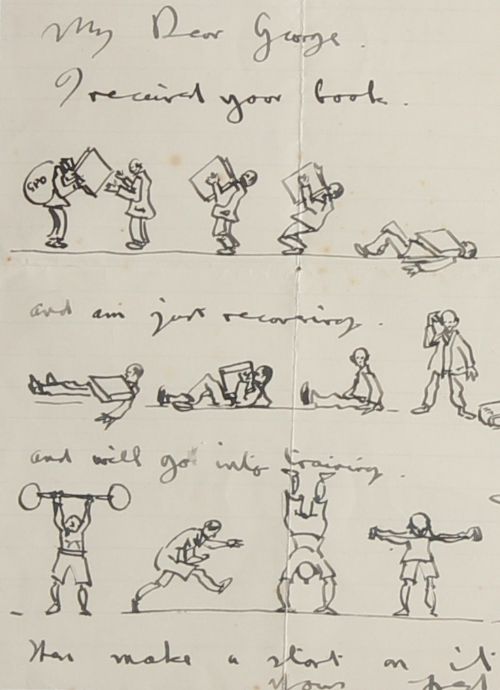
Modern british watercolour art encompasses works on paper created across the twentieth century, including the nineteenth-century roots seen in Edwardian pastoral and early pieces. The selection here leans heavily towards mid-century interpretations, featuring landscapes, townscapes, and still life compositions.
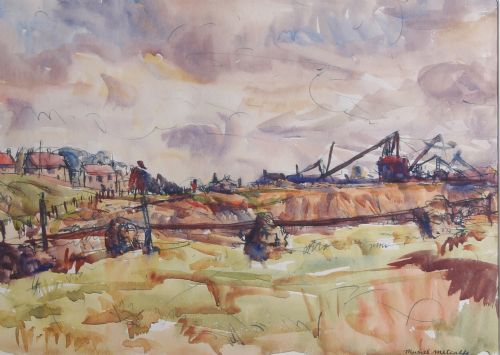
Buyers encounter original paintings, drawings, and sketches executed by notable painters working within British Impressionism and modern idioms. These works record regional views, topographical scenes, and domestic studies framed for display as wall art.
Materials and Technique
Artists executed modern british watercolour art primarily on paper supports, applying water-soluble pigment often combined with ink, gouache, or graphite. Wood and glass typically form part of the framing assemblies that protect these fragile works on paper.
The technique relies on transparent washes of watercolour pigment to build light and tone, sometimes reinforced with ink or pencil lines to define form. This method demands precision, as the paper ground remains visible beneath the pigment.
The listings on this site span the nineteenth century through to the nineteen-sixties, featuring paper, ink, and graphite alongside watercolour.
Distinction in Execution
The distinction between ordinary and exceptional modern british watercolour art lies in the handling of pigment and the confidence of the line. Stronger examples display an assured economy of marks where washes and ink work together to create immediate atmosphere.
Compositional strength and the clarity of the artist's vision separate notable studio output from routine topographical recording. Works that capture specific light or movement through fluid brushwork command greater attention from collectors.
Fred Lawson·Muriel Metcalfe·Dame Elisabeth Frink·James Tower·Henry Charles Fox·Edward Seago·Edward Carter Preston·Sir William Russell Flint·Arthur Todd·Sir William George Gillies·George Graham·Claude Muncaster·Sonia Lawson·James Kerr McArthur·Dame Laura Knight·Henry J Neave·Edward Wesson
The Modern British Watercolour Art Glossary
- Watercolour pigment
- Finely ground colour particles mixed with a water-soluble binder, applied in translucent layers to paper.
- Gouache
- An opaque water-based paint often used alongside watercolour to create solid blocks of colour and highlights.
- Topographical landscape
- A painting or drawing that depicts a specific real-world location with geographical accuracy.
- Works on paper
- A collective term for paintings, drawings, and sketches executed on a paper support rather than canvas.
Modern British Watercolour Art: Frequently Asked Questions
What defines modern british watercolour art?
These works represent a departure from strict academic tradition towards varied twentieth-century styles including impressionism and early modernism. They utilise fluid pigments on paper to record landscapes, townscapes, and figure studies.
Created across several decades, the style embraces both pastoral scenes and stark geometric interpretations of domestic and industrial subjects.
How should these watercolours be displayed?
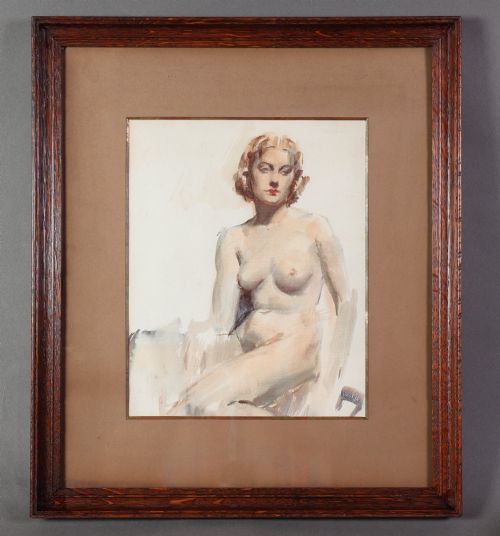
Works on paper require conservation mounting behind glass to protect the delicate pigments from atmospheric moisture and handling damage. UV-filtered glass helps prevent the watercolour pigment from fading under direct room light.
Keep framed pieces away from direct sunlight and damp walls to preserve the integrity of both the paper support and any underlying graphite or ink.
How do I identify the period of a piece?
Dating relies upon stylistic clues such as the application of cubist geometry, modernist abstraction, or the softer tones of earlier pastoral traditions. Signatures, dates inscribed by the artist, and framing materials often provide further confirmation.
Examining the paper type and framing structure can also offer helpful context regarding the decade of creation.
What subjects are most common?
Landscapes and topographical views dominate the selection, capturing rural scenes, Yorkshire villages, and coastal settings. Still life arrangements of flowers and fruit also appear regularly alongside portraits and figurative sketches.
Industrial subjects and architectural townscapes reflect the broader artistic interest in recording changing British environments during the mid-twentieth century.