
Mirrored Credenza Sideboard
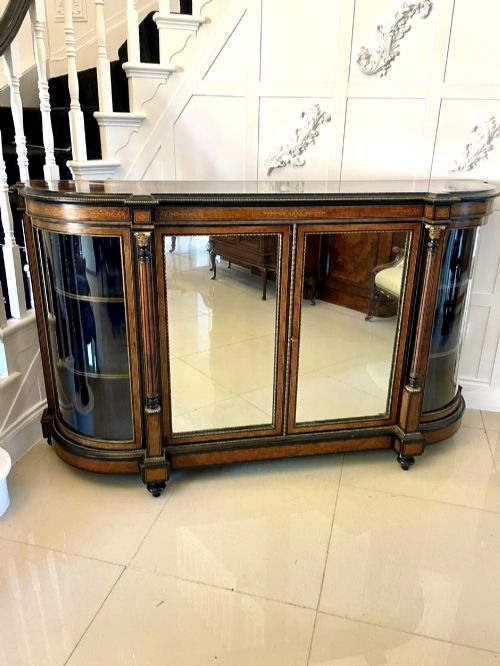
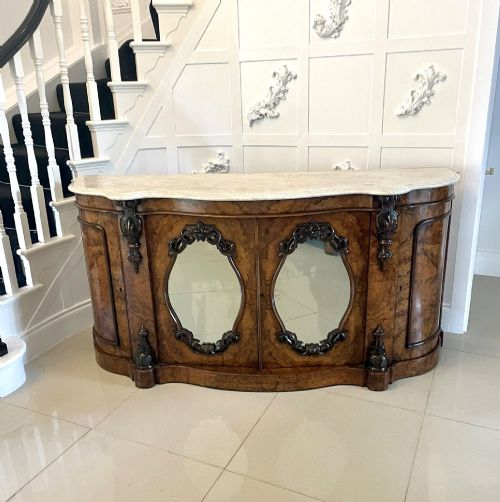
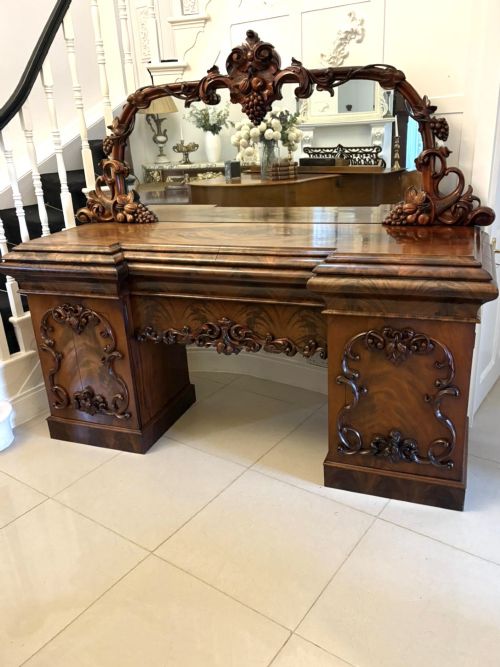
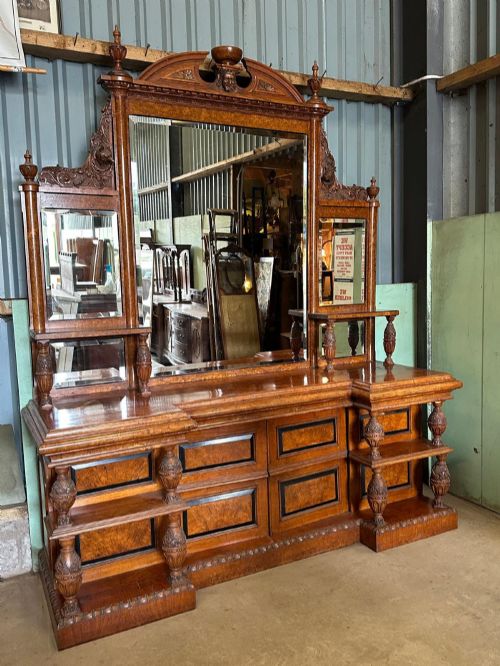
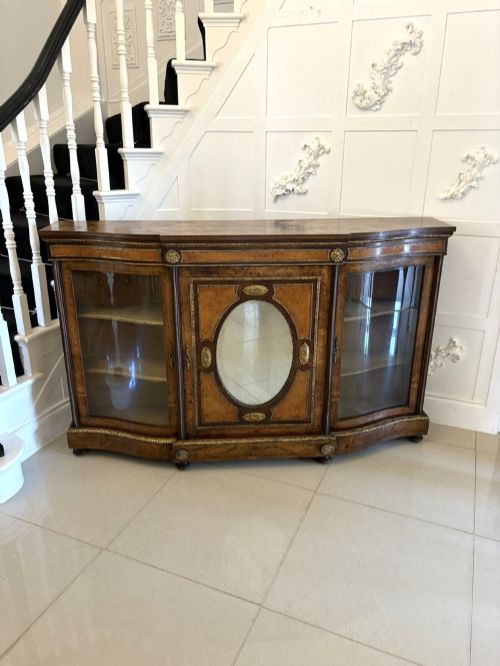
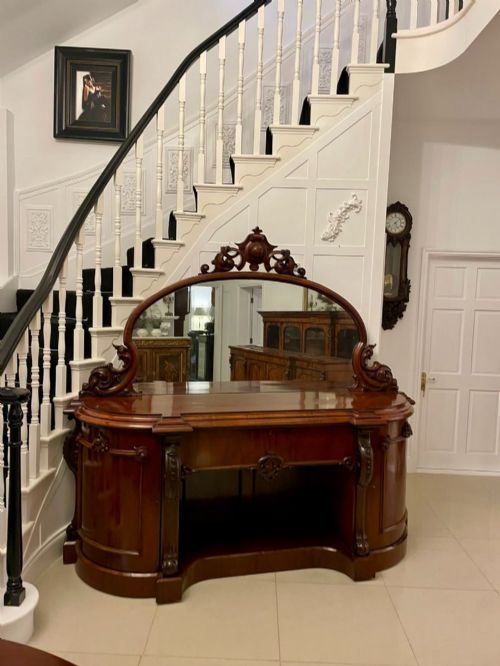
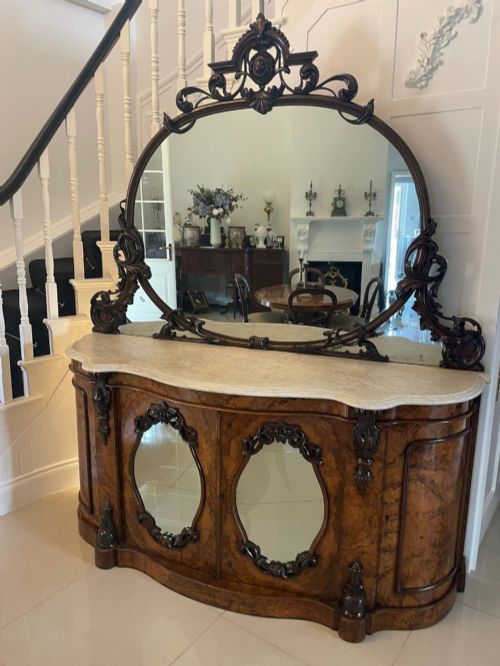
A mirrored credenza sideboard brings deep burr walnut, mahogany, and reflecting glass together to anchor a formal dining room.
Mirrored Credenza Sideboard
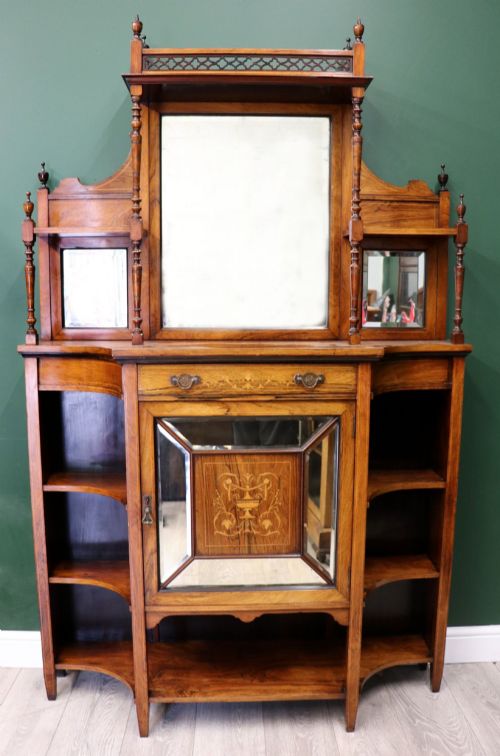
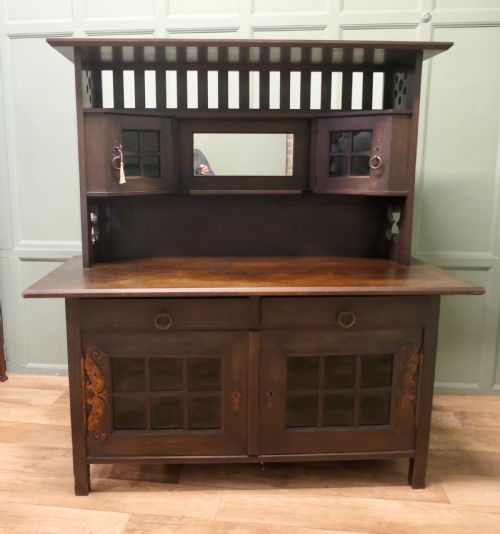
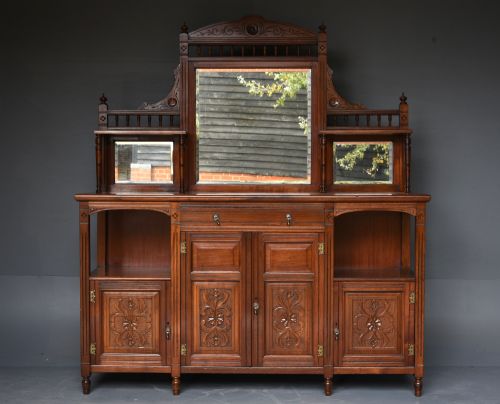
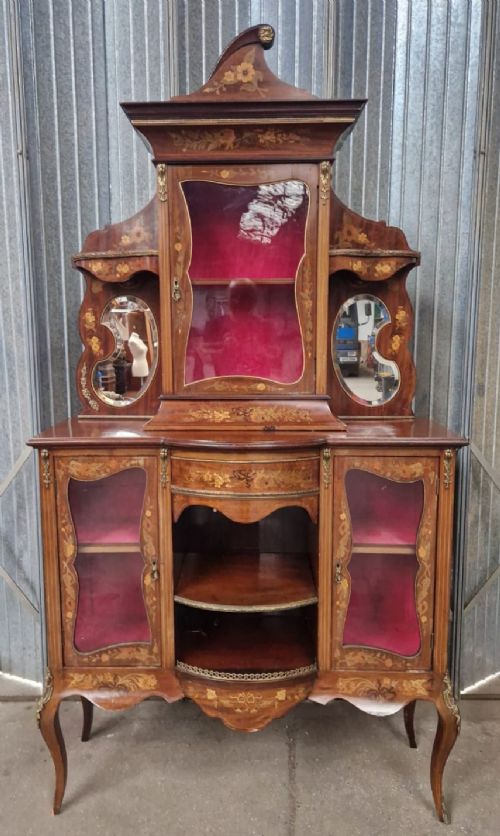
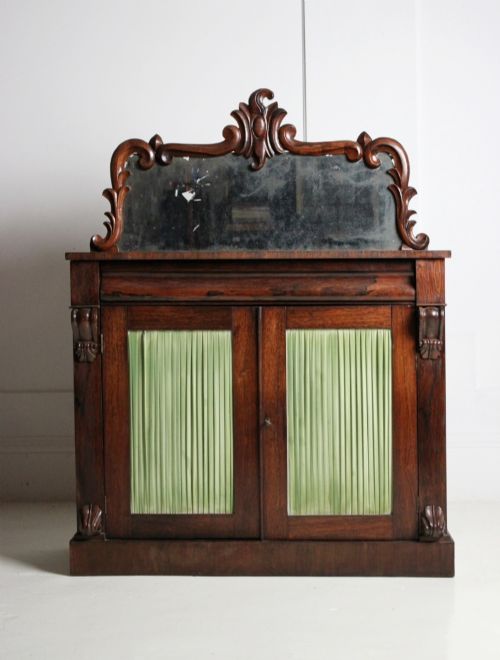
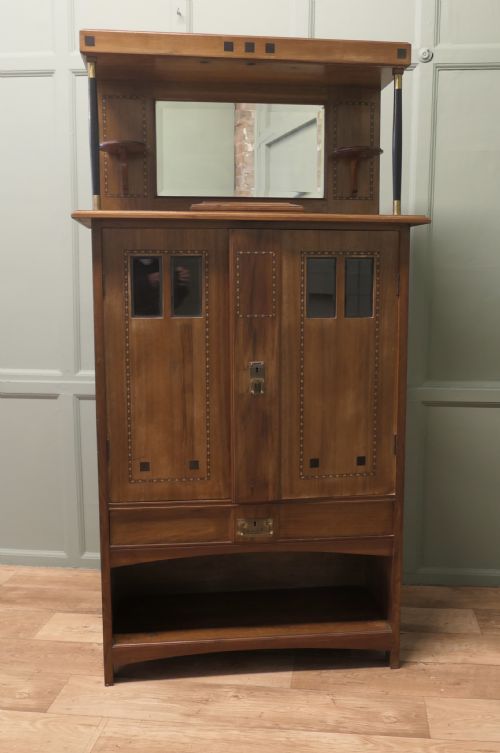
A mirrored credenza sideboard is a substantial dining or drawing room storage unit combining wooden cabinetry with integrated mirror glass panels or large mirror backs. These pieces span the nineteenth century, including Victorian, Edwardian, and Regency eras, taking forms such as chiffoniers, side cabinets, and console tables.
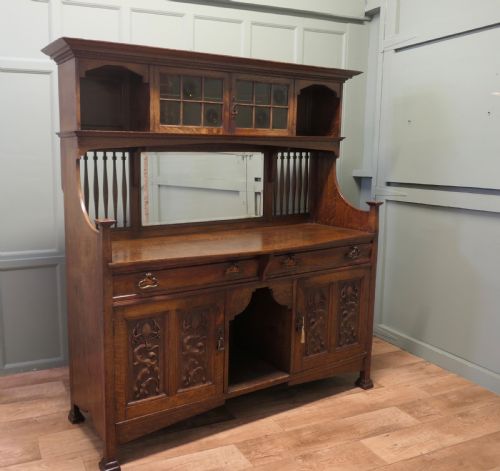
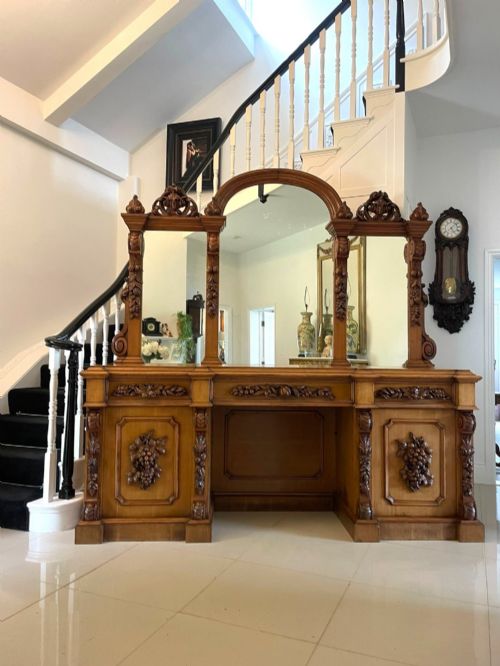
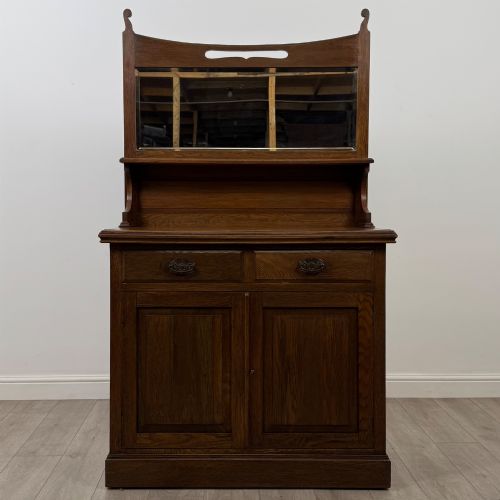
The version most commonly met on this page is the Victorian burr walnut or mahogany sideboard featuring an upright mirror back and enclosed cupboards. Makers also utilised pollard oak, rosewood, and brass hardware to construct these large foundational room pieces.
How they were made
Cabinet makers built these pieces using solid timbers like oak and mahogany, applying decorative veneers of burr walnut, amboyna, and rosewood to primary visible surfaces. Marquetry inlay, ormolu mounts, and hand-carved details completed the ornamentation of the wooden frames.
Mirrored components were integrated into wooden backboards or cabinet doors using silvered mirror glass, occasionally paired with marble top surfaces for added durability and weight.
Morning room book cabinets and hall cupboards hide behind the same grand mirror-backed facades.
What varies in quality
The grade of timber veneer and the depth of hand-carving separate standard utility furniture from exhibition pieces. Selected burr walnut figures and precise marquetry indicate superior workshop standards.
Hardware execution, such as cast ormolu mounts and brass handles, alongside the clarity and beveling of the mirror glass, dictates the overall refinement of the construction.
Shapland and Petter·Shoolbred and Co.·Gillows
The Mirrored Credenza Sideboard Glossary
- Credenza
- A low dining room cabinet or sideboard, frequently fitted with mirrored doors or central cupboards. This form evolved during the nineteenth century for display and storage.
- Chiffonier
- A compact sideboard or cabinet featuring a raised shelf or mirror back atop enclosed lower cupboards. These pieces commonly appear in rosewood or walnut from the Regency and Victorian periods.
- Ormolu
- Gilded bronze mounts applied to cabinet furniture for decorative enrichment. Makers cast and chased these metal elements to frame doors and panels.
- Burr walnut
- Timber taken from the warted growths of walnut trees, yielding intricate, swirling grain patterns. Cabinet makers prized this wood for high-status Victorian veneering.
- Pollard oak
- Timber derived from trees pruned to encourage a dense network of branches, producing a mottled and knotted grain. This material appears on select nineteenth-century case pieces.
Mirrored Credenza Sideboard: Frequently Asked Questions
Where did these sideboards stand?
These large cabinets sat against dining room or drawing room walls, serving as serving stations or display surfaces for silver and glassware.
Their substantial mirror backs helped reflect light across formal Victorian and Edwardian interiors.
How do I clean the wood?
Maintenance requires dry dusting with a soft cloth to protect vulnerable burr walnut and mahogany veneer surfaces from moisture damage.
Traditional beeswax applied sparingly helps preserve the original polished finish without dulling the timber grain.
Can the mirror be removed?
Mirror backs on these sideboards are structurally integrated into the upright wooden frames and backboards as permanent assemblies.
Removing them would destabilise the joinery and alter the historical proportions of the piece.
What is pollard oak?
Pollard oak is a decorative wood harvested from trees that were historically cut back to promote dense branch growth.
This technique produced a distinctive speckled and clustered grain pattern visible on nineteenth-century cabinets.