


Victorian Mirrored Door Cabinet
A victorian mirrored door cabinet brings nineteenth-century warmth and reflected light into a room through polished timber and clear glass.
Victorian Mirrored Door Cabinet
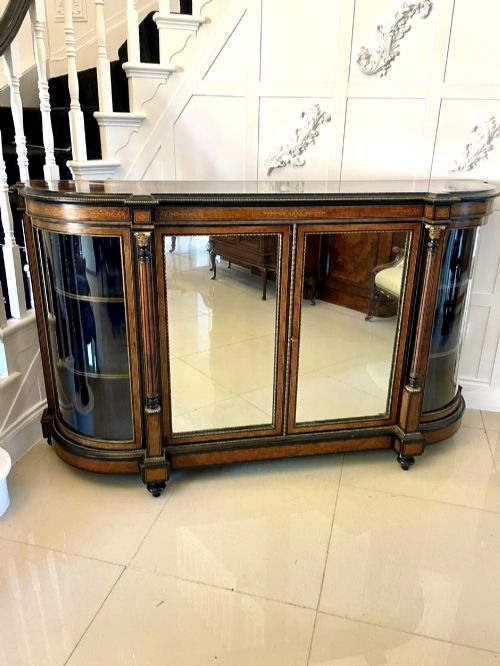
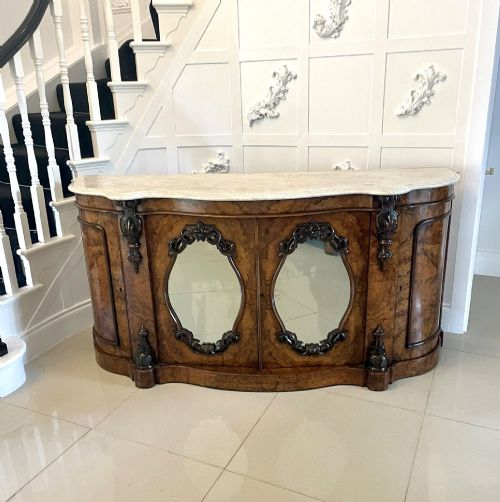
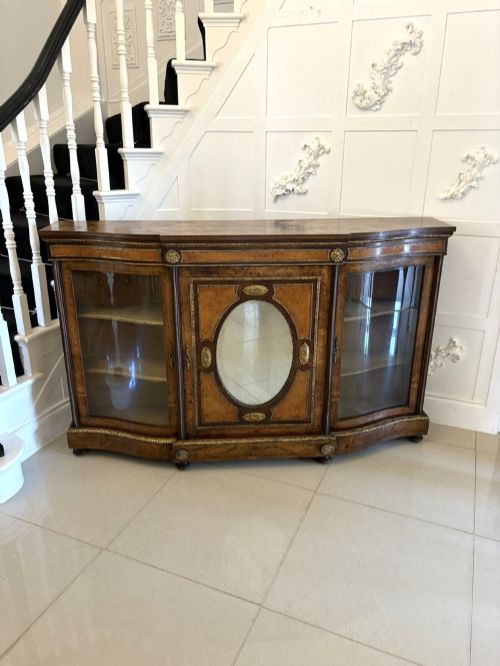
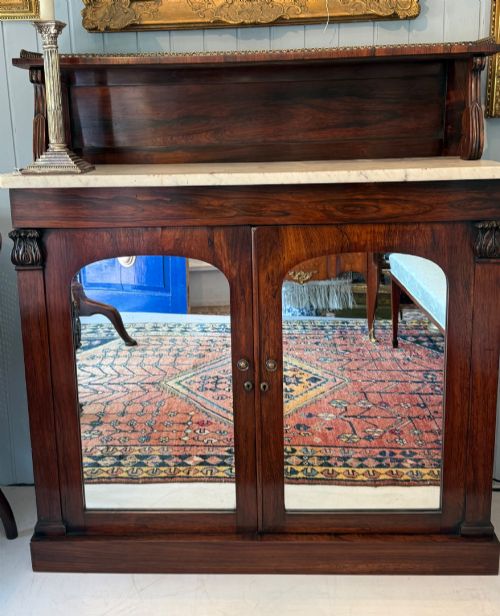
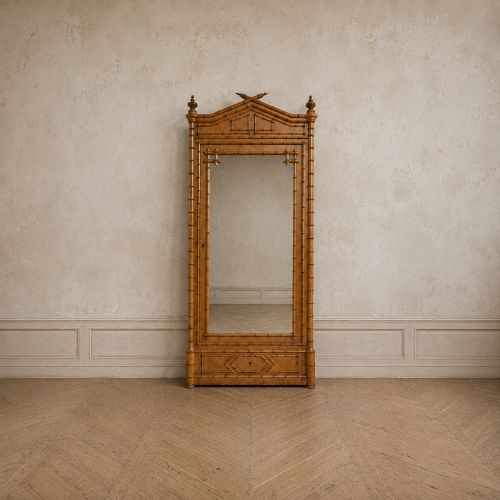
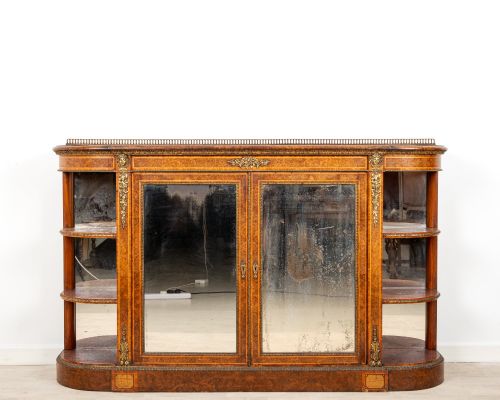
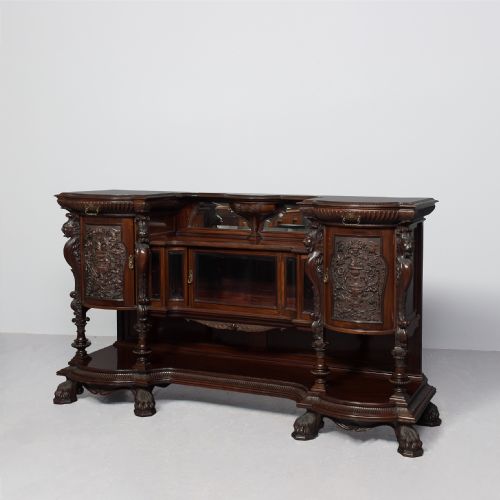
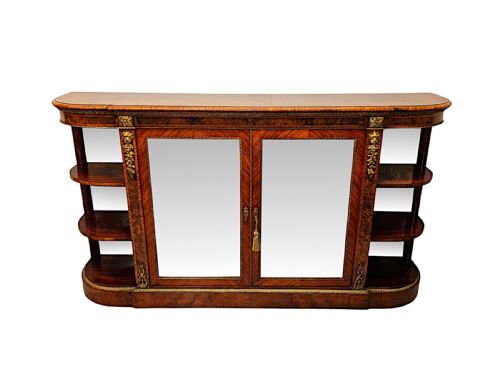
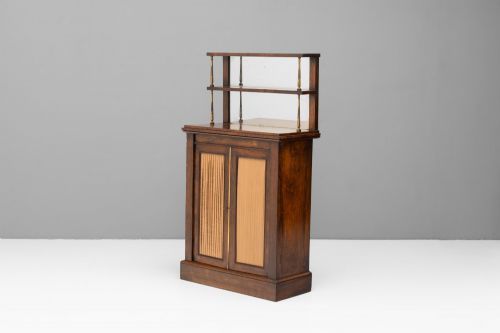
A victorian mirrored door cabinet encompasses a diverse group of nineteenth-century storage furniture, spanning credenzas, chiffoniers, sideboards, and wardrobes.
The pieces appearing on this page originate primarily from the Victorian and Edwardian eras, with dates clustering through the middle and late decades of the nineteenth century.
Makers and cabinetmakers of these periods utilised rich timbers such as burr walnut, mahogany, rosewood, and oak to construct foundational frames designed for display and storage.
Materials and construction
Cabinetmakers built foundational carcases from solid mahogany, oak, or walnut, and applied decorativeveneers such as burr walnut, figured walnut, and rosewood across prominent surfaces.
Many examples incorporate brass mounts, ormolu details, and marquetry inlay alongside bevelled or flat mirror glass set into doors and mirror-backs.
Construction techniques include serpentine fronts, adjustable glass shelving, and carved ornamentation characteristic of revival styles and the Aesthetic Movement.
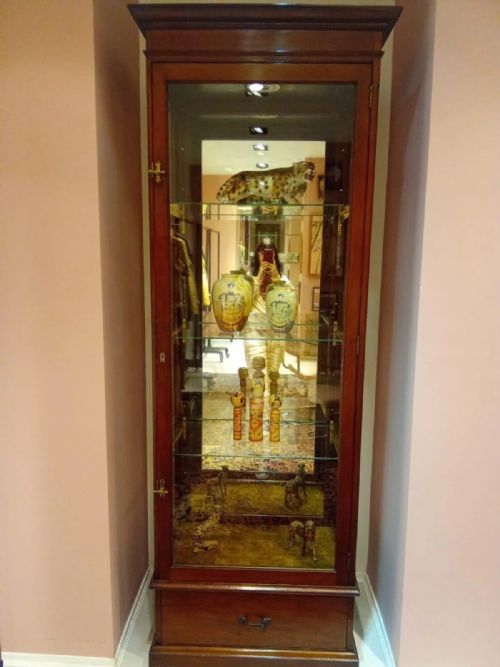
The object forms include credenzas, chiffoniers, wardrobes, and display cabinets with integrated mirror glass.
Assessing craftsmanship
Quality reveals itself in the selection of timber veneers, where heavily figured burr walnut or book-matched rosewood displays superior visual depth.
The precision of cabinet joinery, the weight of cast ormolu mounts, and the integration of mirror glass within the door framing distinguish workshop standards.
Gillows
The Victorian Mirrored Door Cabinet Glossary
- Credenza
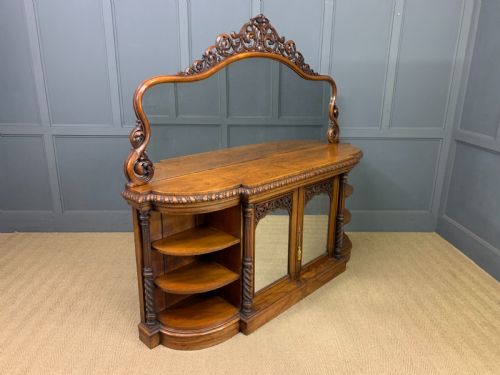
- A low cabinet or sideboard designed for display and storage, frequently featuring glazed or mirrored central doors flanked by curved compartments.
- Chiffonier
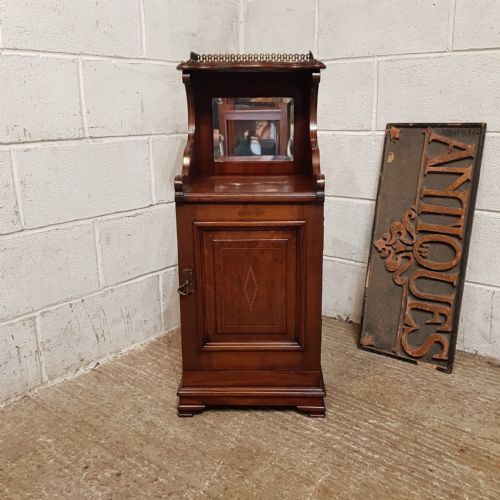
- A compact sideboard or cabinet developed in the nineteenth century, often equipped with a raised mirror-back or shelf superstructure.
- Ormolu
- Gilt bronze mounts applied to furniture woodwork for decorative accent, common on mid-nineteenth-century walnut pieces.
- Marquetry
- The art of applying decorative veneer pieces in wood to form intricate geometric or floral patterns across cabinet doors and surfaces.
Victorian Mirrored Door Cabinet: Frequently Asked Questions
What rooms suit a victorian mirrored door cabinet?
These cabinets work well in living rooms, dining spaces, and hallways where reflective glass panels help distribute natural light around the interior.
The substantial timber surfaces and fitted shelving provide practical storage for glassware, books, or tableware while maintaining a decorative presence.
How do I care for antique walnut and mahogany?
Keep wooden furniture away from direct sunlight and sudden temperature shifts to prevent the timber veneers from drying or splitting over time.
Apply a traditional wax polish occasionally and buff gently with a soft cloth to maintain the natural sheen of the polished surface.
How do I distinguish Victorian from Edwardian pieces?
Victorian cabinets often feature heavier carved details, darker timbers, and ornate ormolu mounts reflecting mid-to-late nineteenth-century revival tastes.
Edwardian examples tend to display lighter woods, simpler structural lines, and occasional influences from the Arts and Crafts or Aesthetic movements.
Were mirrors original to these nineteenth-century cabinets?
Mirrors integrated into door panels or backsplashes formed an integral part of the design for many nineteenth-century sideboards and credenzas.
Silvered glass of this period frequently exhibits minor age spots or oxidation, which serves as a helpful indicator of original manufacturing.