

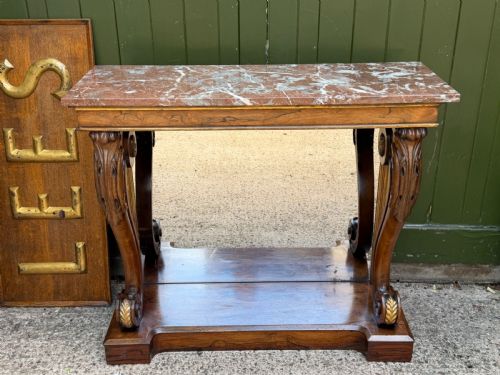


Mirrored Backing Side Table
These mirrored backing side table pieces combine polished timber frames with reflective glass panels to brighten dark corners, and you want one for its striking nineteenth-century presence.
Mirrored Backing Side Table
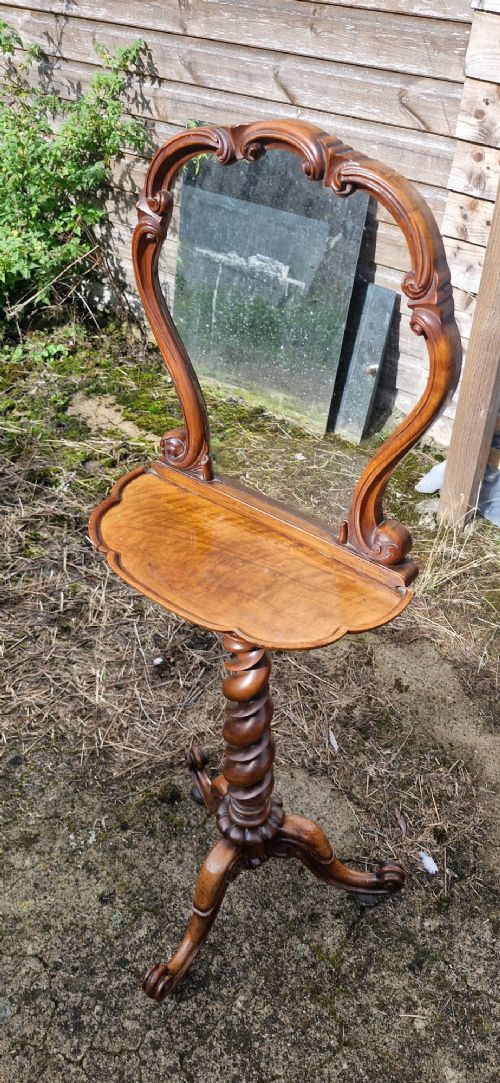
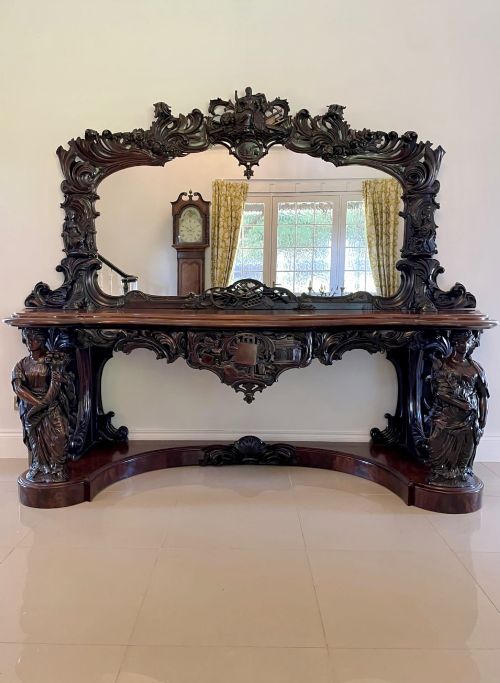
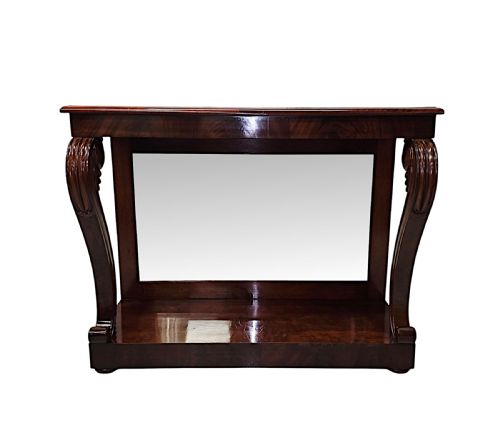
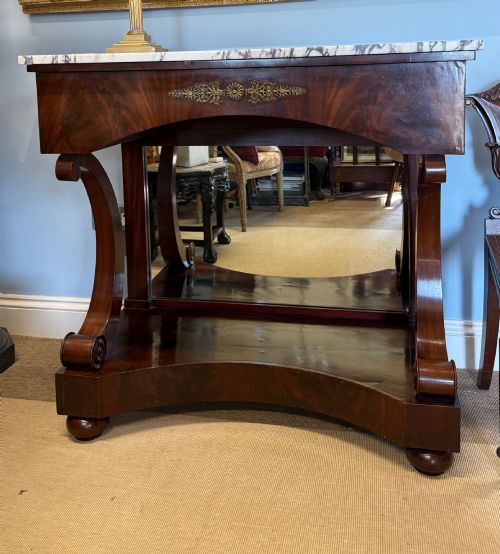
A mirrored backing side table brings together functional display surfaces and reflective glass panels to enhance light and space within a room. When you explore this selection of mirrored backing side table designs, you encounter nineteenth-century console tables, chiffoniers, and washstands originating from Regency, Victorian, and Edwardian periods.
The prevailing form on this page is the console table, frequently rendered in mahogany or rosewood with integrated marble tops and vertical mirror glass. Makers across these eras paired dark timbers with gilt details and reflective panels to create dramatic visual depth against a wall.
Materials and construction
Cabinetmakers utilised dense hardwoods such as mahogany and rosewood, often featuring figured veneers or parcel-gilt highlights. Heavy stone slabs of marble form the upper surfaces on numerous examples, supported by carved wooden frames.
Reflective surfaces utilise traditional mirror glass set into timber backings, sometimes framed by giltwood moulding. Brass accents and marquetry detailing appear across various pieces to complement the polished wood and stone.
Several pieces include secret compartments designed for letters, proving that nineteenth-century furniture makers understood the enduring appeal of a good hiding place.
Indicators of quality
The distinction between standard examples and exceptional pieces rests on the choice of timber and the depth of carving. Richly figured grain, crisp hand-carving on the wooden frames, and heavy, well-fitted marble tops denote superior craftsmanship.
Integration of the reflective glass within the wooden backing structure also separates the masterwork from simpler production. Original mercury or silvered glass with authentic ageing demonstrates higher period integrity than later replacements.
Gillingtons of Dublin·Pauly et Cie·Donald Ross
The Mirrored Backing Side Table Glossary
- Console table
- A table designed to be fixed against a wall, typically supported by front legs or brackets. These pieces often feature decorative mirror backs and marble tops.
- Chiffonier
- A low cabinet or sideboard developed in the nineteenth century, frequently incorporating shelves and mirrored backing. They served practical storage and display functions in formal rooms.
- Parcel-gilt
- Partially gilded with gold leaf or paint to highlight specific carved details on a wooden surface. This technique creates a contrast against dark rosewood or mahogany.
- Marquetry
- Decorative inlay work using various tinted woods to form pictorial patterns on furniture surfaces. Craftsmen applied this technique to top surfaces and borders.
- Giltwood
- Wood that has been coated with gold leaf or a gold-coloured finish. It appears on frames and decorative mouldings throughout the Regency and Victorian periods.
Mirrored Backing Side Table: Frequently Asked Questions
How do I care for the marble top?
Marble surfaces require gentle cleaning with a damp cloth and neutral soap, avoiding acidic substances like lemon or vinegar that can etch the polished stone.
Using coasters and placemats protects the porous material from staining and moisture rings, preserving the smooth historical finish.
What is the difference between Regency and Victorian styles?
Regency pieces tend to display classical restraint, drawing on ancient Greek and Roman motifs with clean lines, rosewood veneers, and subtle parcel-gilt detailing.
Victorian designs often embrace heavier proportions, exuberant carving, and revivalist influences such as Rococo revival, showcasing grander scales and darker polished mahogany.
Can I use a washstand as a side table?
Edwardian and Victorian washstands function effectively as side tables in modern interiors, providing a practical marble surface for lamps and decorative objects.
Their original splashbacks and integrated mirror glass adapt well to living spaces, offering the same light-enhancing qualities as dedicated console tables.