
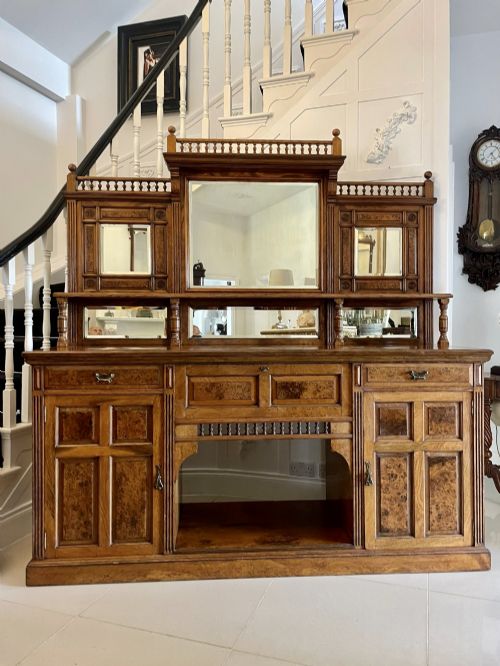
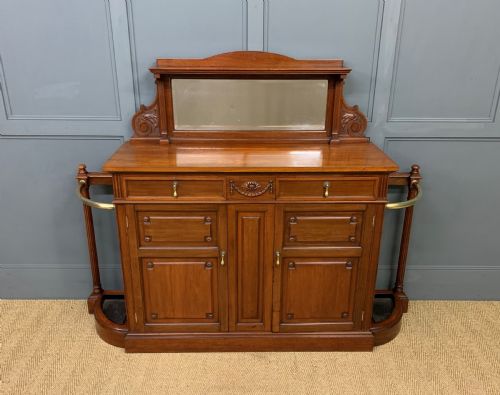
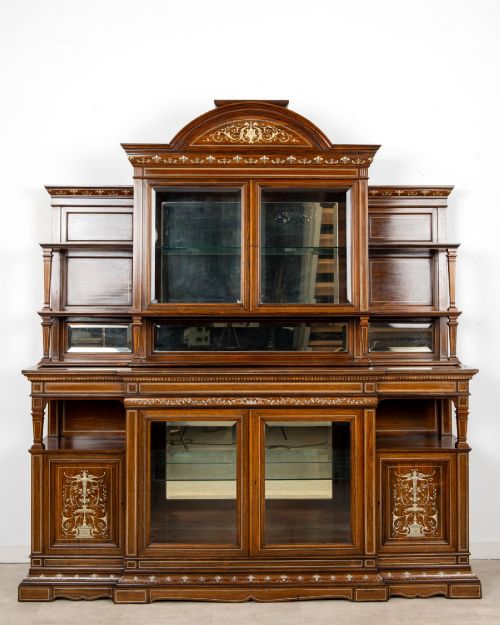
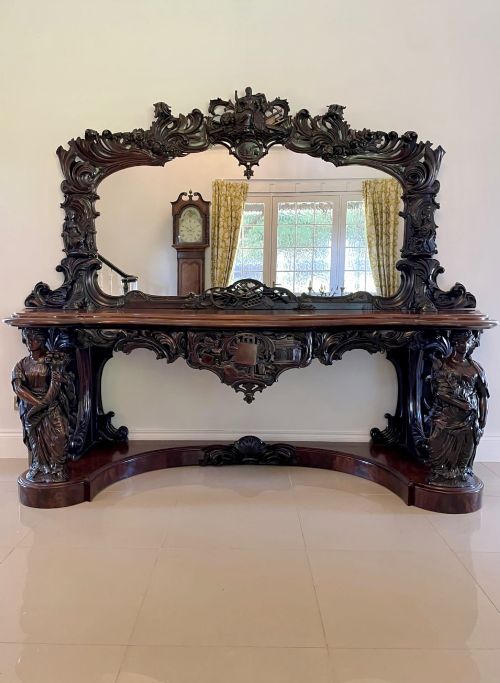
Mirrored Back Credenza
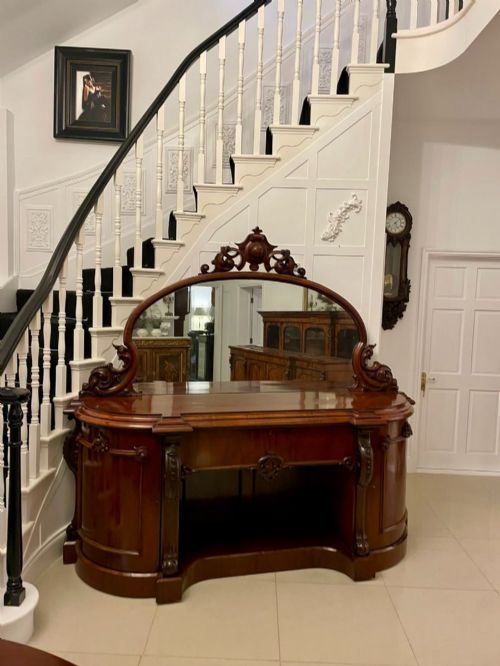
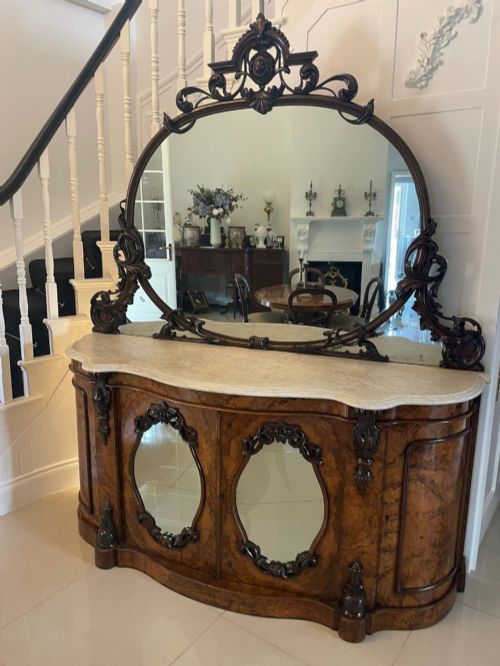
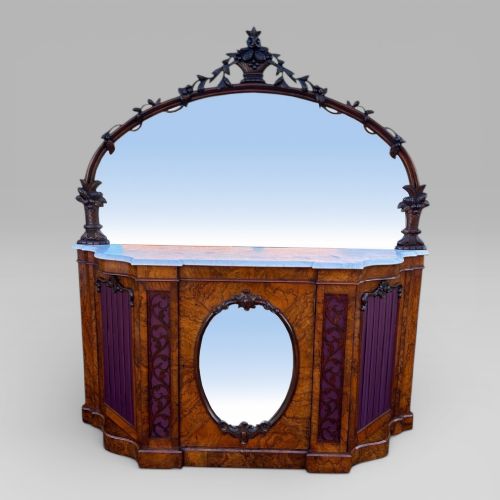
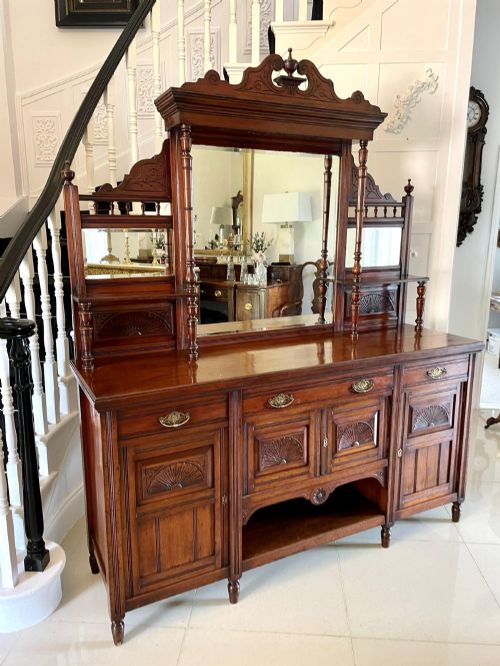
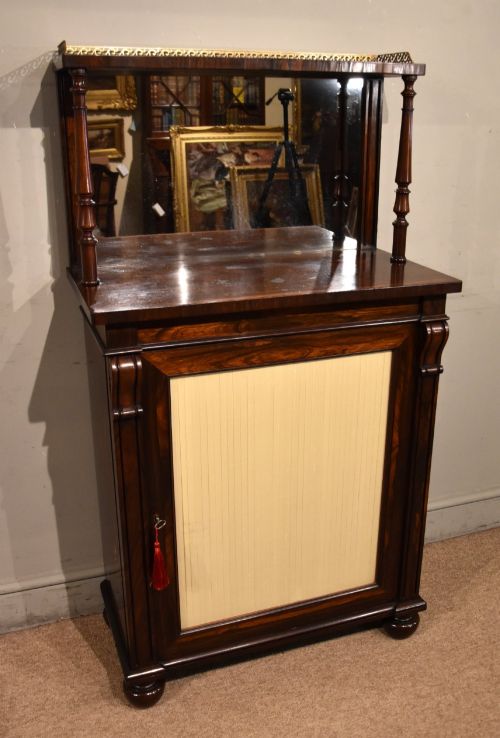
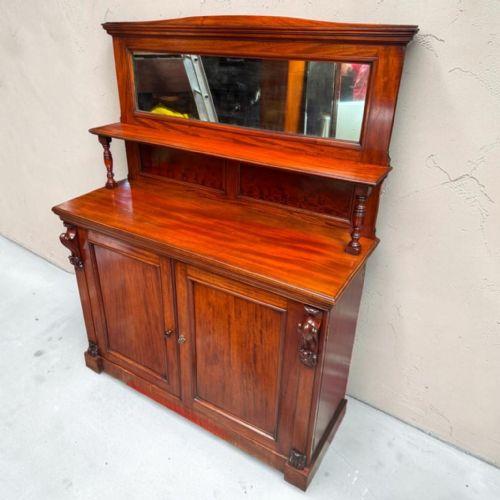
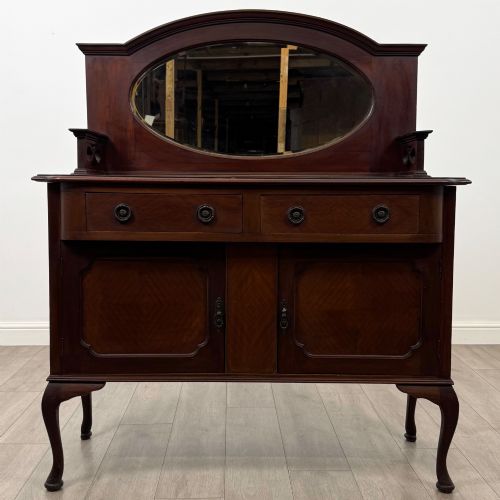
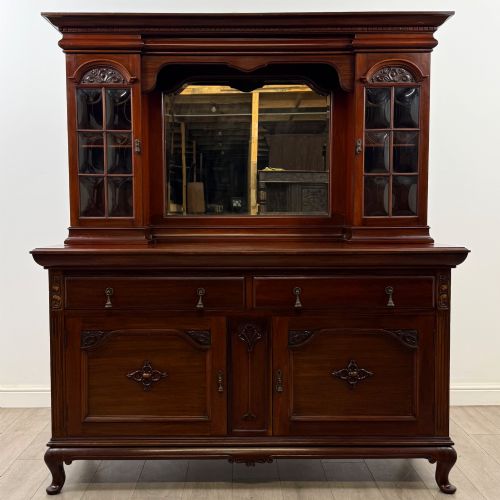
A mirrored back credenza brings deep nineteenth-century timber and reflective glass together to anchor a room with functional presence.

Mirrored Back Credenza
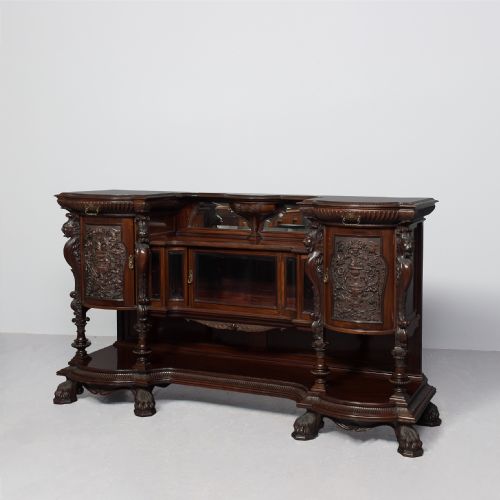
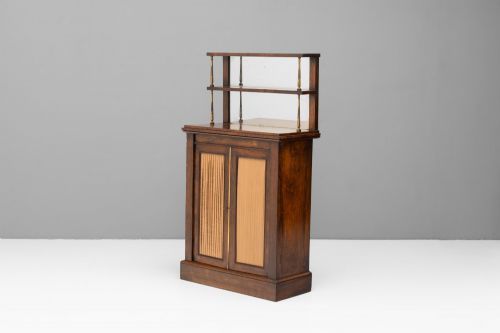
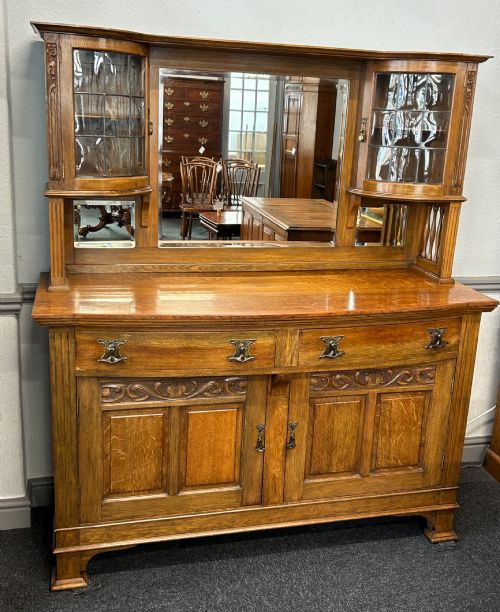
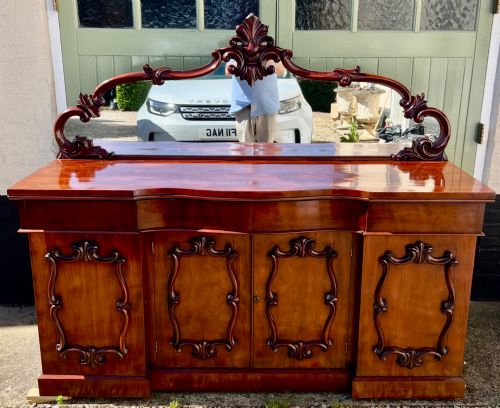
A mirrored back credenza stands as a substantial piece of furniture designed for storage and display, frequently incorporating a tall mirror set into the superstructure above a low timber base. These items emerge predominantly from the nineteenth century, spanning Victorian, Edwardian, and earlier Regency periods.
The most common versions met on this page combine figured hardwoods with carved ornament and shelved or panelled cupboards below. They function naturally in dining rooms and large hallways, reflecting light and surrounding interior details through their integrated glass panels.
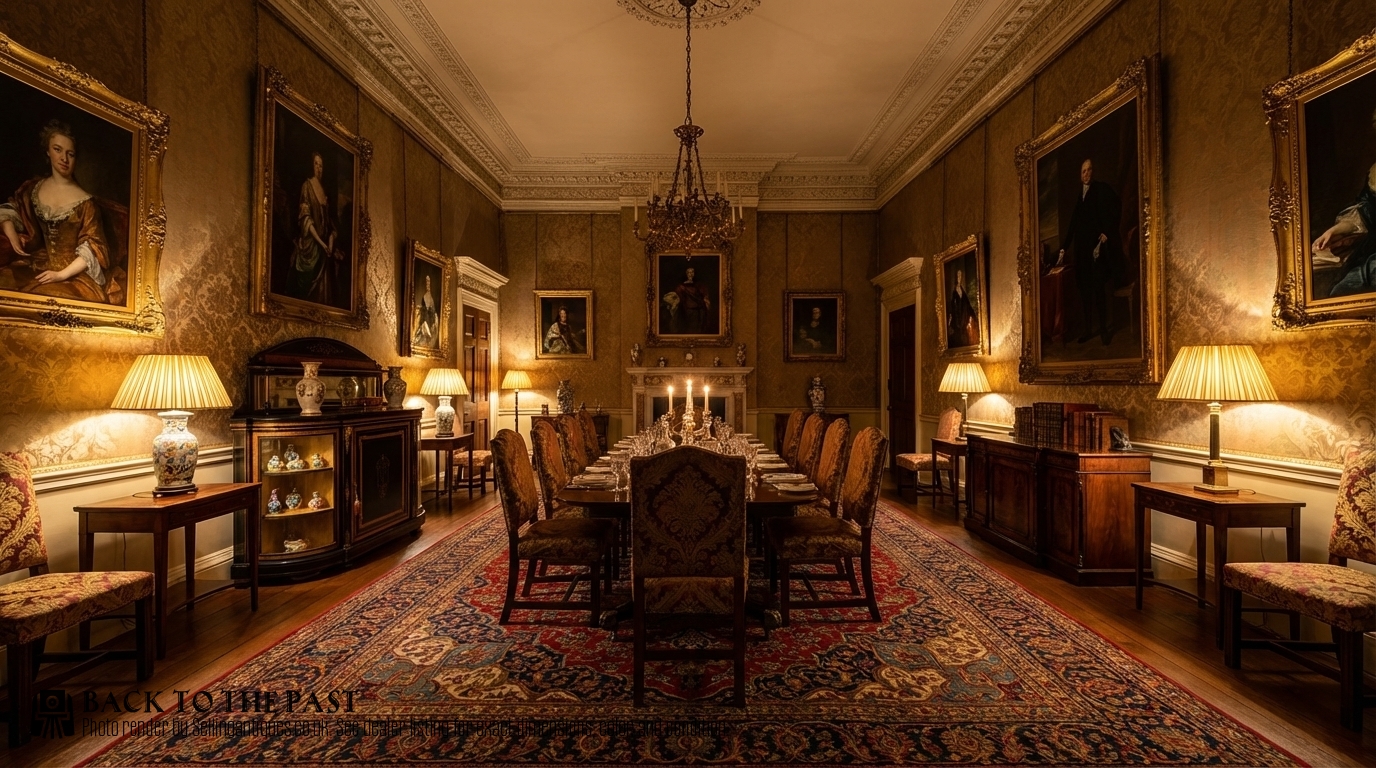
Materials and construction
Cabinetmakers constructed these pieces using dense foundational timbers such as mahogany, walnut, and oak, often applying decorative veneers like burr walnut, pollard oak, and rosewood to visible surfaces. Carved details, marquetry inlay, and brass hardware complete the primary structural elements.
Mirrored glass plates are fitted securely into carved wooden frames or backing boards, utilising traditional joinery methods such as dovetailing for drawers and mortise-and-tenon joints for frames to ensure stability across large sideboards and cabinets.
Mirrored Back Credenza Retail Price Guide 2026
Typical asking prices for mirrored back credenza among the pieces listed under this phrase on Sellingantiques today, from the lower quarter to the upper quarter. They describe what is for sale here now, not the wider market.
One exceptional piece incorporates burr yew and hails from the Aesthetic Movement, proving that even storage could dabble in unconventional timber choices.
Judging quality and execution
The distinction between standard production and top-tier pieces rests on the choice of timber veneers, the depth and crispness of hand-carved ornamentation, and the overall balance of proportion. Superior examples utilise richly figured burr walnut, pollard oak, or exhibition-grade mahogany with intricate marquetry.
Higher quality also shows in the weight and clarity of the mirror glass, the integration of marble tops where present, and the precision of the internal cabinetwork. Maker attribution further separates standard utility pieces from exhibition-standard commissions.
Shoolbred & Co.·Collinson & Lock·Pauly et Cie·Holland & Sons·Gillows
The Mirrored Back Credenza Glossary
- Credenza
- A low cabinet or sideboard designed for storage and display, often featuring a raised superstructure with a mirror. It serves as a traditional focal point in formal dining spaces.
- Chiffonier
- A compact low sideboard or side cabinet developed in the nineteenth century, frequently fitted with enclosed shelving and doors. It provides practical storage with a smaller footprint.
- Marquetry
- The art of applying decorative veneer pieces in wood, metal, or shell to form intricate geometric or floral patterns on furniture surfaces. This technique highlights skilled cabinetmaking.
- Pollard oak
- Oak timber taken from trees that have been pollarded, producing a dense, highly figured grain pattern with clustered knots. It appears frequently on nineteenth-century statement furniture.
- Superstructure
- The upper portion of a piece of furniture built above the main surface or counter, which in these pieces houses the mirror glass and display shelves.
Mirrored Back Credenza: Frequently Asked Questions
Where should I place a mirrored back credenza?
These large cabinets suit dining rooms, grand hallways, or spacious living areas where their reflective glass can bounce light around the room. Position them against a sturdy wall with sufficient clearance to appreciate their height and carved details.
Ensure the piece is anchored safely if placed in a busy traffic zone, and keep them away from direct, harsh sunlight to protect polished rosewood or mahogany finishes from fading over time.
How do I care for the timber and mirror glass?
Maintain the polished wood surfaces by dusting gently with a dry, soft cloth and applying a quality beeswax sparingly when the timber appears dry. Avoid using modern silicone sprays that can build up a residue on antique finishes.
Clean the mirror glass carefully with a mild glass cleaner applied to a cloth rather than sprayed directly onto the glass, preventing moisture from seeping behind the plate and damaging the silvered backing.
What is the difference between a sideboard and a credenza?
While both function as storage furniture, a credenza traditionally refers to a lower, more compact cabinet style, whereas sideboards often span a wider footprint with diverse cupboard and drawer arrangements. Pieces combining these terms frequently blur the lines through the addition of a mirrored superstructure.
Both forms developed significantly during the Victorian period, shifting from purely functional dining room server units into grand display pieces meant to showcase wealth and craftsmanship.
How can I tell a Victorian piece from an Edwardian one?
Victorian furniture, produced between 1837 and 1901, tends to feature heavier proportions, dark rich timbers like mahogany or burr walnut, and dense, elaborate hand-carvings. Pieces from this era often embrace revival styles or ornate Aesthetic Movement designs.
Edwardian pieces, dating from 1901 onwards, frequently display lighter oak construction, simpler Arts and Crafts influences, or refined inlaid decoration with a greater emphasis on domestic utility and airiness.