




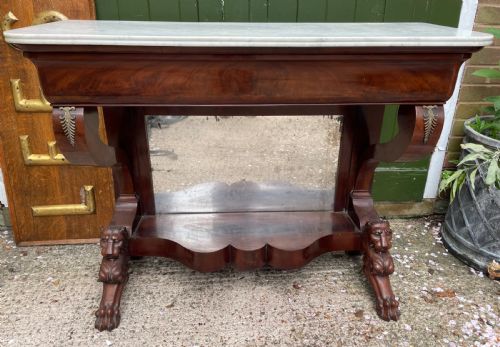

Mirrored Back Console
A mirrored back console brings depth and reflected light into a room, pairing timber frames with silvered glass plates.
Mirrored Back Console
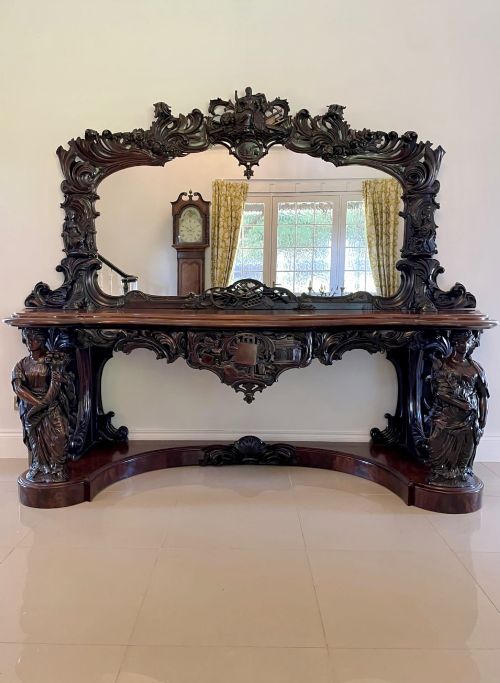
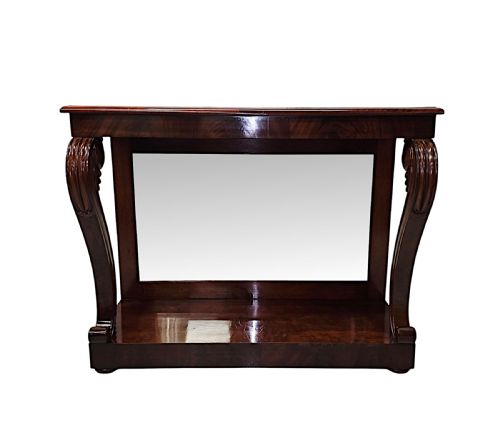
A mirrored back console sits flush against a wall, combining a heavy timber or gilt frame with an upright mirror plate reflecting the room. The pieces seen here span the nineteenth century through the Edwardian era, taking forms such as console tables, chiffoniers, washstands, sideboards and credenzas.
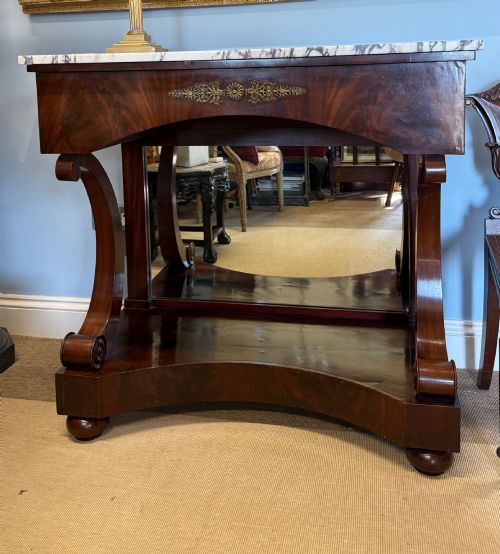
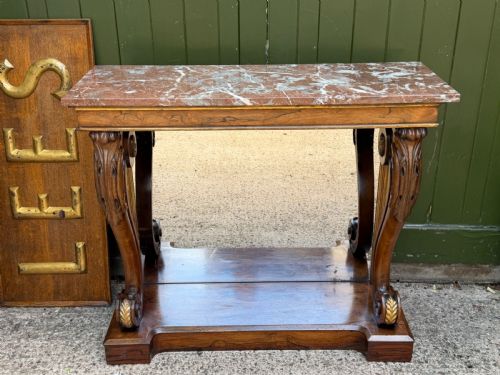
Regency, Victorian, William IV and French Empire styles dominate the selection, alongside Biedermeier and continental examples. Buyers meet mahogany and rosewood bodies most frequently, often paired with marble tops in white carrara or figured varieties.
Origin points range from British workshops to Irish commissions and French ateliers, showing regional preferences in timber selection and carving depth. The mirror glass itself forms an integral architectural component, placed behind the console surface to bounce light through the interior.
Materials and Construction
Cabinetmakers built these consoles using dense hardwoods like mahogany, rosewood and walnut, frequently applying flame veneers or marquetry to catch the eye. Structural integrity relied on solid timber carcases supporting heavy stone slabs without warping.
Marble tops provided a durable, cool surface for display, bedded directly onto the wooden frame. Gilding and parcel-gilt details added metallic contrast to the dark wood grains, while silvered mirror glass was held securely within wooden rebates at the rear.
Mirrored Back Console Retail Price Guide 2026
Typical asking prices for mirrored back console among the pieces listed under this phrase on Sellingantiques today, from the lower quarter to the upper quarter. They describe what is for sale here now, not the wider market.
French Empire and Regency designs form the primary stylistic influences in this category.
Judging Quality
The distinction between ordinary and exceptional pieces lies in the choice of timber and the ambition of the carving. Figured mahogany, rich rosewood veneers and crisp, hand-carved giltwood elevate a piece far above simple utility.
Proportion and the integration of the mirror plate dictate success. The relationship between the weight of the marble top, the bulk of the timber base and the clarity of the silvered glass determines whether a console holds a room with authority.
Gillingtons of Dublin·Pauly et Cie·Donald Ross
The Mirrored Back Console Glossary
- Console table
- A table designed to stand against a wall, traditionally fixed with brackets or resting on front legs. It provides a narrow surface for display without encroaching into the floor space.
- Marble top
- A polished stone slab fitted to the upper surface of a cabinet or table. It offers a smooth, cool finish resistant to liquid and heat.
- Parcel-gilt
- Woodwork partially decorated with thin leaf gold applied to specific carved details. This technique highlights mouldings and decorative motifs against a dark timber ground.
- Giltwood
- Timber carved and coated with gold leaf over a prepared gesso ground. It produces a rich, reflective surface common in classical revival frames.
- Figured mahogany
- Timber cut from specific sections of the mahogany tree showing distinct grain patterns like flame or fiddleback. It was prized for decorative cabinet fronts.
- Chiffonier
- A low cabinet featuring shelving or a mirror superstructure. It serves a similar function to a sideboard in domestic interiors.
Mirrored Back Console: Frequently Asked Questions
What is a mirrored back console?
A mirrored back console is a wall-mounted or freestanding table featuring an attached upright mirror that reflects light and objects placed upon the surface.
These pieces served functional and decorative roles in nineteenth-century interiors, often placed in hallways or reception rooms to create an illusion of space.
How were marble tops used?
Marble tops provided a robust and waterproof surface suitable for serving drinks or holding heavy decorative ornaments.
Craftsmen selected slabs of carrara or coloured marble to contrast with dark timbers like mahogany and rosewood.
How do I identify Regency style?
Regency design draws heavily on classical Greek, Roman and Egyptian motifs, favouring clean architectural lines and rich dark woods.
Details often include brass inlay, reeded legs and parcel-gilt enrichments that give the furniture a disciplined, formal elegance.
Where should I place a console?
These tables suit narrow entrance halls, living rooms or dining spaces where floor area is restricted.
The reflective back helps brighten darker corners by bouncing ambient light around the room.