



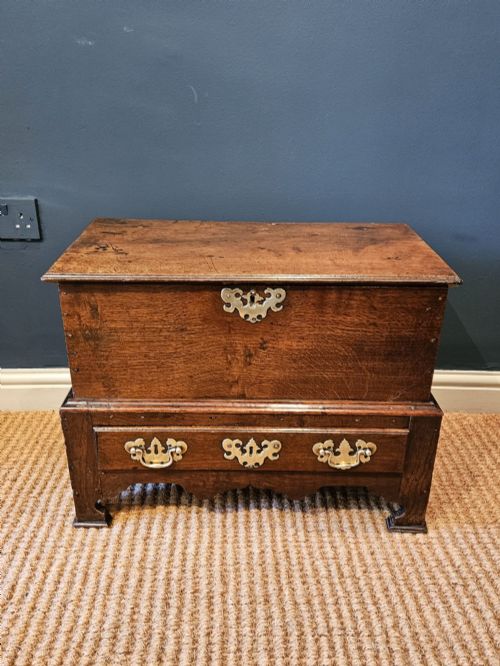
Miniature Storage Box
A miniature storage box gathers centuries of small-scale craftsmanship, from Welsh coffer bachs to tabletop collectors cabinets built to hold precious items.
Miniature Storage Box
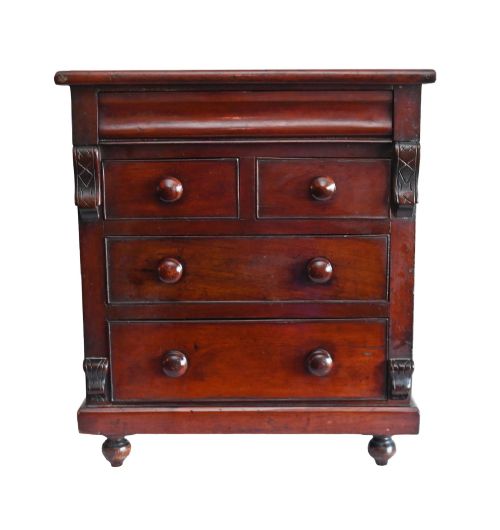
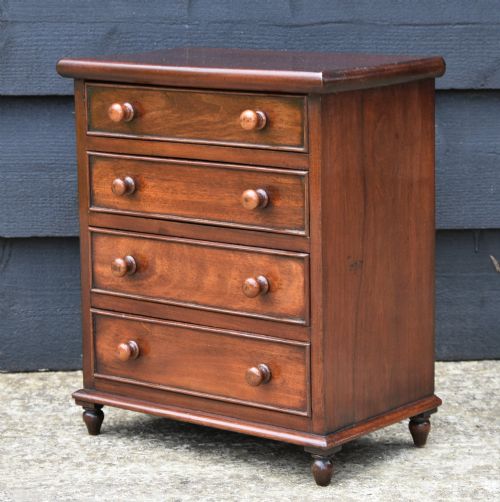
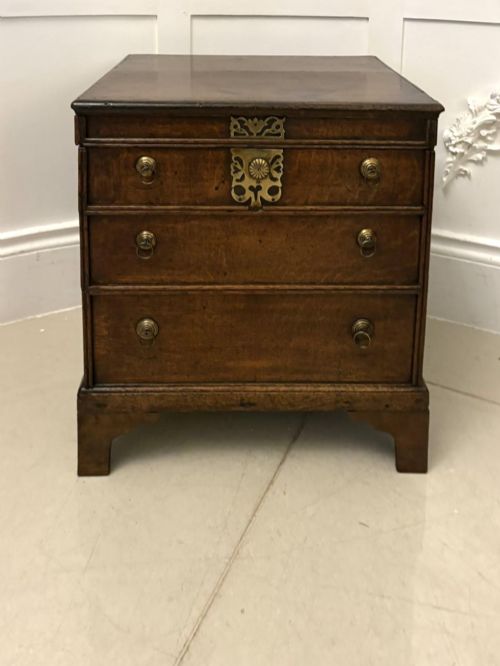
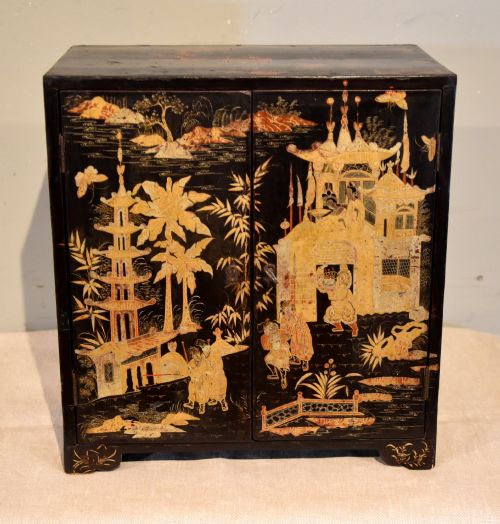
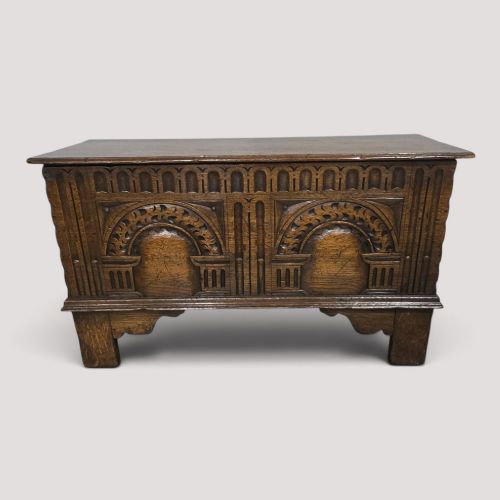
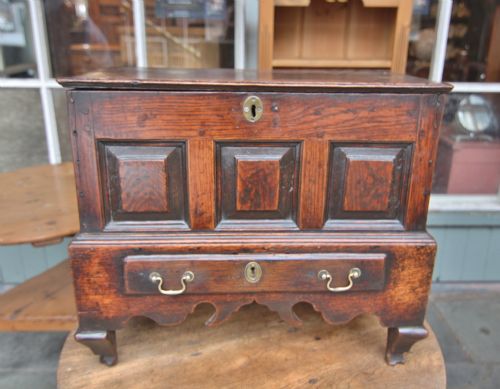
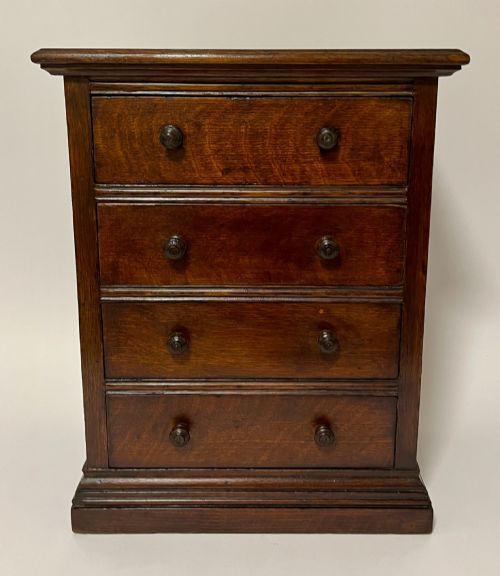
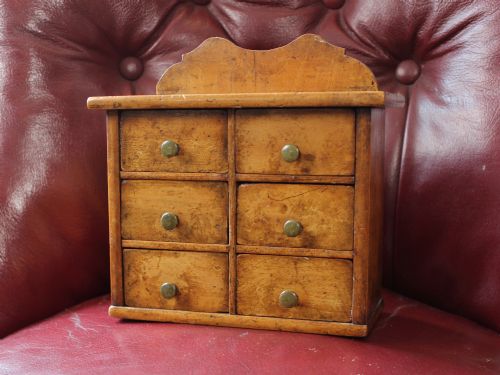
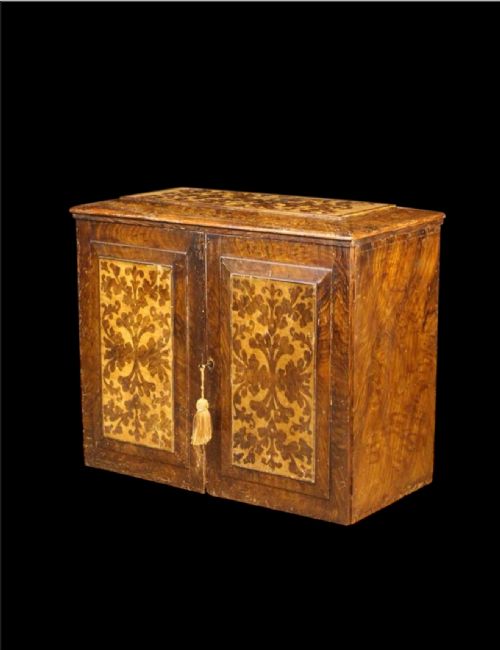
A miniature storage box encompasses small chests, tabletop cabinets, spice drawers, and coffer bachs designed to hold small valuables, specimens, or documents. These diminutive pieces mirror the construction and proportions of full-sized furniture scaled down for domestic use or workshop storage.
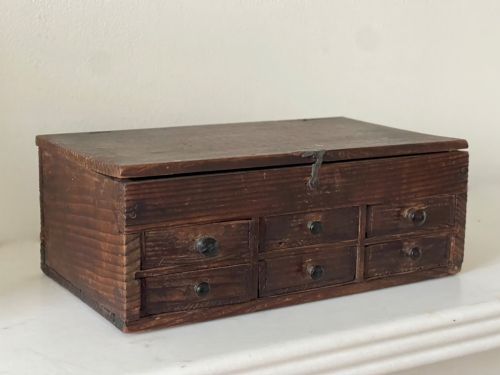
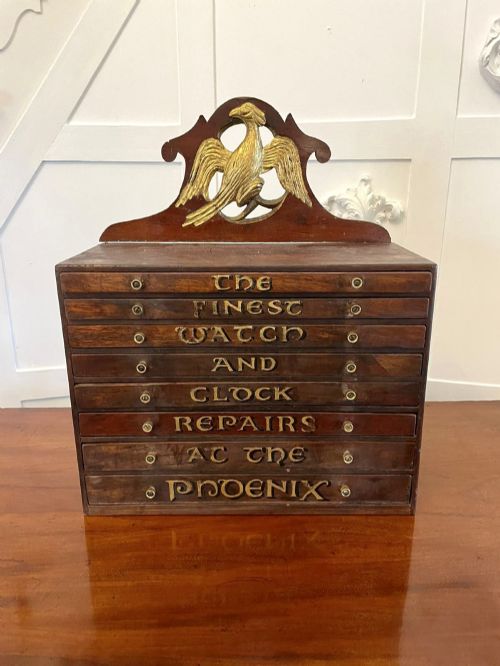
The versions most commonly met on this page span the eighteenth and nineteenth centuries, originating from English, Welsh, and continental workshops. Oak, mahogany, and pine form the backbone of these pieces, appearing as miniature chests of drawers, watchmakers boxes, and tabletop cupboards.
Regional vernacular pieces, particularly Welsh coffer bachs and elm spice drawers, sit alongside formal mahogany apprentice pieces and Victorian collectors cabinets. Each category serves a specific domestic or trade purpose, translating large furniture forms into compact tabletop companions.
How they were made
Makers utilised solid native timbers including oak, elm, fruitwood, and pine alongside imported hardwoods such as mahogany and teak. Joinery methods relied on traditional dovetailing for drawers and mortise and tenon joints for structural frames, ensuring small boxes withstood daily use.
Iron and brass hardware provided hinges, escutcheons, and drawer pulls, often cast by hand on earlier pieces. Surfaces received wax or oil finishes that brought out the grain of the wood without heavy modern varnishes.
Miniature Storage Box Retail Price Guide 2026
Typical asking prices for miniature storage box among the pieces listed under this phrase on Sellingantiques today, from the lower quarter to the upper quarter. They describe what is for sale here now, not the wider market.
Listings span periods from the seventeenth century through the Victorian era, executed in oak, mahogany, elm, fruitwood, and pine.
What varies in quality
The refinement of the timber selection and the precision of the joinery dictate the standing of a piece. Finer examples display carefully chosen grain patterns, hand-cut dovetails that remain tight, and secondary timbers appropriate to the declared origin.
Proportion and execution separate utilitarian workshop boxes from presentation pieces. Superior items maintain architectural harmony in miniature, while lesser examples exhibit heavy-handed proportions or unsympathetic later replacements to hardware.
The Miniature Storage Box Glossary
- Coffer bach
- A small Welsh oak chest raised on feet or drawers, traditionally given as a wedding gift to hold valuables and linens. These miniature chests reflect regional vernacular furniture traditions.
- Apprentice piece
- A small-scale item demonstrating the skill required for a tradesman to join a guild. These miniature chests of drawers display the full joinery techniques of standard furniture.
- Spice drawer
- A set of small drawers built into a frame for culinary herbs and resins. Wall-hanging or tabletop versions kept ingredients secure in domestic kitchens.
- Collectors cabinet
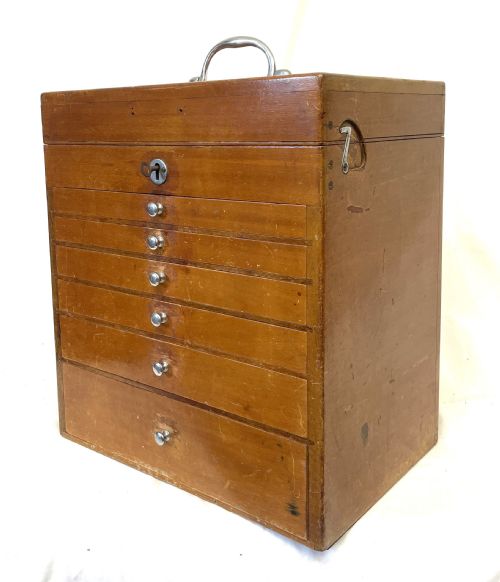
- A multi-drawer housing unit for natural history specimens, coins, or microscope slides. These pieces feature numerous shallow drawers designed for organised classification.
Miniature Storage Box: Frequently Asked Questions
What was a coffer bach used for?
A coffer bach served as a portable strongbox for family documents, jewellery, and wedding mementos in Welsh households. Families kept these small chests on tables or large dressers.
Their sturdy oak construction protected contents from dampness and theft while remaining easy to move around the home.
Are apprentice pieces actually made by apprentices?
Traditional apprentice pieces represent the qualifying test a young woodworker undertook before joining a trade guild. They demonstrated mastery of dovetailing, drawer fitting, and turned elements.
Many small chests and miniature pieces carrying this label reflect the exacting standards demanded by master craftsmen.
How do I distinguish regional styles?
Regional pieces often rely on local timbers like Welsh oak or Scottish mahogany, showing distinct vernacular joinery methods. Cabinetmakers incorporated regional construction traits that differ from London workshop norms.
Examining the secondary woods inside drawers helps confirm where a box or small cabinet originated.
Where should I place a table top cabinet?
Tabletop cabinets suit sideboards, desks, and chest tops where their small footprint does not crowd the room. They provide functional storage for modern desk accessories or small collections.
Keeping them away from direct heat sources protects the timber and historic finishes from drying out.