

Miniature Silhouette Portrait
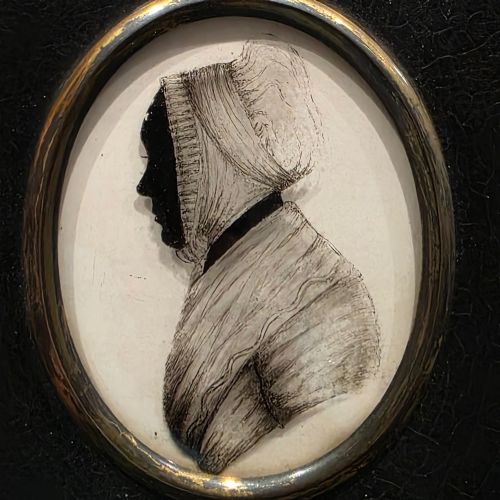
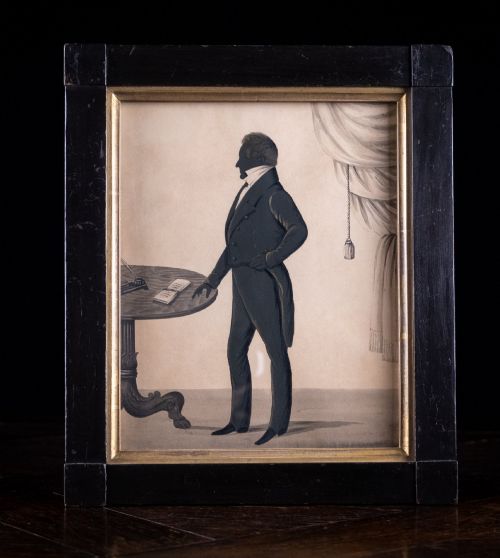
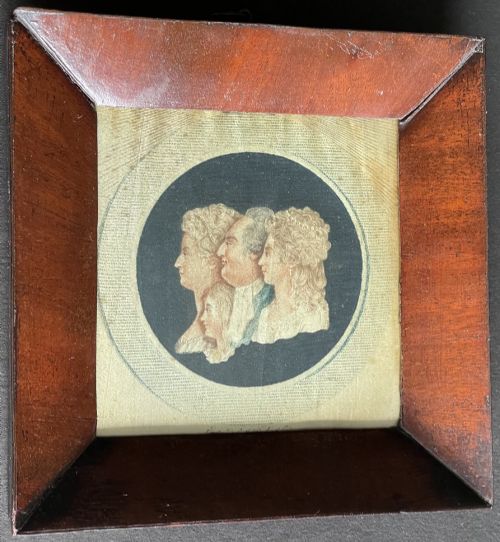
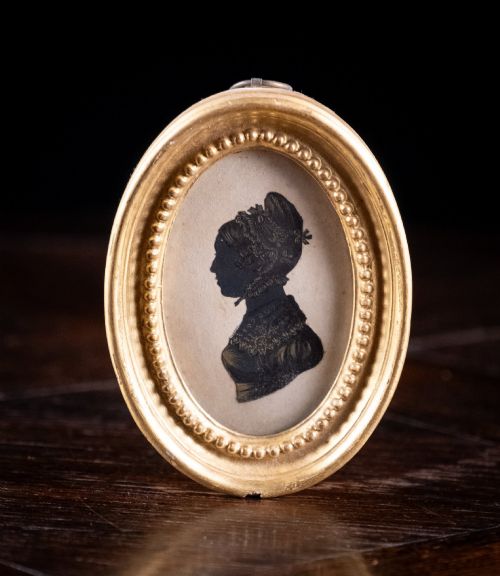
These miniature silhouette portraits capture individual likenesses through precise profile work, offering an intimate window into Georgian and Victorian lives.
Miniature Silhouette Portrait
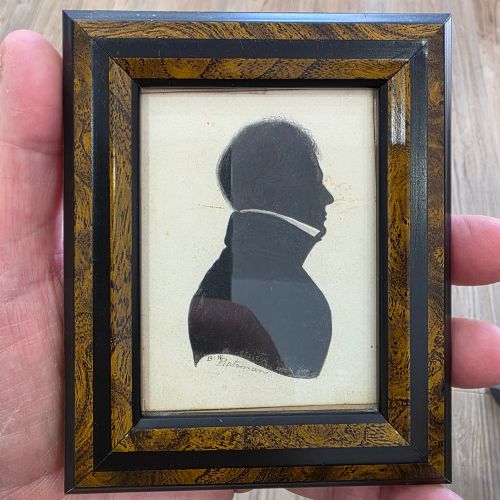
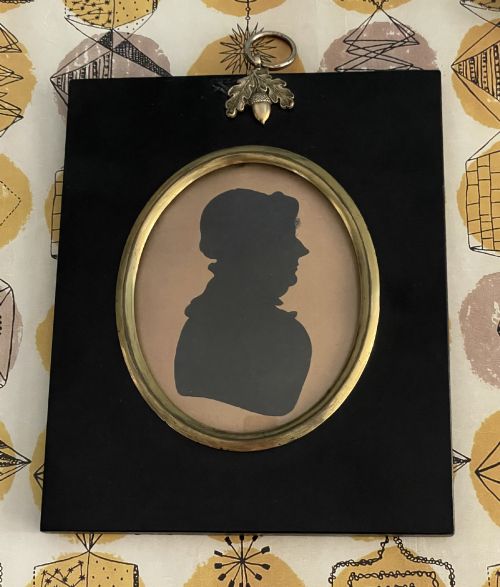
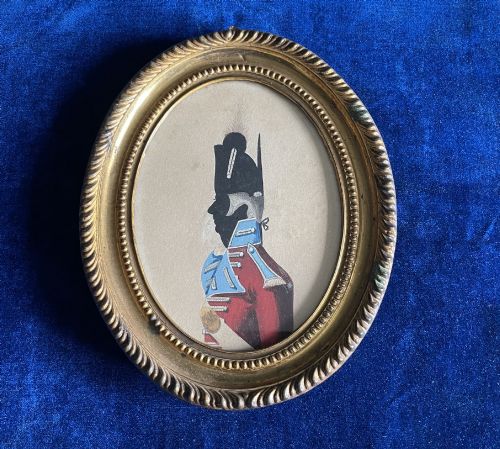
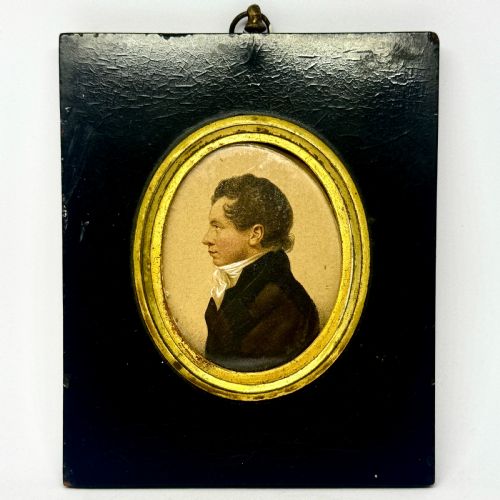
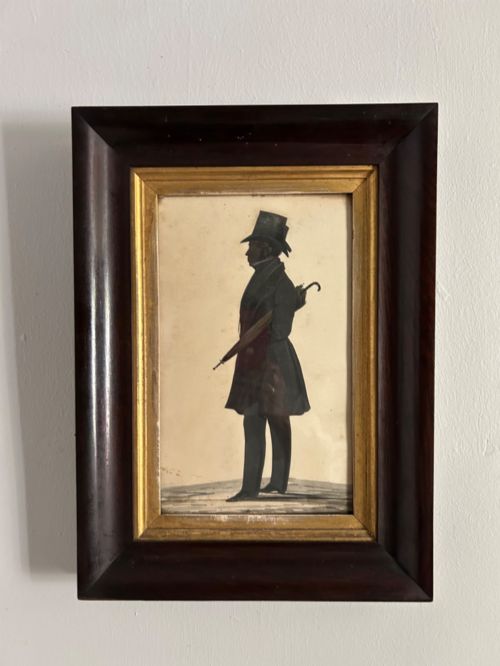
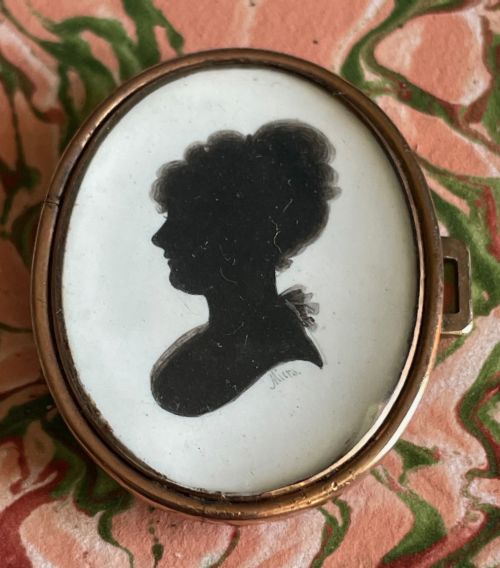
A miniature silhouette portrait presents a profile likeness of a sitter, most commonly encountered here from the Georgian, Regency, and Victorian periods. These pieces appear as framed wall art, delicate jewellery items, and small portrait miniatures.
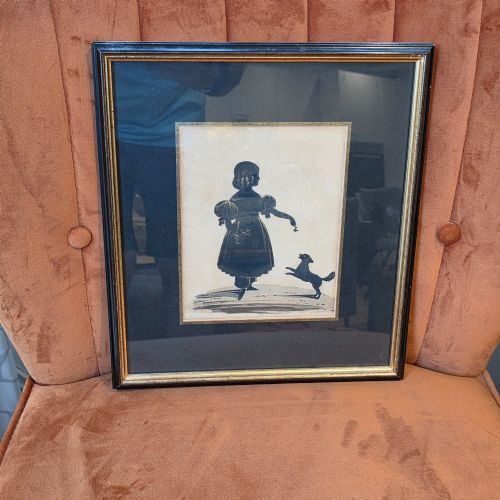
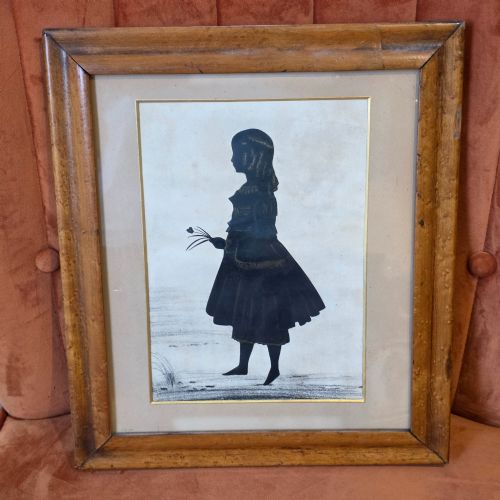
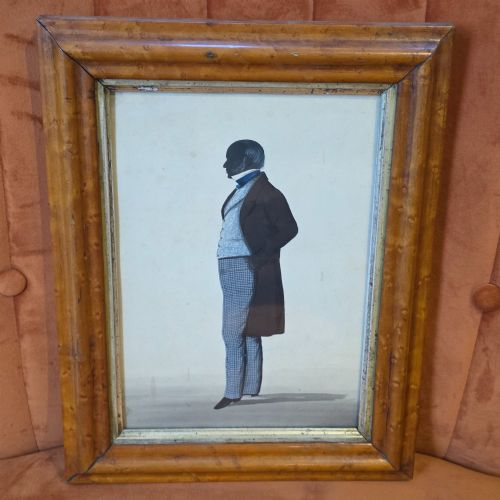
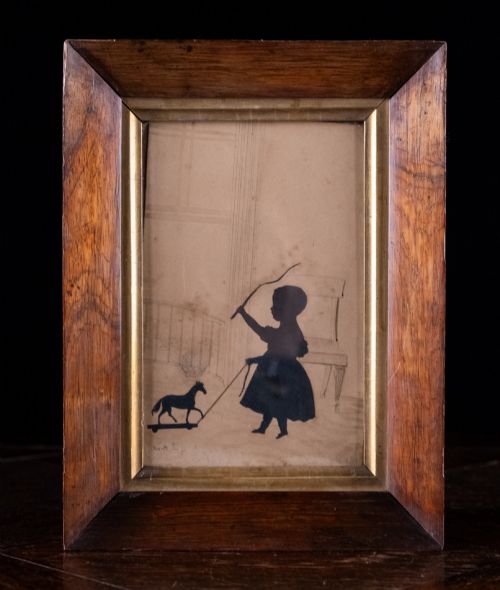
The subjects range from gentlemen and ladies in period attire to children and family pets, often mounted in ebonised wood or rosewood frames. Such works trace personal histories through profile imagery produced across the eighteenth and nineteenth centuries.
Materials and technique
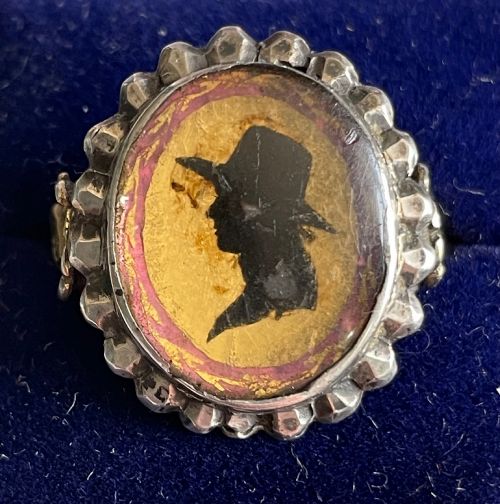
Craftsmen utilised cut paper, ink, and watercolour, frequently mounting the profile against a contrasting background or applying reverse painting on glass known as verre églomisé. Gilded highlights in gold leaf add fine detail to collars, bonnets, and clothing.
Several silhouettes record family pets alongside their owners, capturing beloved dogs sharing the portrait frame.
What separates the work
Quality rests in the precision of the cutting or brushwork, where confident lines capture the exact contours of a sitter's facial profile without hesitation. The subtlety of the gilded highlights and the crispness of the painted details elevate certain examples above standard output.
The choice of housing matters equally, with original frames, convex glass, and well-preserved reverse-painted panels contributing to the integrity of the piece. Provenance and legible signatures from recognised profileists separate notable studio work from anonymous output.
William James Hubard·Augustin Edouart·John Miers·J. Deacon
The Miniature Silhouette Portrait Glossary
- Verre églomisé
- A method of applying cold painting and gold leaf to the reverse side of glass. This technique protects the delicate pigment and creates a reflective background for the profile.
- Ebonised wood
- Timber treated to resemble ebony, providing a dark contrast. It forms the classic black framing material seen on many profile portraits.
- Convex glass
- Curved glass fitted over the portrait. It adds depth and protects the surface of the paper or painted ground.
- Bust portrait
- A representation of a person showing only the head and shoulders. This format forms the majority of profile likenesses.
- Profile
- A side view of a human head or figure. It is the defining feature of these silhouette works.
Miniature Silhouette Portrait: Frequently Asked Questions
How were miniature silhouettes displayed?
These portraits hung on walls in small wooden frames or were worn close to the body as jewellery pieces, including rings, brooches, and pendants. The compact scale allowed sitters to carry likenesses of family members during travel.
Framed versions often grouped multiple family members together in parlours, while pendant forms served as personal tokens of affection.
What materials make up these portraits?
Makers relied on cut paper, dark ink, and watercolour applied to paper, plaster, or glass. Frames typically consisted of ebonised wood, rosewood, or burr walnut, sometimes fitted with brass bezels.
Gold leaf was frequently added to highlight clothing details, buttons, and jewellery on the dark profiles.
How do I date a silhouette?
Stylistic cues in the clothing, hairstyles, and headwear provide the clearest indication of date, matching the fashions of the Georgian, Regency, or Victorian eras. High collars, bonnets, and turban caps help narrow down the decade.
Backings, frame types, and occasional handwritten inscriptions or dates verso offer further chronological evidence.
Are silhouettes painted or cut?
Both methods were common, with some artists cutting profiles directly from black paper and others painting the likeness in black pigment onto glass, plaster, or card. Many examples combine cut paper silhouettes with delicate watercolor and gilded embellishments.
Reverse painting on glass creates a distinctive glossy finish that differentiates it from matte cut paper.