



Miniature Oak Chair
These miniature oak chair examples are small-scale vernacular seats offering considerable charm and fine craftsmanship for the collector.
Miniature Oak Chair
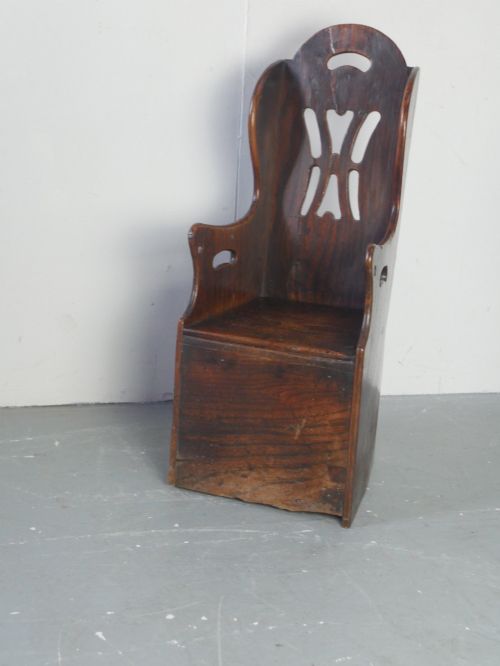
A miniature oak chair is a small-scale seating form produced across the eighteenth, nineteenth, and early twentieth centuries. These objects frequently served as children's furniture, master pieces for apprenticeship evaluation, or ornamental parlour models.
The versions most commonly met on this page originate from English country traditions and encompass various regional forms. They mirror full-size domestic seating while retaining compact proportions suitable for display or domestic use.
Makers drew upon established vernacular styles such as Windsor, stickback, and wainscot designs. Surviving examples demonstrate how cabinetmakers applied full-scale joinery techniques to diminutive dimensions.
How they were made
Makers relied on solid timber construction utilising oak, often supplemented by elm, ash, or beech for structural components. Joinery methods included traditional mortise and tenon joints alongside steam-bent elements for Windsor bows and stickback frameworks.
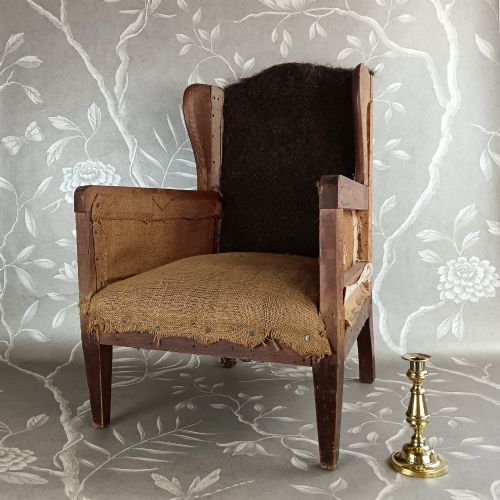
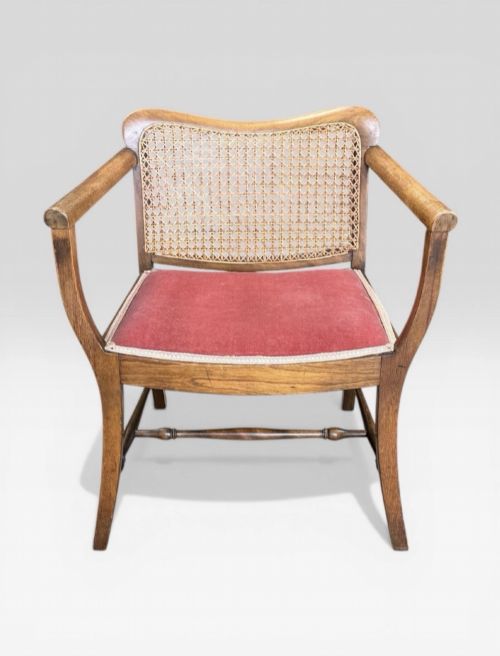
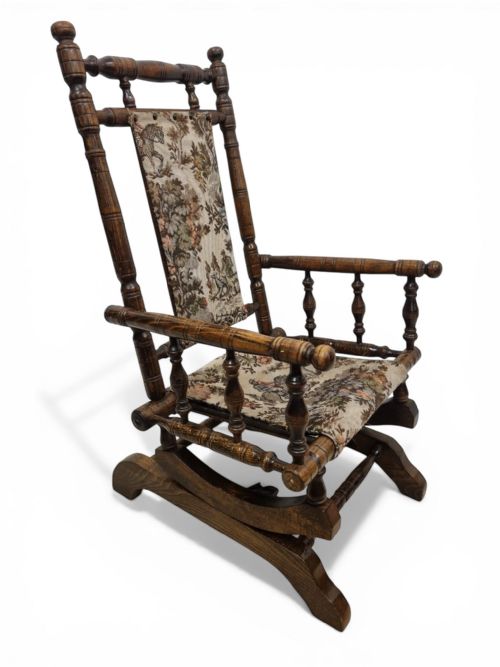
Secondary materials such as rush, cane, and hessian appear in seat construction alongside solid wood panels and tapestry upholstery. These diverse materials reflect regional availability and the specific functional requirements of each miniature form.
Some miniature chairs feature tiny crinoline stretchers built purely to keep small wooden legs from wobbling.
What varies in quality
Quality rests primarily on the fidelity of proportion and the integrity of the original construction. Pieces that maintain correct scale relative to their full-size prototypes demonstrate superior workshop competence.
The choice of timber grain and the finesse of hand-carved details elevate certain examples above utility items. Original surface patination and minimal structural intervention distinguish finer historical survivals.
James Shoolbred
The Miniature Oak Chair Glossary
- Wainscot armchair
- A heavy wooden chair constructed with panelled back and solid arms, appearing in miniature form during the eighteenth and nineteenth centuries. This term denotes a sturdy, box-like frame derived from vernacular domestic interiors.
- Windsor chair
- A seat featuring spindles inserted into a solid wooden seat block, frequently built with a bentwood bow or stickback. These chairs demonstrate notable structural ingenuity on a reduced scale.
- Bergere chair
- An enclosed upholstered armchair featuring woven cane panels on the back and sides. This French-influenced style translates into compact domestic pieces.
- Apprentice piece
- An exemplary miniature object created by a trainee craftsman to demonstrate mastery of joinery and carving skills before guild admission. Such items often display exceptional detail.
- Crinoline stretcher
- A curved under-frame linking the legs of a Windsor chair to provide rigidity and lateral strength. This feature occurs frequently on eighteenth and nineteenth-century examples.
Miniature Oak Chair: Frequently Asked Questions
Were these chairs made for children?
Many of these pieces served as functional seating for children within well-to-do households during the eighteenth and nineteenth centuries. Their sturdy timber construction accommodated actual daily use.
Other examples functioned as apprentice pieces or salesman samples rather than nursery furniture. Scale and structural wear often indicate the intended original purpose.
How do I date a miniature oak chair?
Dating relies on examining construction methods, tool marks, and stylistic indicators borrowed from full-size domestic furniture. Eighteenth-century models often show hand-riven timber and pegged joinery.
Later nineteenth and twentieth-century examples incorporate machine-sawn components and different fastening techniques. Comparing the piece to dated historical prototypes clarifies its period of origin.
Where should I place these in my home?
These compact seats suit display on sideboards, low tables, or within dedicated cabinet shelving where their proportions remain visible. Their small footprint allows integration into most interior spaces.
Placing them away from direct heat sources and strong sunlight protects the antique timber and natural seating materials like rush or cane.
Are rush and cane seats original?
Original woven seating materials survive on certain pieces, though many historical examples underwent re-weaving during their lifespan. Close inspection of the cordage or cane reveals whether the material matches the age of the wooden frame.
Replacements executed in traditional methods maintain the structural integrity and aesthetic value of the object for modern collectors.