
Miniature Desktop Drawers
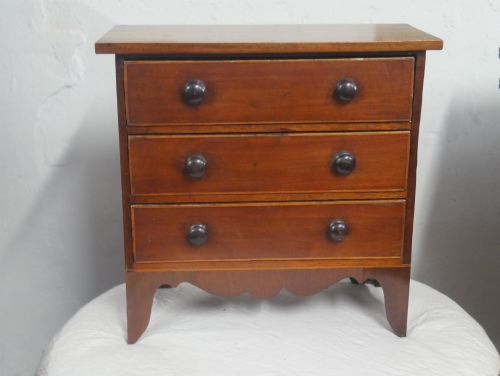
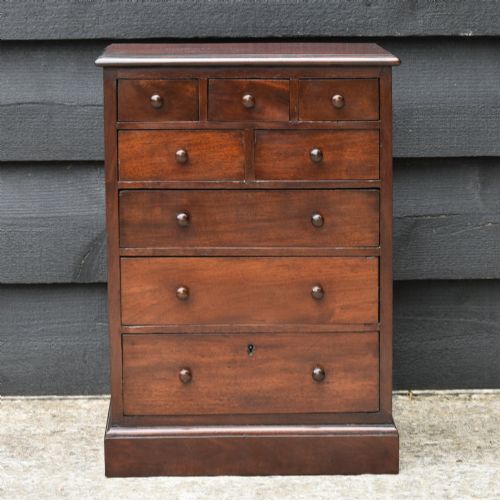
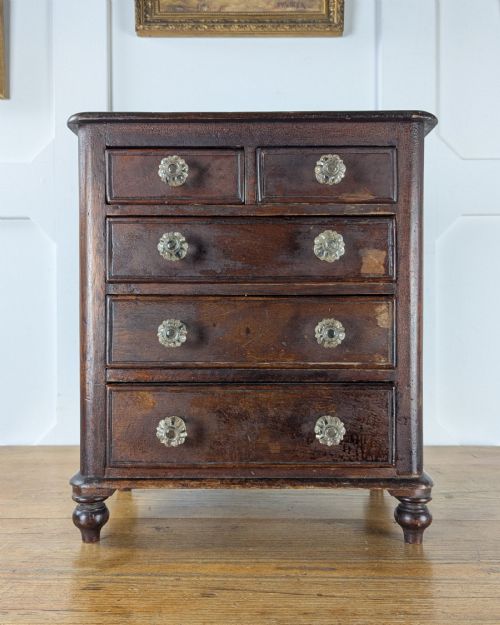
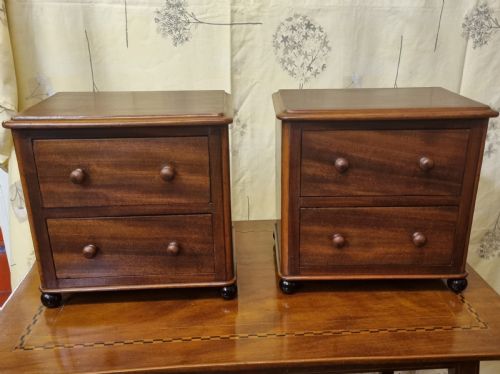
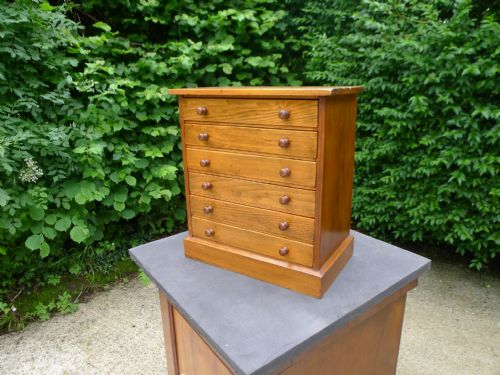
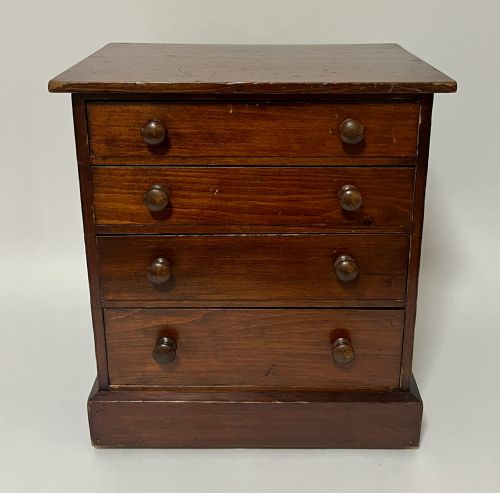
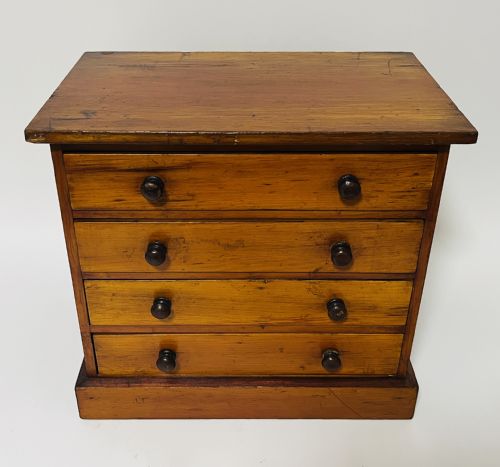
Miniature desktop drawers are compact storage pieces designed for small valuables, and the Victorian mahogany chests dominate this selection.
Miniature Desktop Drawers
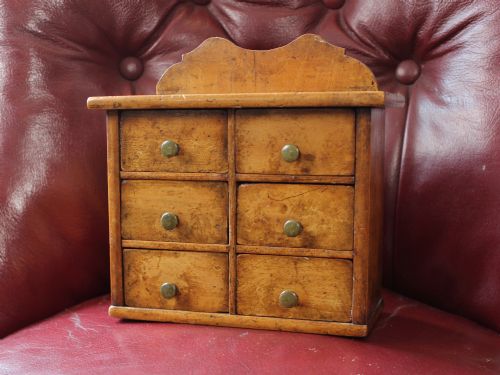
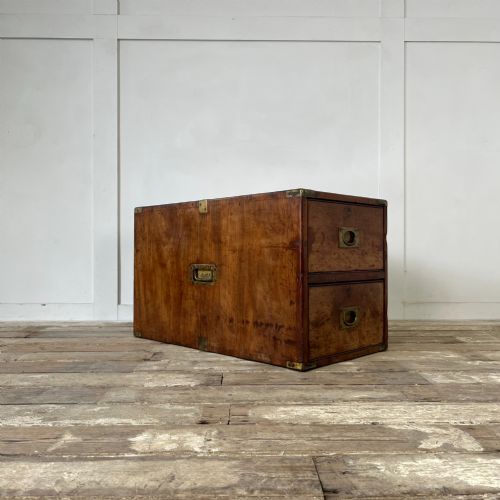
Miniature desktop drawers appear across the eighteenth, nineteenth, and early twentieth centuries in forms such as apprentice chests, collector cabinets, and spice drawers. These compact pieces served as desk accessories for sorting letters, specimens, or trinkets while mirroring the full-scale cabinetmaking of their respective eras.
Materials and Technique
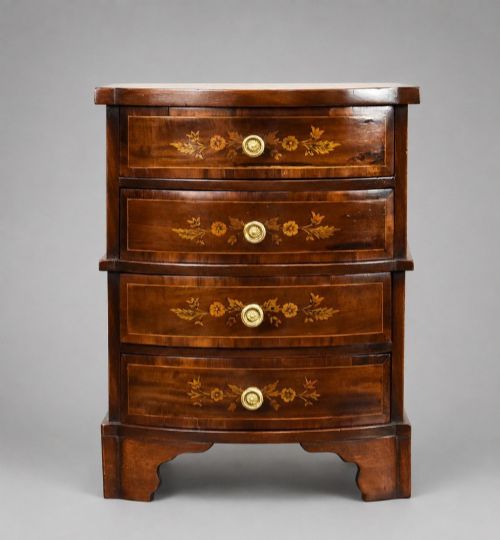
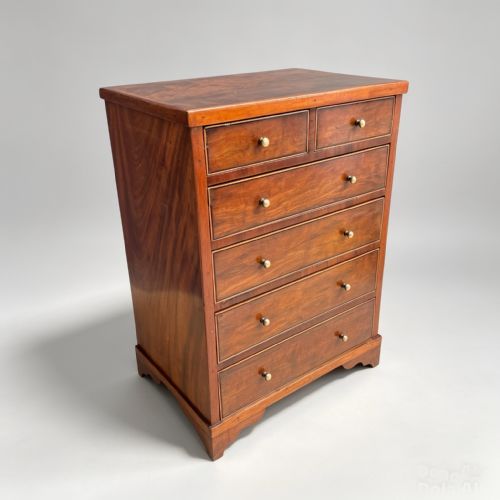
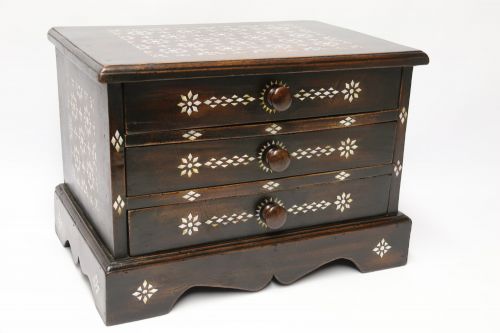
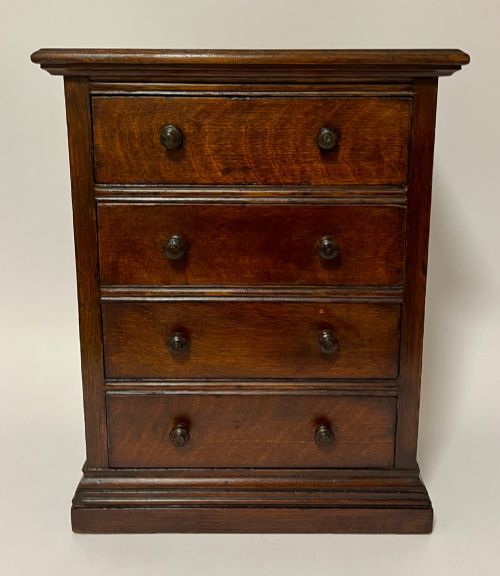
Cabinetmakers utilised hardwoods including mahogany, oak, walnut, and rosewood, frequently incorporating fruitwood, elm, or deal for secondary elements and drawer linings. Finer examples display marquetry, string inlay, and figured veneers such as burr walnut and palmwood.
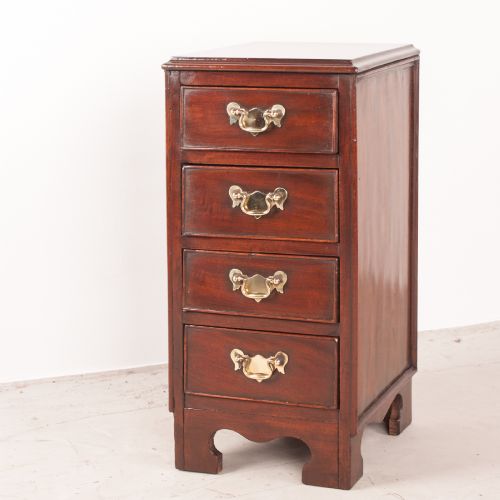
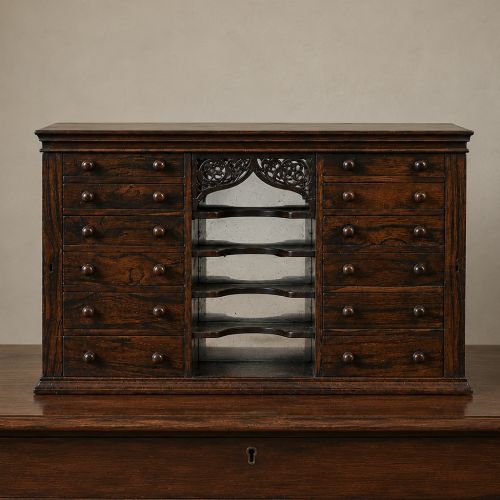
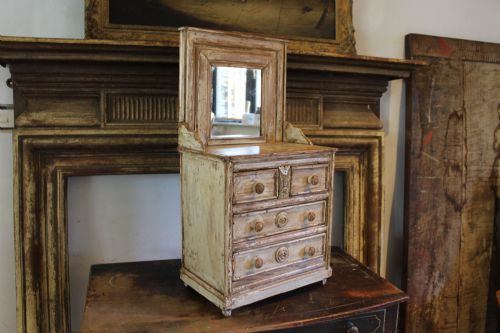
Construction methods mirror domestic furniture on a reduced scale, employing dovetailed drawer construction, brass drop handles, and occasionally ebonised mouldings or mirrored doors. Surviving items often retain original locks with keys or display turned wooden feet.
Materials recorded across the selection include brass, glass, pine, oak, mahogany, walnut, burr walnut, elm, fruitwood, and palmwood.
Judging Quality
Quality rests in the fidelity of proportion and the selection of timber, where tightly figured veneers or well-matched mahogany elevate a simple desktop box. The crispness of the dovetails and the integration of secondary woods demonstrate the maker's hand.
Surface finish defines the ultimate character of these pieces, with preserved patination and original brass hardware setting apart superior specimens from later utility boxes.
The Miniature Desktop Drawers Glossary
- Apprentice piece
- A small-scale item traditionally made by a craftsman to demonstrate skill for guild membership or mastery. These chests reproduce full-sized furniture joints and details.
- Wellington chest
- A tall, narrow chest of drawers secured by a hinged vertical locking bar on one side. This mechanism fastens all drawers simultaneously with a single key.
- Specimen cabinet
- A piece built with multiple shallow drawers intended for housing natural history collections such as insects, minerals, or fossils. The interior layout prioritises systematic organisation.
- Bow front
- A convex curved cabinet front that swells outward in the centre. This decorative shaping requires advanced woodworking skill to fit the drawers accurately.
- Marquetry
- The art of applying thin veneers in wood, shell, or ivory to form decorative patterns on a surface. It adds visual complexity to cabinet doors and drawer fronts.
Miniature Desktop Drawers: Frequently Asked Questions
What were miniature desktop drawers used for?
These small pieces served to store correspondence, jewellery, coins, or natural history specimens on top of a desk or table.
Craftsmen also produced them as demonstration pieces to showcase cabinetmaking skills to prospective clients or guilds.
How do I identify a Victorian piece?
Victorian examples frequently utilise dense mahogany or figured walnut, often featuring turned wooden feet, brass knobs, and bow-fronted drawer arrangements.
Stylistic markers from this era also include ebonised mouldings and Wellington locking bars alongside pine carcass construction.
What is an apprentice chest?
An apprentice chest is a small-scale model of a full-sized chest of drawers, built with identical joinery and proportions.
Cabinetmakers traditionally created them to test techniques or demonstrate proficiency in furniture construction.
How should I care for antique wood?
Keep wooden pieces away from direct sunlight and sudden temperature shifts to prevent the timber and veneers from drying out or splitting.
Maintain the surface by dusting gently with a dry cloth and avoiding harsh modern polishes.