

Military Storage Trunk
A military storage trunk provides robust travel housing built for officers on the move across the nineteenth century.
Military Storage Trunk
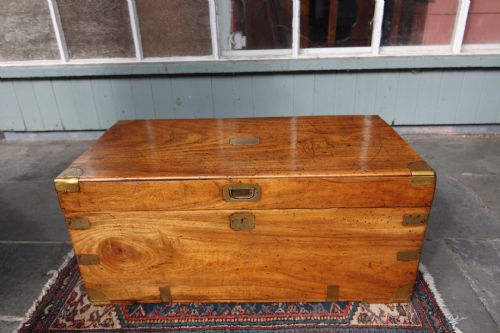
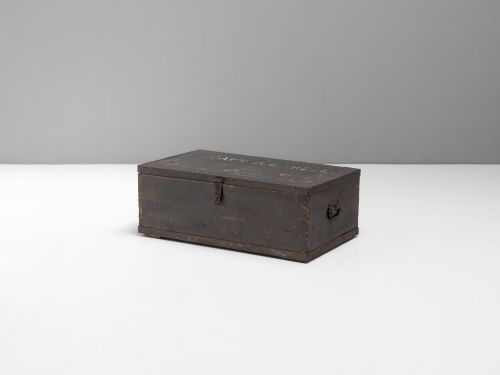
A military storage trunk is a portable chest designed to transport an officer's personal effects, uniforms, and equipment during campaigns. These pieces span the Georgian, Victorian, and Edwardian eras, reflecting the logistical needs of British forces overseas.
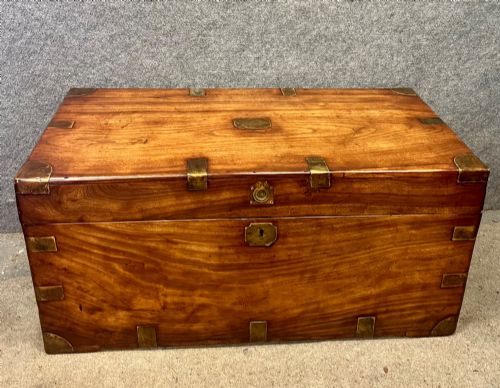
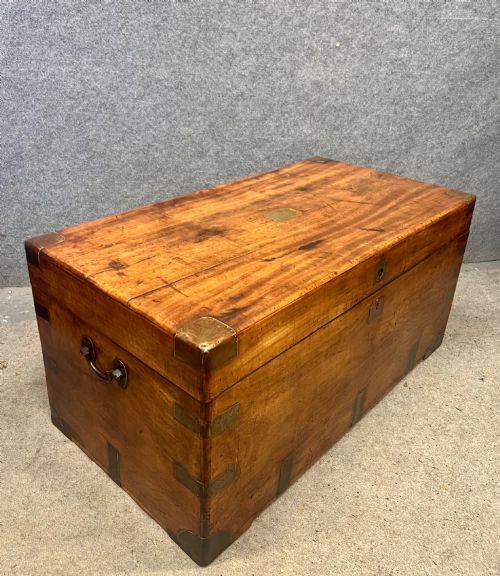
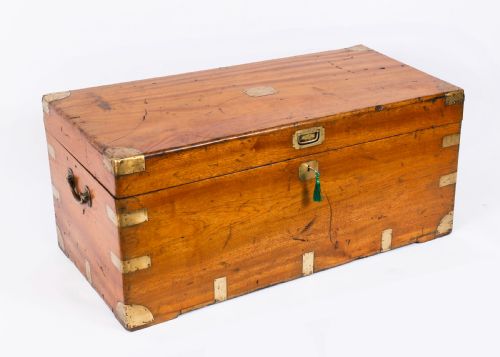
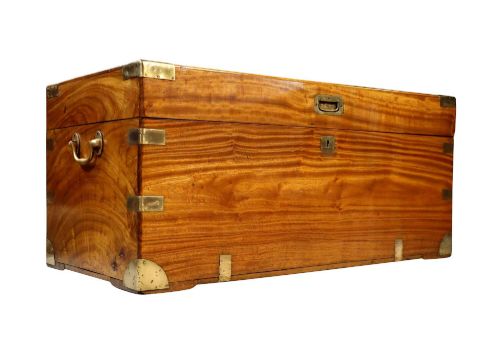
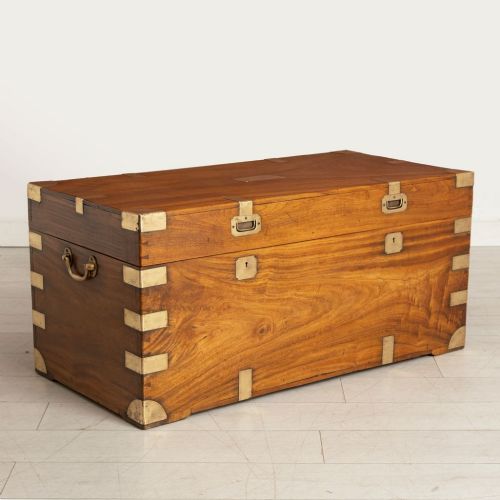
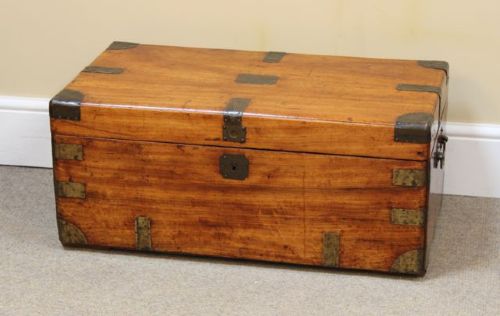
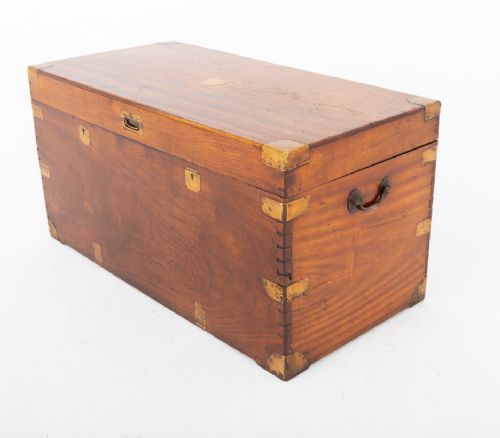
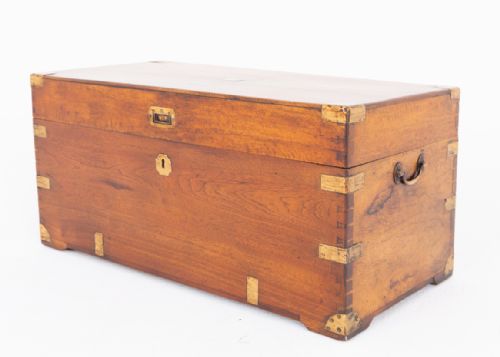
The version most commonly met on this page is constructed from solid camphorwood or teak, chosen for durability and insect resistance in tropical climates. Such trunks frequently exhibit brass binding and recessed hardware to withstand rough transit.
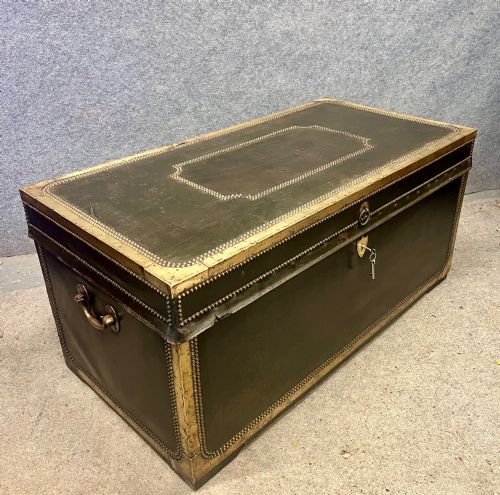
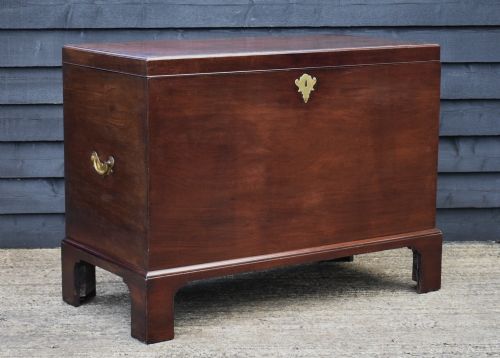
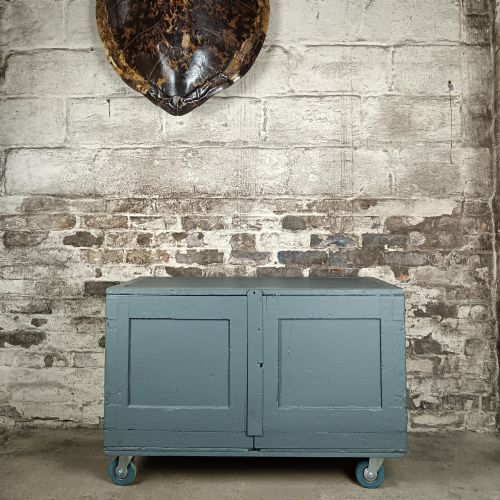
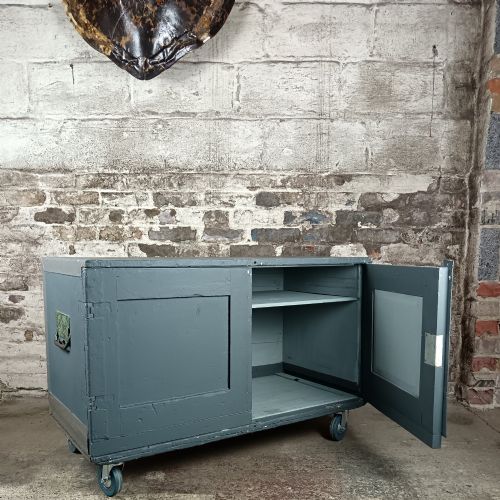
Forms range from simple hinged blanket boxes to compartmentalised travelling chests and side cabinets. Their origins trace to colonial outposts, India, and China trade routes where officers required secure storage that doubled as temporary furniture.
How they were made
Cabinetmakers built these trunks using dense tropical timbers such as camphorwood, teak, and mahogany, often reinforced with durable pine for internal framing. These woods resisted warping and humidity during long sea voyages.
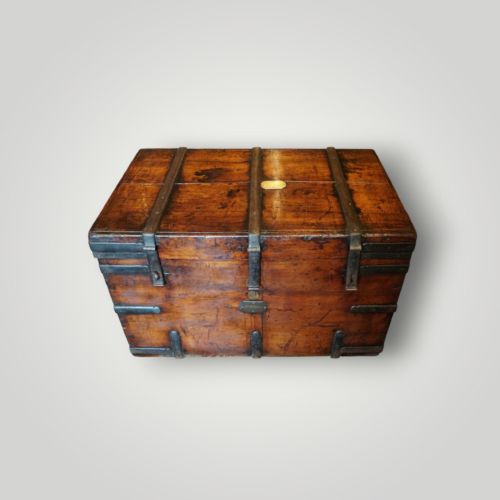
Brass corners, strapping, and flush-fitting recessed drop handles protected vulnerable edges and prevented snagging in cramped ship holds or wagon beds. Dovetail joints secured the primary carcass, ensuring structural integrity under heavy loads.
Listings feature nineteenth-century camphorwood, teak, and mahogany alongside iron-bound walnut examples dating from the Georgian era onwards.
What varies in quality
Quality rests on the selection of timber and the precision of the brass hardware integration. Superior examples employ thick, figured camphorwood or dense teak paired with heavy cast brass straps rather than thin plated sheet metal.
Finer pieces retain original working locks, internal candle boxes, and maker plaques, whereas lesser specimens show heavy later repairs or replaced fittings that dilute their historical integrity.
Allen of London·Gnome Et Le Rhone Engine Company
The Military Storage Trunk Glossary
- Campaign trunk
- A portable chest built with recessed handles and reinforced corners for military transport. These boxes were constructed to withstand frequent loading onto ships and pack animals.
- Camphorwood
- An aromatic timber native to Asia, prized in nineteenth-century trunks for repelling moths and damp. Its distinct scent remains a key identifier of Anglo-Indian pieces.
- Brass binding
- Metal strips and corner guards fixed to the exterior edges of a trunk to absorb impact during travel. This reinforcement protected the wooden joints from splitting.
- Recessed hardware
- Handles and escutcheons set flush into the surface of the wood so they did not catch on ropes or tight spaces. This technique was standard on campaign furniture.
- Dovetail joint
- An interlocking corner construction method using wedge-shaped fingers that resisted pull-apart forces. It formed the structural skeleton of quality chests.
Military Storage Trunk: Frequently Asked Questions
Why do these trunks smell strongly?
The distinct aroma comes from the natural camphorwood used to construct the interior and exterior panels. This timber was specifically chosen by nineteenth-century makers to deter insects and protect uniforms from tropical humidity.
Over decades, the natural oils remain embedded within the grain. Keeping the trunk aired in a dry room softens the scent without removing its characteristic profile.
How were they used on campaign?
Officers used these trunks to pack uniforms, books, and personal valuables while travelling across the British Empire. The boxes doubled as temporary tables or desks inside campaign tents.
Their standardised dimensions allowed pack animals and cargo carts to carry them efficiently. Recessed handles ensured multiple trunks packed tightly together without snagging.
How should I clean a brass-bound chest?
Dust the exterior timber with a dry cloth and preserve the aged patina without stripping the surface oils. Avoid harsh modern solvents that damage nineteenth-century polish.
Polish the brass strapping gently if brighter metalwork is preferred, using a barrier to protect the adjacent wood. Many collectors leave the brass unpolished to maintain the historical appearance.
Where do I place one at home?
These trunks function well as coffee tables in a living room, offering internal storage for blankets and books. Their flat lids and sturdy frames support everyday domestic use.
Bedrooms also suit these pieces as blanket chests positioned at the foot of a bed. Ensure they sit away from direct radiator heat to prevent the tropical timbers from splitting.