

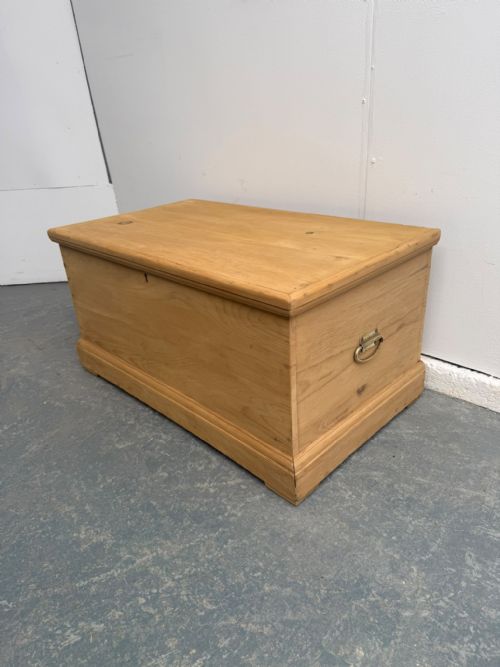


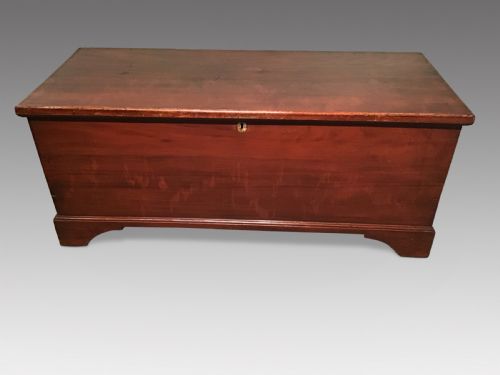


Pine Coffee Table Chest
A pine coffee table chest brings robust utilitarian storage and a low surface into a room with genuine nineteenth-century character.
Pine Coffee Table Chest
A pine coffee table chest adapts a traditional storage trunk or blanket box for daily living by offering a low, flat surface alongside internal space. These pieces originate predominantly from the Victorian period, spanning the nineteenth century up to the early twentieth century.
The forms vary from simple blanket boxes and carpenter's tool chests to brass-bound trunks and mule chests equipped with drawers. Many examples show a heritage of practical domestic or military use, featuring sturdy construction designed to endure.
Most items meeting this description combine the rustic warmth of waxed or painted timber with the functional utility of a low table. Buyers select them to anchor a sitting room with historic timber grain and hidden storage.
Materials and construction methods
Makers built these chests primarily from solid pine and pitch pine, selecting the softwood for its availability and resilience. Surfaces were frequently treated with wax to protect the timber while preserving its natural grain and colour.
Iron and brass hardware provided structural reinforcement for heavy-duty use. Metal straps, corners, and robust carrying handles appear frequently across these utilitarian forms, reflecting their origins as travel trunks or workshop chests.
Recorded examples span the Victorian period, the nineteenth century, and extend to nineteen-twenty, utilising pine, pitch pine, iron, and brass.
Factors that distinguish individual chests
Quality rests in the integrity of the original construction and the condition of the timber. Dovetail joints, sound interior fittings, and retained hardware distinguish chests built for heavy service from more basic boxes.
The Pine Coffee Table Chest Glossary
- Pine
- A softwood derived from conifer trees, widely utilised in nineteenth-century cabinet making for its strength and accessible working properties.
- Pitch Pine
- A denser, harder variety of pine known for its prominent grain pattern and resinous content, often used in more durable trunk construction.
- Mule Chest
- A traditional storage chest featuring one or more drawers built into the base beneath the main compartment.
- Blanket Box
- A deep chest originally designed for storing household textiles, now frequently adapted as a low table.
- Tool Chest
- A sturdy utilitarian box constructed for tradespeople, typically featuring internal tills, reinforced corners, and robust carrying handles.
Pine Coffee Table Chest: Frequently Asked Questions
How do I use a chest as a table?
A low pine chest functions naturally as a coffee table because its flat top provides adequate surface area for books and daily items.
The internal cavity remains fully accessible by lifting the lid, allowing you to store blankets or household objects out of sight.
Are these chests genuinely antique?
The pieces available date primarily from the Victorian era and the nineteenth century, with occasional examples extending into the early twentieth century.
Construction details such as hand-cut dovetails and period hardware help confirm their historical origins.
How should I care for waxed pine?
Waxed pine benefits from occasional application of a quality beeswax to nourish the timber and maintain its protective finish.
Avoid placing the chest near direct heat sources or strong sunlight to prevent the softwood from drying out or splitting.
What is the difference between a trunk and a blanket box?
A blanket box is typically a domestic chest designed with a simple interior for storing linens and woollens.
A trunk often incorporates heavier metal binding, corner brackets, and side handles intended for travel or military transport.