


Military Storage Chest
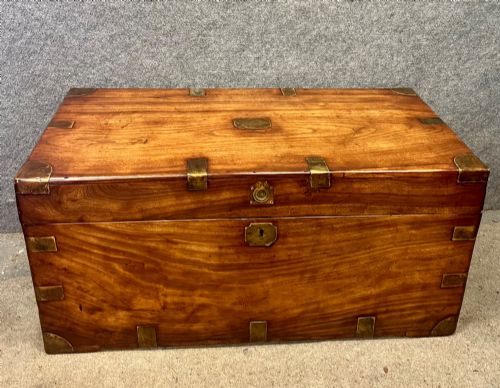
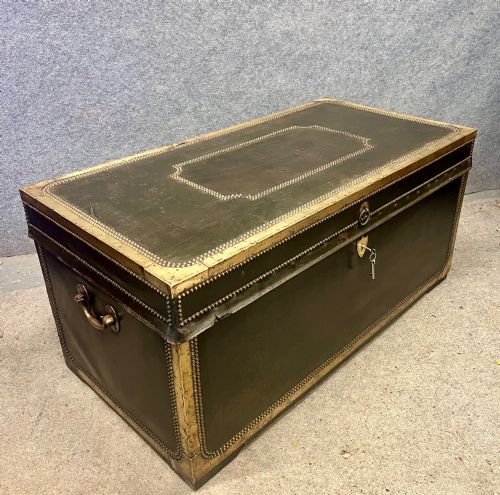
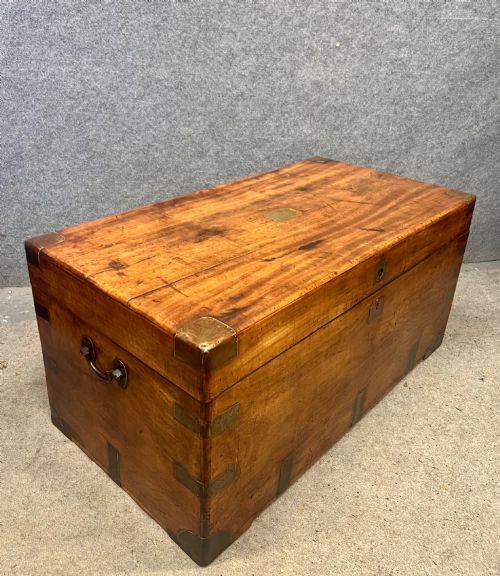
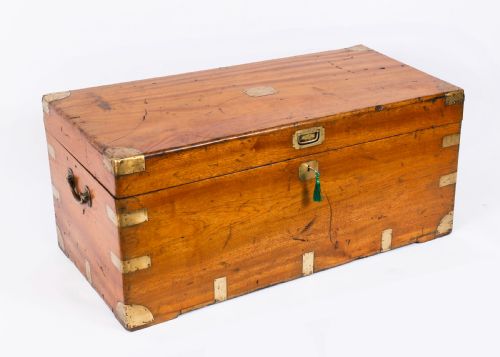
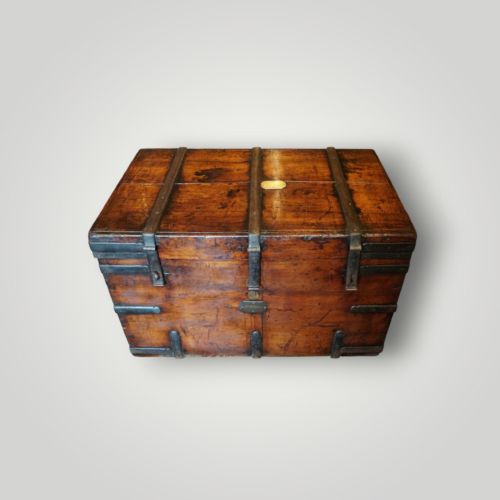
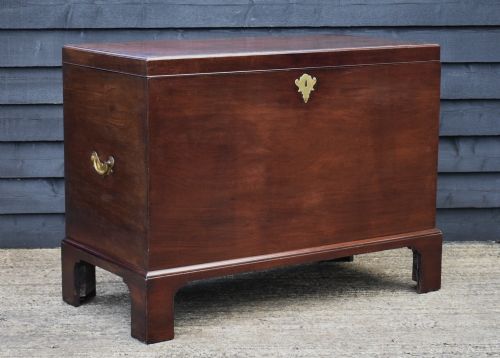
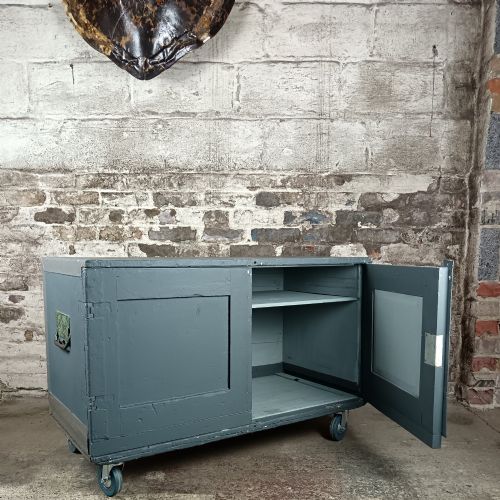
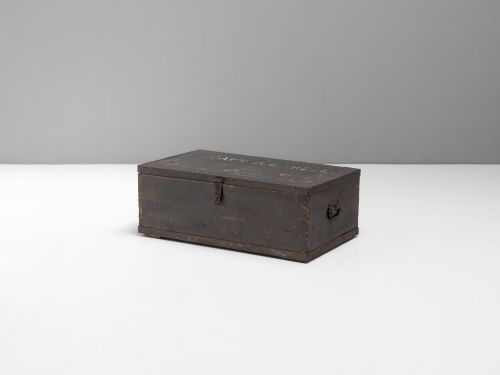
These military storage chest examples are travel trunks and chests designed for officers on the move, offering robust construction and brass hardware.
Military Storage Chest
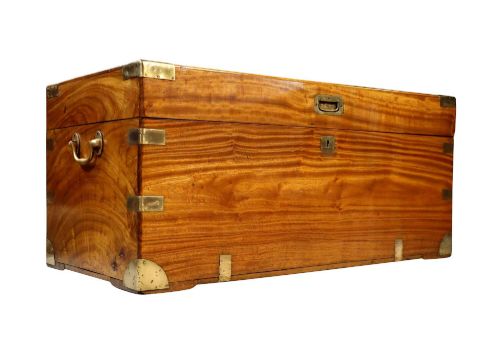
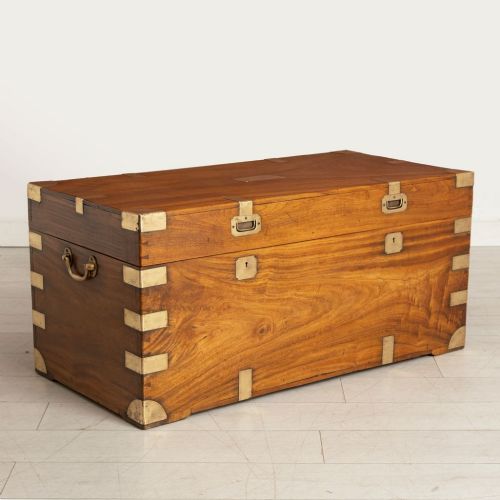
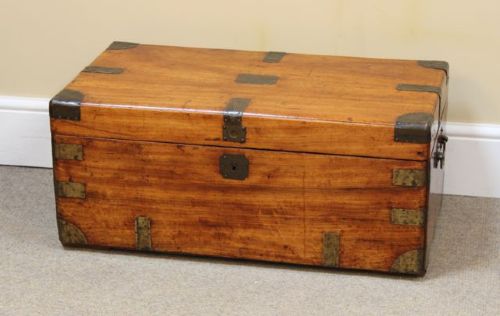
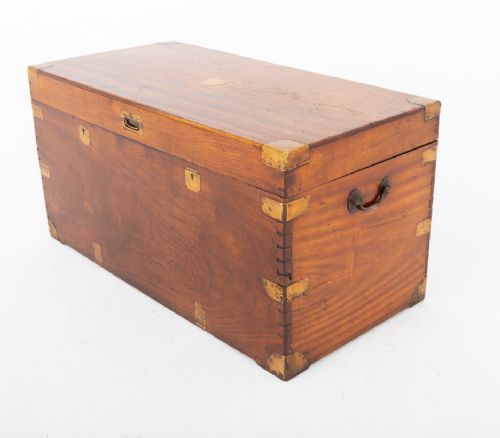
A military storage chest encompasses durable trunks, coffers and two-part chests of drawers built for officers during the Georgian, Victorian and Edwardian eras. You will most frequently encounter nineteenth-century camphor wood trunks reinforced with brass corners and recessed handles.
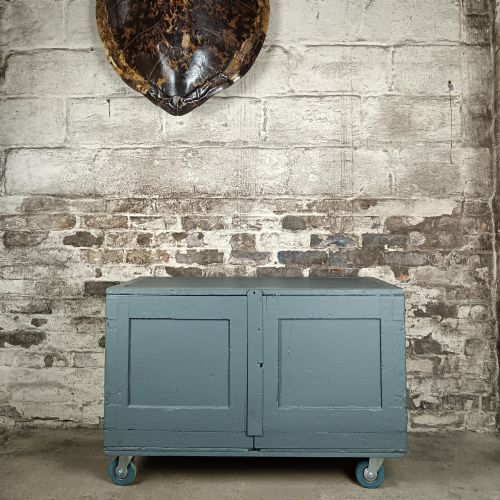
These pieces served active duty on campaigns, sea voyages and colonial outposts, requiring split-section designs for easier transport by pack animal or ship. The selection also includes side cabinets, tallboys and transport packing cases styled for practical utility.
Origins span British military deployments across the globe, including Anglo-Indian workshops and China Trade routes that supplied resilient timber to travelling personnel. Surviving examples reflect the specific logistical demands of nineteenth-century military life.
Materials and construction
Cabinetmakers utilised dense timbers like camphor wood, teak and mahogany to withstand damp climates and rough transport conditions. Camphor wood provided natural insect-resistant properties, protecting uniforms and documents during long voyages.
External brass bindings, flush-fitting handles and reinforced corners protected vulnerable edges from impact while maintaining a compact profile for stacking. Iron bands and leather trim appear on specific utilitarian trunks and transport cases.
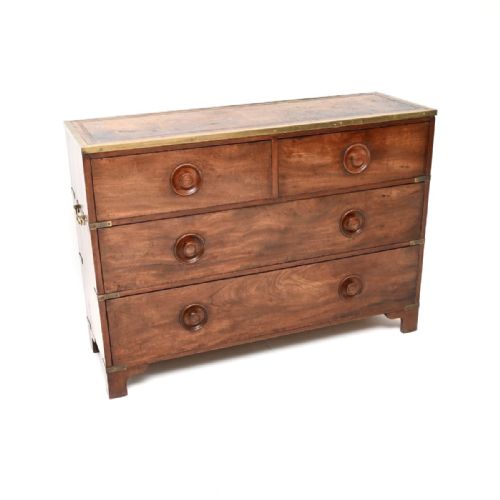
Two-part chests of drawers featured internal carrying handles and threaded screw fixings to secure the upper and lower sections together during transit. Dovetail joinery and robust internal framing ensured structural integrity under heavy loads.
Some trunks retain the original travelling ink stains and regimental stamps from officers deployed across the empire.
Evaluating quality
The division between standard field equipment and superior pieces rests on the weight of the brass hardware and the precision of the joinery. Premium examples display heavy cast brass mounts, original countersunk fastenings and secret internal drawers.
Timber selection dictates overall substance, with figured mahogany and selected camphor wood denoting officer-commissioned pieces rather than standard issue barracks furniture. The integrity of the original dovetailed carcase and flush fittings establishes the tier of the piece.
The Military Storage Chest Glossary
- Campaign chest
- A modular chest of drawers built in two separate sections for ease of transport during military movements. These units feature recessed brass handles to prevent snagging.
- Camphor wood
- An aromatic timber native to Asia, utilised for nineteenth-century trunks due to its natural pest-repellent qualities. It protects stored textiles from moths and damp.
- Brass bound
- A method of reinforcing box corners and edges with brass strips and corner pieces. This technique prevents splitting during rough handling on campaign.
- Flush handle
- A hardware fitting sunk level into the wood surface so it does not protrude. This design allows chests to pack tightly into transport crates or wagons.
Military Storage Chest: Frequently Asked Questions
What is a military campaign chest?
A military campaign chest is a portable piece of furniture designed for officers on active service, typically built in sections with recessed brass handles for transport.
These chests split apart or stack securely to fit inside tents, ships and baggage wagons during nineteenth-century military campaigns.
Why are many campaign chests made of camphor wood?
Camphor wood naturally repels insects and resists moisture, making it the ideal timber for protecting uniforms and papers in tropical climates.
Officers serving in India and the Far East relied on these fragrant trunks to keep their personal belongings safe from humidity and pests.
How do two-part chests work?
Two-part chests of drawers consist of an upper and lower cabinet designed to separate completely for transit.
Metal brackets, side carrying handles and internal locking pins secure the two halves together when stationary.
How do I date an antique military chest?
Dating relies on timber choices, construction methods, hardware style and historical provenance markers like regimental plaques.
Nineteenth-century examples frequently exhibit heavy brass bound corners, flush military handles and dovetail joints characteristic of Victorian campaign furniture.