

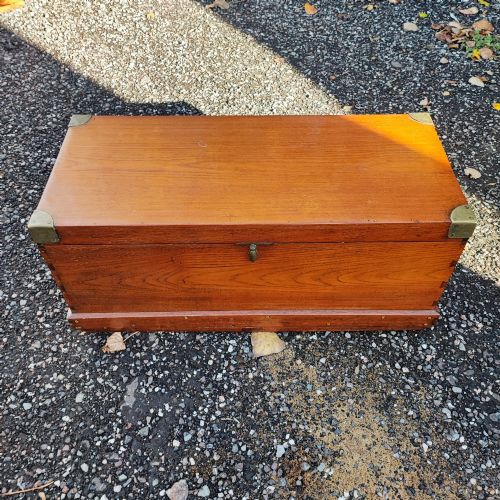
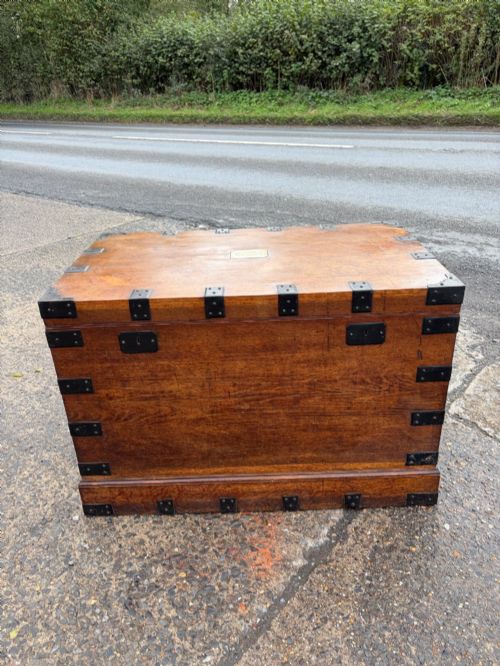
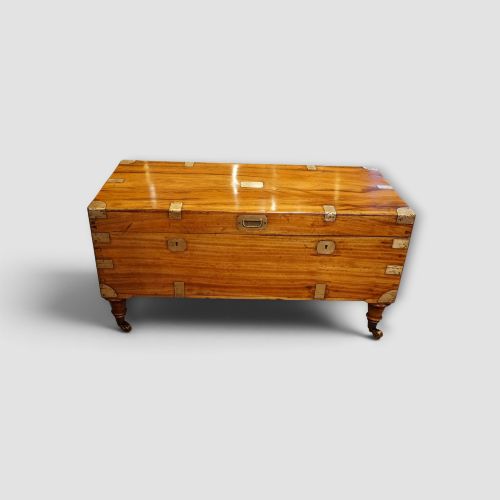
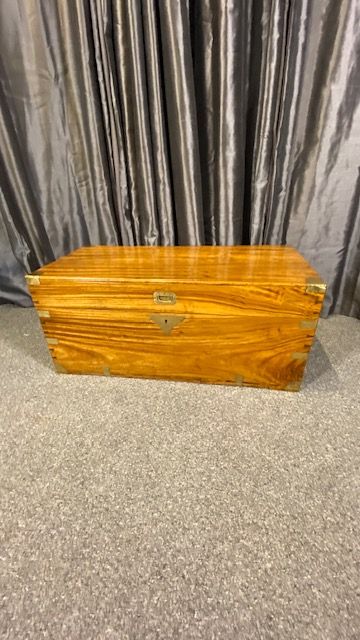




Brass Corners Blanket Chest
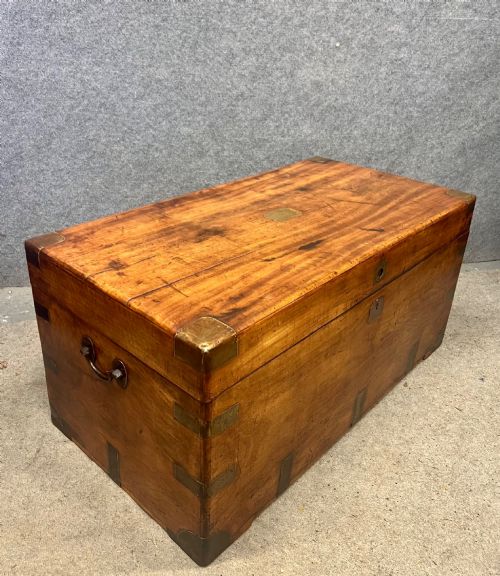
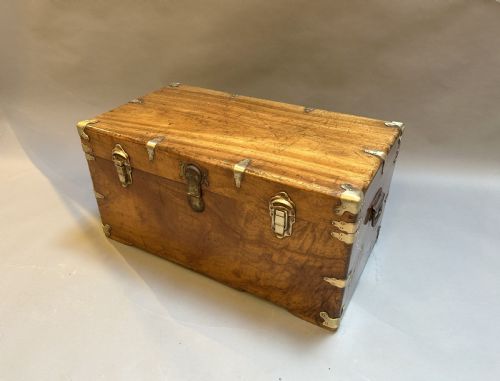
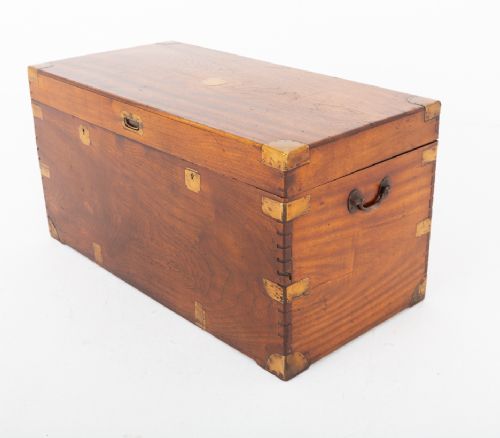
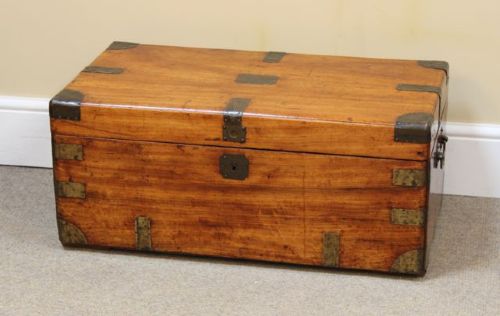
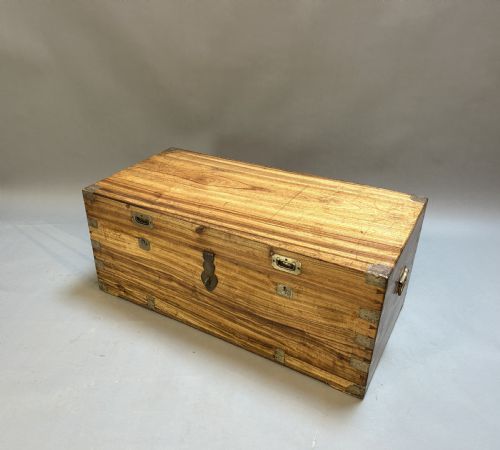
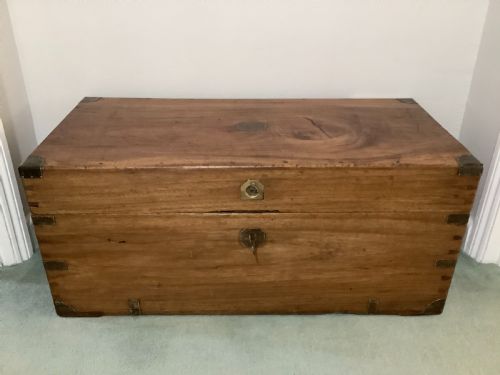
These brass corners blanket chest examples are robust travel trunks built for nineteenth century officers and travellers, offering enduring storage with character.
Brass Corners Blanket Chest
When you search for a brass corners blanket chest, you encounter sturdy wooden boxes designed to travel with military officers and colonial administrators across the British Empire during the nineteenth century. These pieces combine utilitarian strength with practical design, often constructed in sections or fitted with recessed carrying handles to ease transit on ships and trains.
The version you are most likely to meet on this page is a nineteenth century camphor wood chest featuring protective brass corners, corner brackets and strapping. These trunks typically date from the Victorian era, spanning decades from eighteen fifty to nineteen hundred, and frequently appear in campaign or colonial styles.
Beyond standard camphor wood variants, the selection includes trunks formed from teak, oak, elm, mahogany and walnut, augmented by iron or brass hardware. Some examples incorporate fitted interiors or rest upon castors, reflecting diverse origins from British workshops to Anglo Indian production.
How they were made
Cabinet makers utilised dense hardwoods such as camphor wood, teak and oak to withstand tropical climates and the heavy demands of transit. Camphor wood was particularly favoured for its insect repellent properties and distinctive grain, while hardwoods provided structural integrity.
Joints and surfaces were reinforced with heavy brass corners, plates and straps secured by numerous screws, protecting vulnerable edges from impact during travel. Recessed brass drop handles and flush hardware allowed chests to be packed tightly without protruding elements catching on ropes or canvas.
Brass Corners Blanket Chest Retail Price Guide 2026
Typical asking prices for brass corners blanket chest among the pieces listed under this phrase on Sellingantiques today, from the lower quarter to the upper quarter. They describe what is for sale here now, not the wider market.
Camphor trunks retain their distinct aromatic scent after more than a century, quietly perfuming every blanket tucked inside them.
What varies in quality
The calibre of a trunk depends heavily on the timber selection and the precision of the brass work. Superior examples display finely figured camphor wood grain, tight joinery and heavy gauge brass hardware that sits flush with the timber surfaces.
Completeness of original internal fittings, locking mechanisms and keys distinguishes finer pieces from simpler utility trunks. The presence of robust corner reinforcement and well preserved brass mounts elevates an ordinary storage box to a piece of campaign heritage.
The Brass Corners Blanket Chest Glossary
- Campaign trunk
- A portable chest built in the eighteenth or nineteenth century for military officers on active service abroad, featuring protective metal corners and recessed handles.
- Camphor wood
- A fragrant tropical hardwood used for nineteenth century chests because its natural scent repels moths and insects, protecting woollens and blankets inside.
- Brass bound
- A descriptive term for wooden trunks featuring brass strapping, corner pieces and braces screwed to the exterior to prevent damage during travel.
- Anglo Indian
- Pertaining to furniture made in India during the British colonial period, often combining local timbers like camphor with traditional British campaign forms.
- Recessed handle
- A flush fitting metal grip inset into the side of a trunk so it does not project beyond the wooden panels during transport.
Brass Corners Blanket Chest: Frequently Asked Questions
What is a campaign chest?
A campaign chest is a portable piece of furniture designed for military officers on deployment, built to dismantle or travel easily.
These trunks feature durable timber construction and protective brass corners to withstand rough handling during overseas transit.
Why use camphor wood?
Camphor wood was chosen for travel chests because its aromatic natural oil repels moths and insects, protecting stored woollens and blankets.
The timber is also stable, moderately lightweight and richly grained, making it ideal for furniture moving between climates.
How do I style a chest at home?
These chests function well as coffee tables, end of bed storage, or hallway blanket boxes, adding historical character to a room.
The flat top surface accommodates books or decorative items while the interior conceals everyday clutter.
How do I date a trunk?
Dating relies on timber types, construction methods, and the style of the brass hardware and corner brackets.
Nineteenth century Victorian examples often feature machine screws and standardised brass strapping, while earlier Georgian pieces show hand cut elements.