


Military Portrait Miniature
A military portrait miniature captures the resolute gaze of an officer in delicate detail, offering a tangible link to centuries of martial history.
Military Portrait Miniature
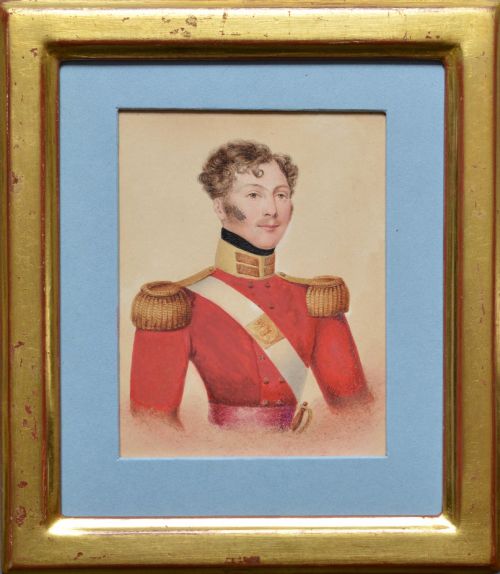
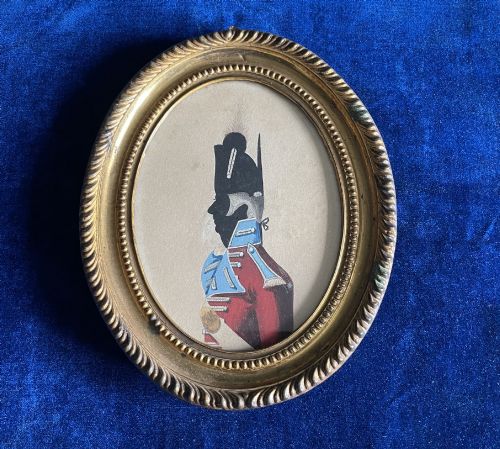
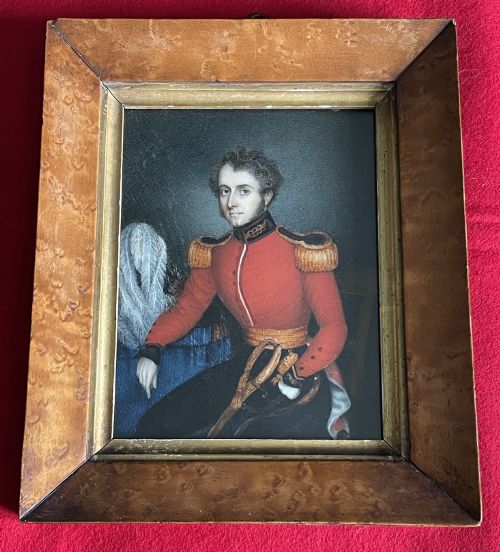
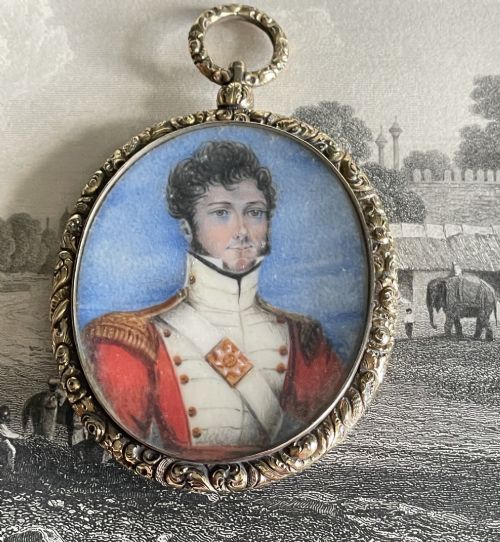
A military portrait miniature depicts officers from various regiments, capturing the likeness of figures such as naval commanders, dragoons, and generals in intimate, small-scale paintings. These portable likenesses served as personal mementoes or records of service for families and comrades during the eighteenth and nineteenth centuries.
The pieces on this page span the Georgian, Regency, and Victorian periods, reflecting the shifting military uniforms and artistic conventions of those eras. Common forms include watercolour paintings on paper or ivory, alongside works framed in gold, gilt metal, or burl wood.
Subjects range from named historical figures like Sir William Barnard and General Sir James Henry Craig to anonymous officers of the Staffordshire 80th Regiment of Foot. Buyers encounter both British and Anglo-Indian schools, showing the global reach of military service during the period.
How they were made
Artists painted these delicate works using watercolour on materials such as ivory, paper, and agate panels, demanding immense precision on a miniature scale. Some pieces utilise oil paint, while others incorporate textile art like silkwork.
Frames played an essential role in presentation, utilising materials like 18k gold, 9ct gold set with pearls, giltwood, and gilt metal. Protective glass covers the delicate painted surfaces to prevent damage over time.
Military Portrait Miniature Retail Price Guide 2026
Typical asking prices for military portrait miniature among the pieces listed under this phrase on Sellingantiques today, from the lower quarter to the upper quarter. They describe what is for sale here now, not the wider market.
Listings feature works from the 18th century, 19th century, Georgian, Regency, and Victorian periods, utilising watercolour, ivory, gold leaf, and glass.
What varies in quality
The housing of the piece contributes significantly to its overall standard, with heavy gold frames, pearl settings, and original burl wood cases indicating high-status commissions. The preservation of the delicate paint surface and the clarity of the protective glass also distinguish finer examples.
Edward Pugh·Sir William John Newton·Leslie Moore·Gerrit Schipper
The Military Portrait Miniature Glossary
- Watercolour
- A paint consisting of pigment suspended in a water-based solution. It was the primary medium for delicate works on paper and ivory.
- Ivory
- A smooth, dense organic material used as a painting surface for its luminous quality. Artists painted fine portraits directly upon thin slices of it.
- Gilt metal
- Metal treated with a thin layer of gold or gold-coloured wash. It provided a durable and decorative alternative to solid gold frames.
- Agate panel
- A polished slice of cryptocrystalline quartz used as an unusual and durable base for miniature paintings.
- Silkwork
- Embroidery created using silk threads to form pictorial scenes. Examples include theatrical silkwork pictures from the Georgian period.
Military Portrait Miniature: Frequently Asked Questions
How were military miniatures worn or displayed?
These small portraits were often kept in pocket cases, worn as lockets, or displayed on tabletop surfaces in private rooms.
Their portable nature allowed officers and their families to carry likenesses during campaigns and travels.
What periods do these miniatures come from?
The pieces span the eighteenth and nineteenth centuries, encompassing the Georgian, Regency, and Victorian eras.
Changes in military uniform styles and framing techniques help date individual works across these periods.
What materials were used for the frames?
Frames range from simple burl wood to elaborate mountings of 18k gold, 9ct gold set with pearls, and gilt metal.
Protective glass was consistently used to shield the delicate watercolours and paintings from moisture and handling.
Are all the sitters identified?
Many miniatures record specific historical figures, including generals, naval officers, and named captains with documented service.
Other works depict anonymous officers from regiments such as the Staffordshire 80th Regiment of Foot.