

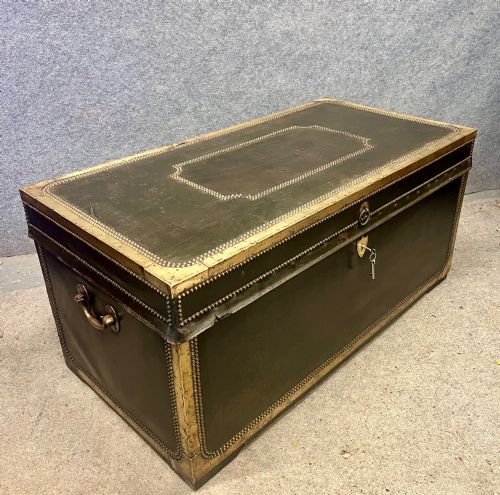
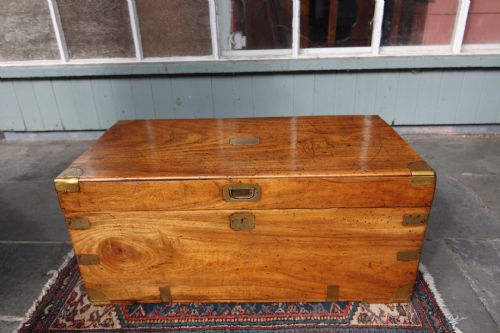
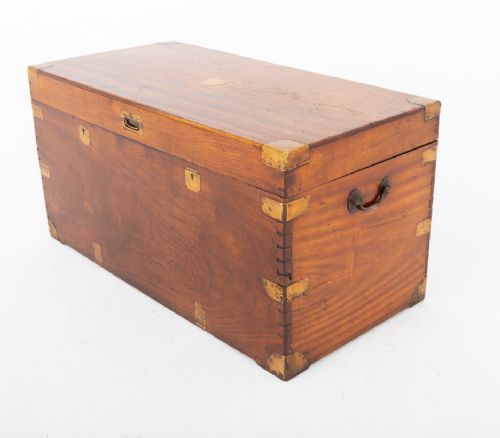
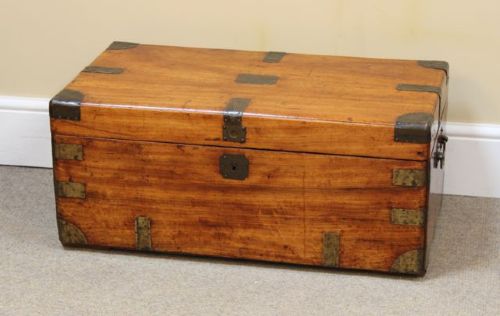


Military Campaign Coffer
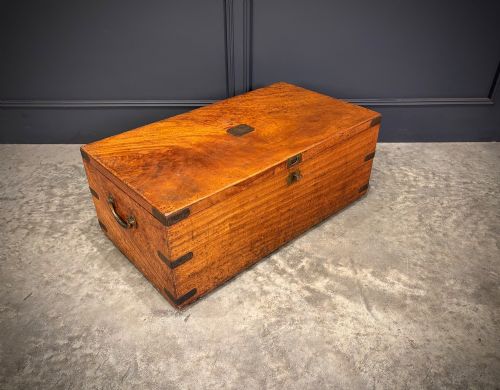
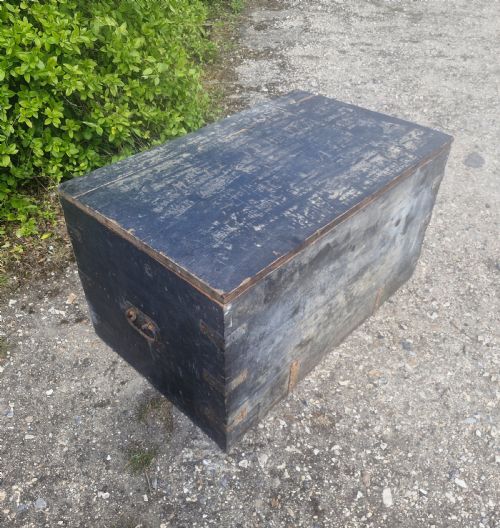
A military campaign coffer is a robust transportable storage trunk designed for travel, offering utilitarian strength and distinct brass hardware.
Military Campaign Coffer
A military campaign coffer is a practical storage box built to endure transit during army deployments and naval voyages. Buyers searching for a military campaign coffer encounter pieces originating primarily from the nineteenth century, including Victorian and Georgian examples.
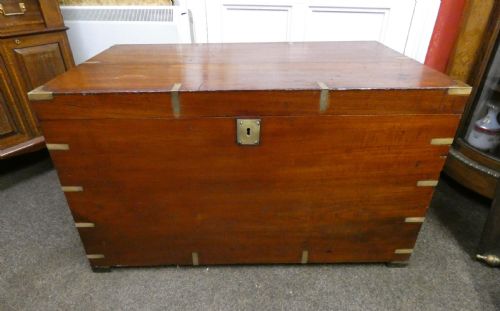
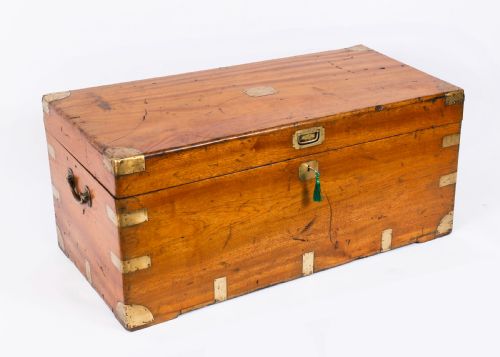
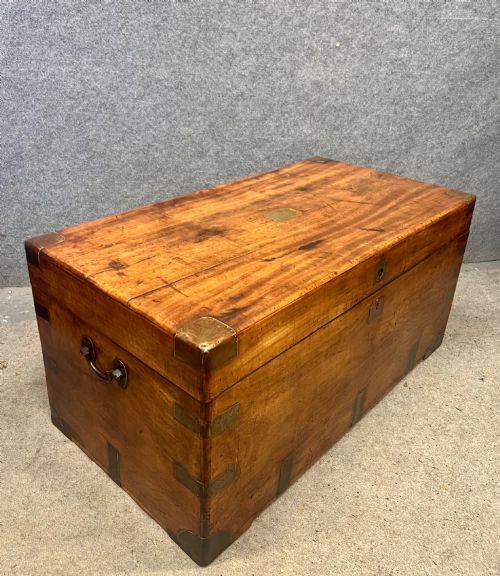
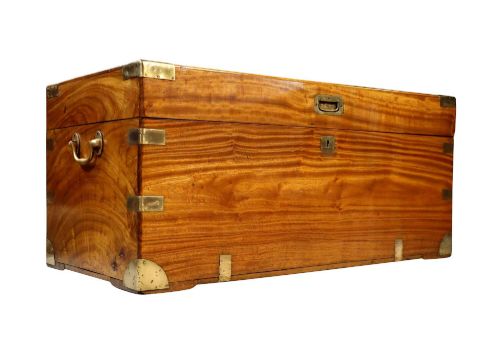
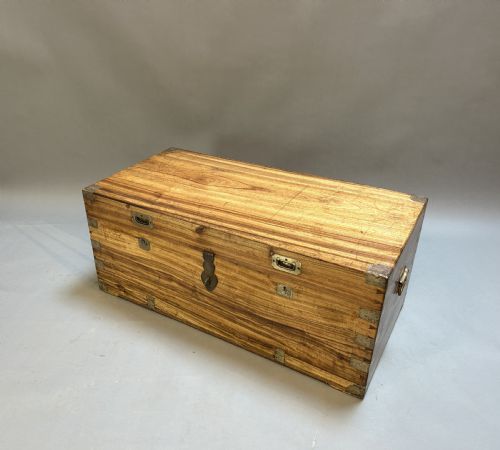
The dominant forms on this page include camphor wood and teak trunks, often reinforced with brass corners and straps for durability. Anglo Indian and China Trade origins frequently appear alongside standard British military models.
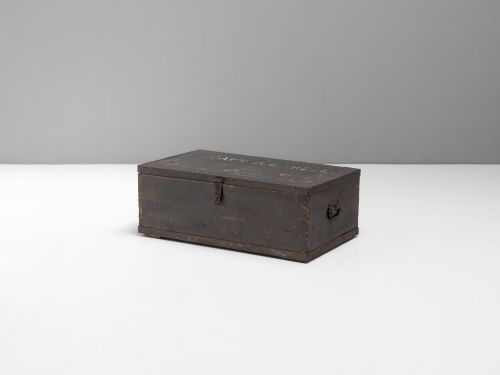
These coffers served officers on the move, requiring sectional designs and sturdy carrying handles. Surviving specimens range from large blanket boxes to compact travelling chests.
Materials and Construction
Carpenters utilised dense timbers such as camphor wood, teak, and mahogany to withstand extreme climates and rough handling. Camphor wood was particularly favoured for its insect repellent properties, protecting uniforms and documents in tropical postings.
Structural rigidity relied upon heavy brass binding, flush drop handles, and iron straps countersunk into the wood to prevent snagging during transport. Dovetail joints and secure corner brackets ensured the trunk maintained integrity under heavy loads.
Listings feature nineteenth century and Georgian periods, utilising camphor wood, teak, mahogany, and brass.
Evaluating Quality
Quality in a military campaign coffer rests on the integrity of the original hardware and the selection of timber. Heavy gauge brass fittings and intact recessed handles distinguish higher grade pieces from standard utility trunks.
The subtlety of dovetailing and the preservation of original interior compartments indicate superior craftsmanship. Pieces retaining authentic brass locks, hinges, and historical provenance command greater interest.
The Military Campaign Coffer Glossary
- Campaign chest
- A portable storage unit built in sections for easy transport by pack animal or wagon during military deployments. These chests feature recessed brass pulls to avoid catching.
- Camphor wood
- An aromatic hardwood native to Asia, utilised for its resistance to insects and moisture. It forms the primary body of many nineteenth century travelling trunks.
- Brass bound
- A method of reinforcing wooden trunk edges and corners with metal strips and brackets. This technique protected the structure from heavy impacts during transit.
- Flush handle
- A metal pull inset into the surface of the wood so it does not project outward. This design prevented handles from snagging in tight storage spaces aboard ships.
Military Campaign Coffer: Frequently Asked Questions
What is a military campaign coffer?
A military campaign coffer is a durable wooden storage trunk built for officers and officials travelling during nineteenth century deployments. They were designed to protect uniforms, papers, and personal equipment across rough terrain and sea voyages.
These pieces combine functional portability with robust construction, typically featuring reinforced corners and secure carrying handles. Their enduring appeal lies in their practical history and distinct utilitarian aesthetic.
How were campaign chests used originally?
Campaign chests served as mobile wardrobes and desks for military personnel stationed abroad in distant territories. They transported essential goods while enduring the rigours of constant relocation.
Many examples feature sectional designs that could be stacked or easily handled by baggage handlers. Their sturdy build ensured contents remained secure against moisture and rough transit.
Why are camphor wood and teak common?
Carpenters selected camphor wood and teak because they resisted tropical humidity, warping, and insect damage. Camphor wood also emitted a natural scent that deterred moths from uniforms.
These durable timbers provided the necessary strength for long distance travel without adding excessive weight. Their resilience explains why so many nineteenth century examples survive today.
How do I date a campaign coffer?
Dating relies on observing construction methods, timber choices, and the style of brass hardware used. Nineteenth century pieces often display distinct recessed brass fittings and dovetail joints characteristic of the period.
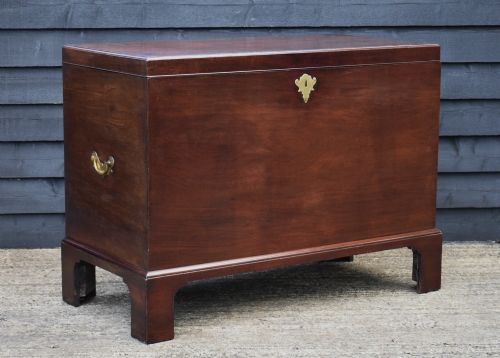
Georgian examples tend to use mahogany with different proportions, while later Victorian and 1880s pieces frequently showcase camphor wood and standardised brass banding. Examining locks and interior labels can offer further chronological clues.