
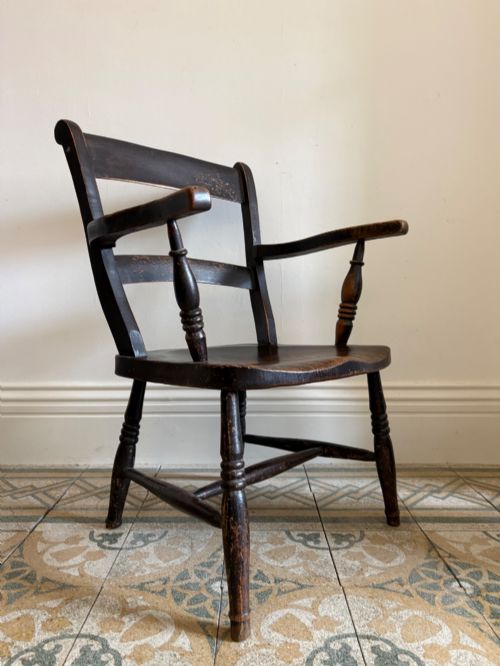
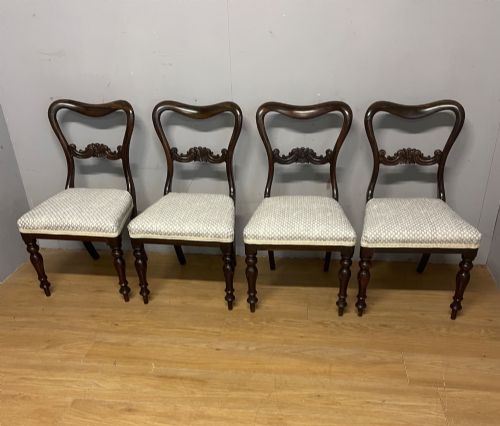


Mid Victorian Wooden Seat
A mid victorian wooden seat brings solid nineteenth-century character into a room, offering sturdy utility and time-tested joinery.
Mid Victorian Wooden Seat
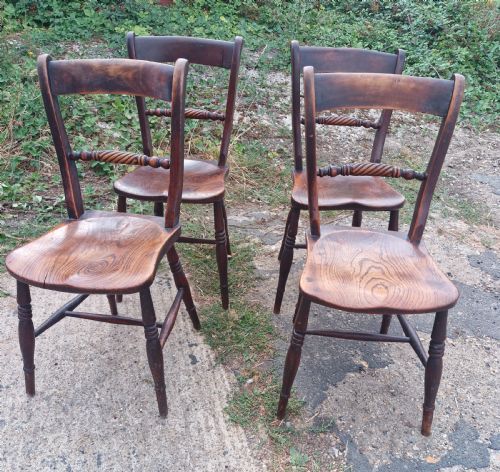
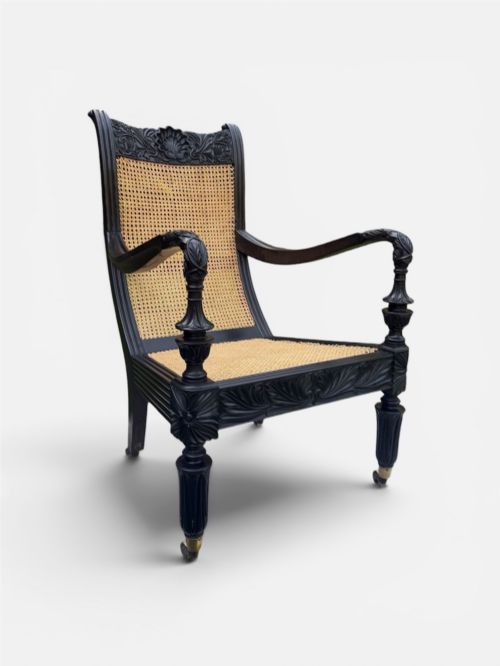
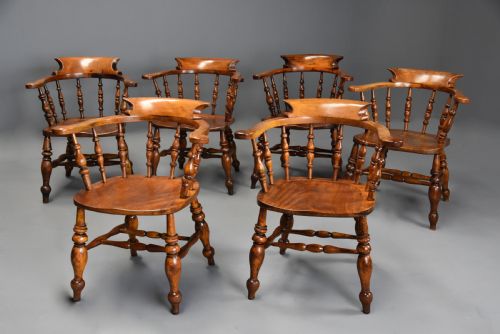
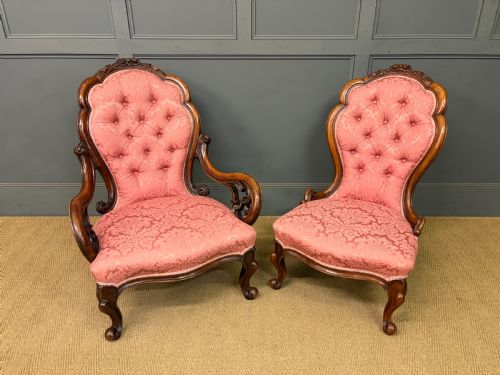
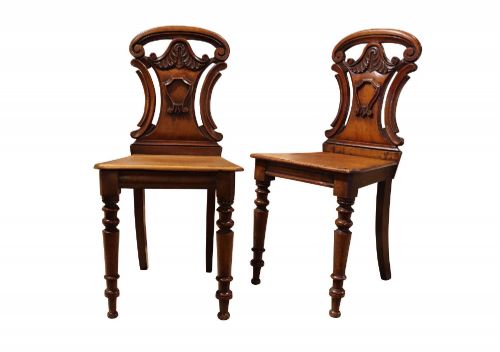
A mid victorian wooden seat encompasses everything from kitchen dining chairs and Windsor sticks to parlor armchairs, hall benches, and window seats originating across the nineteenth century. Buyers searching this phrase meet practical timber furniture shaped by regional makers and urban cabinet makers alike between roughly eighteen-fifty and eighteen-seventy.
The selection leans heavily toward sturdy seating solutions constructed in local and exotic timbers, featuring vernacular farmhouse styles alongside formal dining chairs and upholstered salon pieces. Walnut, mahogany, and oak appear frequently alongside mixed-wood Windsor chairs pairing ash and elm.
How they were made
Cabinet makers and rural bodgers utilised solid native and imported timbers including mahogany, walnut, oak, ash, elm, and yew, often combining woods within a single Windsor or stickback chair for strength and flexibility. Turning lathes shaped spindles and legs, while steam bending manipulated curved backs for everyday endurance.
Joinery relied on traditional mortise and tenon construction, pegging, and wedged joints rather than modern adhesives. Upholstered variants incorporated webbing, horsehair stuffing, and heavy fabric or leather coverings fixed with brass tacks.
What varies in quality
The standard of timber selection and grain figure dictates much of the distinction between ordinary utility seating and finer parlour pieces. Well-figured burr elm, rich mahogany, and matching sets command attention for their visual depth.
Execution of carved detail and structural integrity set individual examples apart. Crisp mouldings on mahogany frames or carefully turned spindles on Thames Valley Windsors indicate deliberate craftsmanship by skilled hands.
The Mid Victorian Wooden Seat Glossary
- Windsor chair
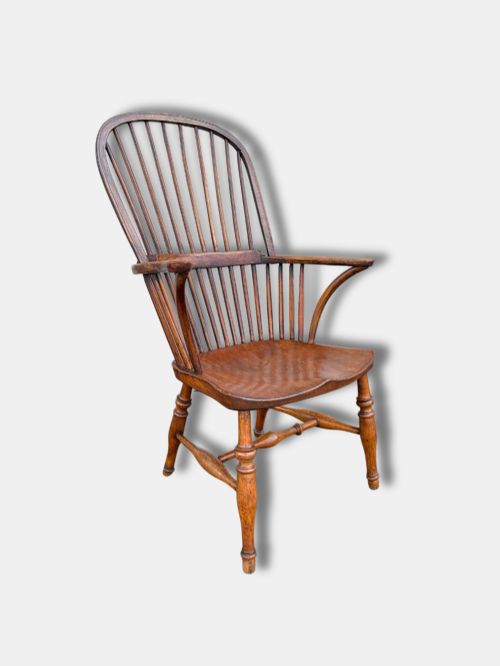
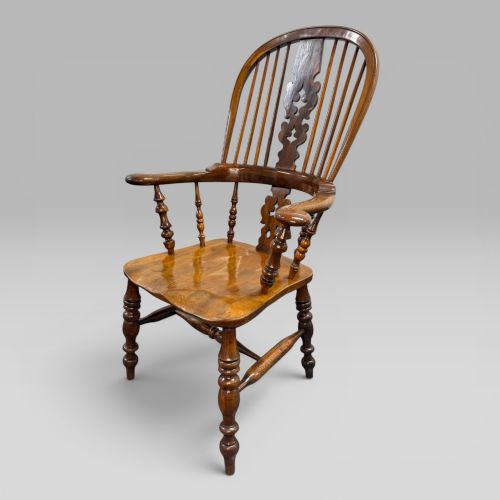
- A wooden seating form featuring a solid saddle-shaped wooden seat into which the legs and back spindles are wedged directly. These country pieces often combine ash, elm, and yew.
- Hall chair
- A rigid timber seat intended for entrance halls, constructed mostly without upholstery. These examples often display carved wooden backs and solid panel seats.
- Window seat
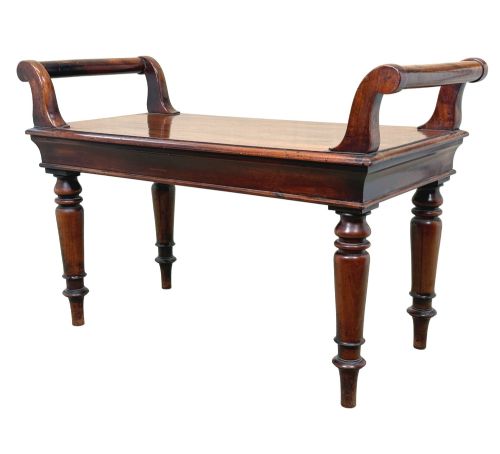
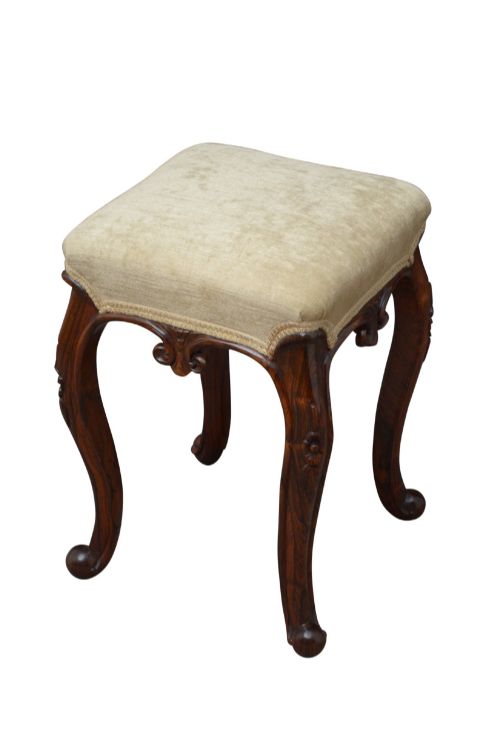
- A long, narrow bench designed to fit into a bay window recess. They frequently incorporate upholstered tops or carved wooden frames in oak, mahogany, or walnut.
- Reformed Gothic
- A nineteenth-century design style reflecting medieval architectural principles adapted for modern domestic furniture. Pieces in this manner display geometric lines and architectural chamfers.
Mid Victorian Wooden Seat: Frequently Asked Questions
How do I identify a mid Victorian chair?
Examine the timber selection, construction methods, and stylistic cues such as balloon backs or turned legs typical of the nineteenth century.
Look for signs of hand-tooling beneath the seat and traditional joinery like pegged mortise and tenon joints rather than modern hardware.
Were wooden seats used in dining rooms?
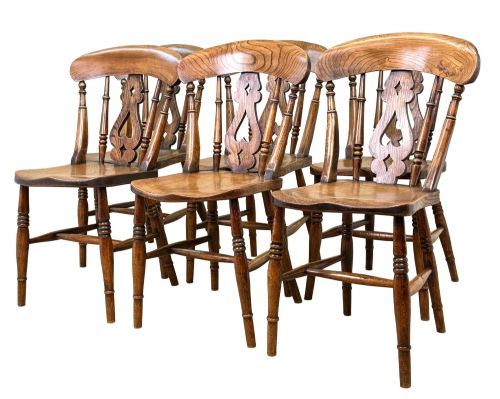
Dining chairs formed a major part of nineteenth-century production, utilising hardwoods like mahogany, walnut, and oak.
Sets ranging from pairs up to eight or more pieces served formal dining spaces and large farmhouse kitchens alike.
What is a Mendlesham chair?
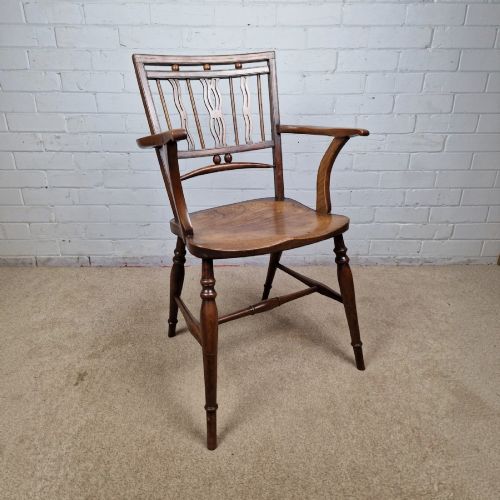
A Mendlesham chair is a distinctive regional Windsor arm chair originating from Suffolk, recognised by its unique pierced splat and construction in native timbers.
These pieces combine country craftsmanship with refined regional design characteristics.
How do I care for antique wooden seats?
Keep wooden furniture away from direct heat sources and rapid temperature fluctuations to prevent timber splitting or joint shrinkage.
Apply traditional beeswax periodically to nourish the surface finish and maintain a natural lustre.