
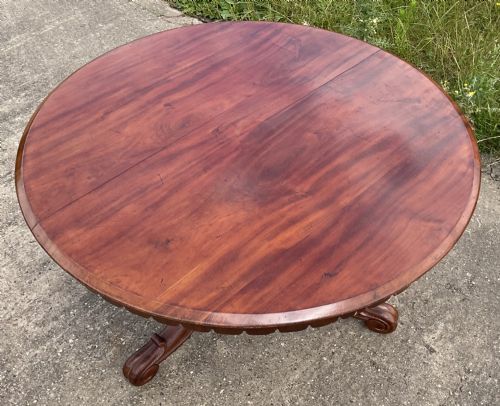
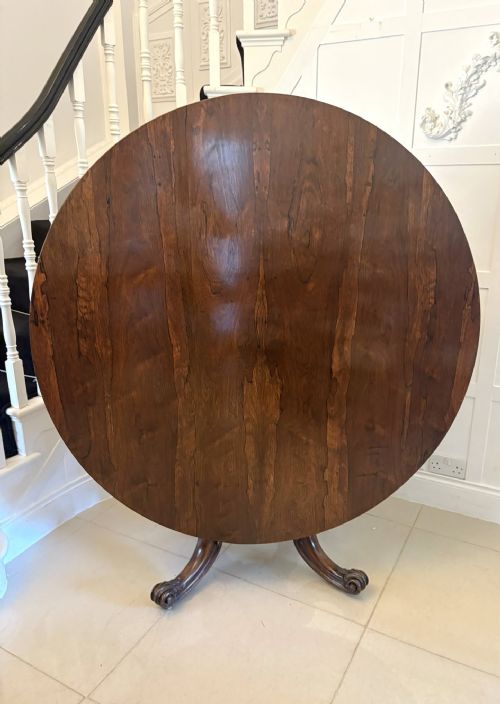
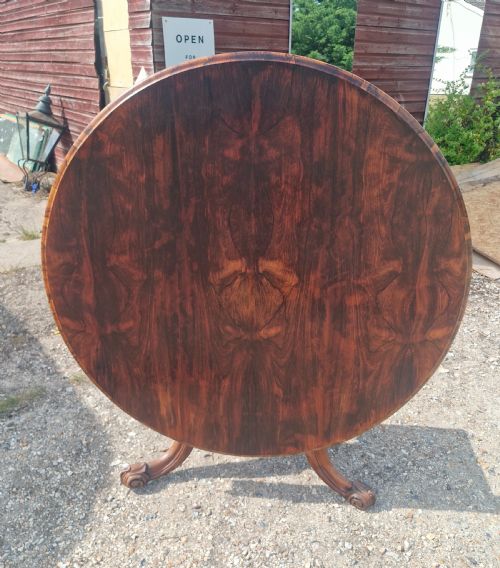


Mid Victorian Loo Table
Mid victorian loo table examples bring versatile, tilt top engineering and rich timber grain together for grand drawing rooms.
Mid Victorian Loo Table
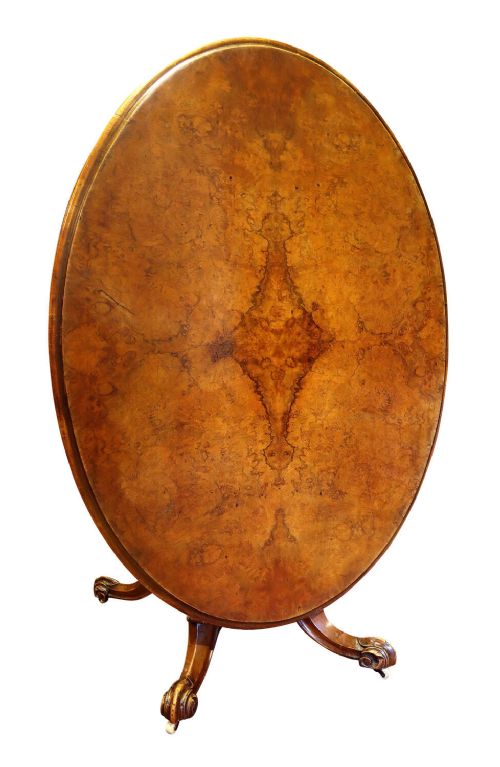
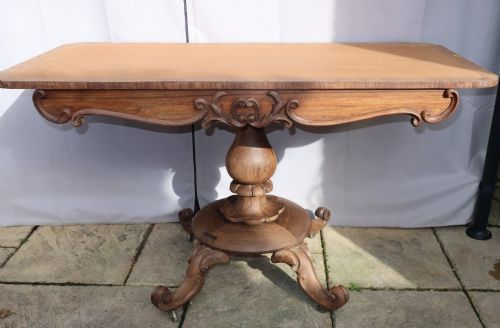
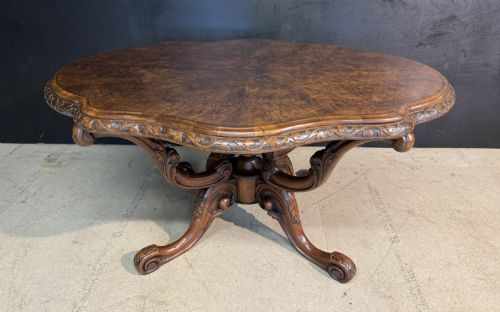
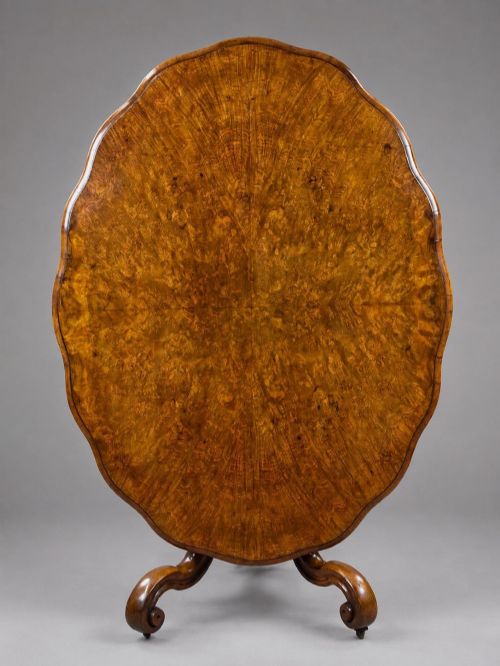
A mid victorian loo table serves as a large, tilt top centrepiece designed for nineteenth century drawing rooms and reception spaces. These tables frequently appear in oval or circular formats, often featuring elaborate pedestals and basket bases.
Buyers seeking this form encounter variations in timber such as burr walnut, rosewood, and mahogany. Many examples function equally as breakfast tables or dining tables depending on their proportions and top mechanism.
Materials and Construction
Cabinet makers utilised solid timbers alongside finely figured veneers, mounting burr walnut and rosewood onto stable secondary woods. Marquetry inlay, brass components, and satin birch detailing appear across sophisticated examples.
The tilt top mechanism relies on a sturdy pedestal base, frequently supported by carved legs or a basket configuration. Joinery employs traditional framing to stabilise the large circular or oval top against warping.
The listings on this site span the nineteenth century, capturing walnut, rosewood, mahogany, and satin birch across circular and oval formats.
Assessing Quality and Craftsmanship
Quality rests in the selection of the timber veneers, where tightly figured burr walnut or richly grained rosewood creates a striking surface pattern. The depth and crispness of carved wooden details on the pedestal indicate superior workshop standards.
Structural integrity of the tilt mechanism and the precision of inlaid marquetry distinguish higher grade pieces from standard utilitarian examples. The stability of the central column and the matching of grain patterns across the top demonstrate expert cabinet making.
The Mid Victorian Loo Table Glossary
- Loo Table
- A large Victorian card and conversation table featuring a tilt top mechanism for easy storage against a wall. The name derives from the popular nineteenth century card game loo.
- Tilt Top
- A table top hinged to the pedestal so it can rotate into a vertical position when not in use. This clever space saving design allowed large tables to line room perimeters.
- Burr Walnut
- Timber taken from the gnarled growth of a walnut tree, yielding complex, swirling grain patterns. Cabinet makers prized this veneer for high status Victorian furniture.
- Marquetry
- Decorative patterns created by fitting different wood veneers and materials into a prepared surface. This technique added intricate floral or geometric designs to table tops.
- Centre Table
- A freestanding table finished on all sides to stand in the middle of a room rather than against a wall. These pieces displayed fine timber and carving from every angle.
Mid Victorian Loo Table: Frequently Asked Questions
What is a mid victorian loo table used for?
These large tables functioned primarily for social gatherings, tea service, and card games in nineteenth century drawing rooms. The tilt top mechanism allowed the furniture to sit flat against the wall to clear floor space.
Today, owners utilise them as statement centre tables or occasional dining surfaces in spacious rooms. Their grand scale and figured timber grain make them natural focal points for interior spaces.
How do you operate the tilt top?
A release catch beneath the table top disengages the locking mechanism, allowing the surface to pivot vertically on its central pivot. The mechanism balances the weight of the heavy timber top for smooth rotation.
Users should support the top securely with both hands when operating the catch to prevent sudden movement. Ensure the locking pin engages fully when returning the table to a horizontal position.
What woods were used to make them?
Workshop artisans predominantly worked with dense hardwoods including rosewood, mahogany, and walnut. Burr walnut veneer provided highly decorative surfaces with distinctive swirling grain patterns.
Secondary timbers supplied internal structural support while specialist woods like satin birch and sycamore appeared in marquetry details and banding. Brass fixtures often reinforced moving joints and castors.
How do I date a 19th century table?
Dating relies on stylistic shifts, construction methods, and timber preferences recorded across the period. Pieces from around eighteen fifty often display rosewood and mahogany, while later decades favour burr walnut and heavier carving.
Examine the underside for assembly marks, screw types, and secondary wood choices that indicate specific workshop traditions. Comparing the form against dated exhibition pieces provides further chronological context.