


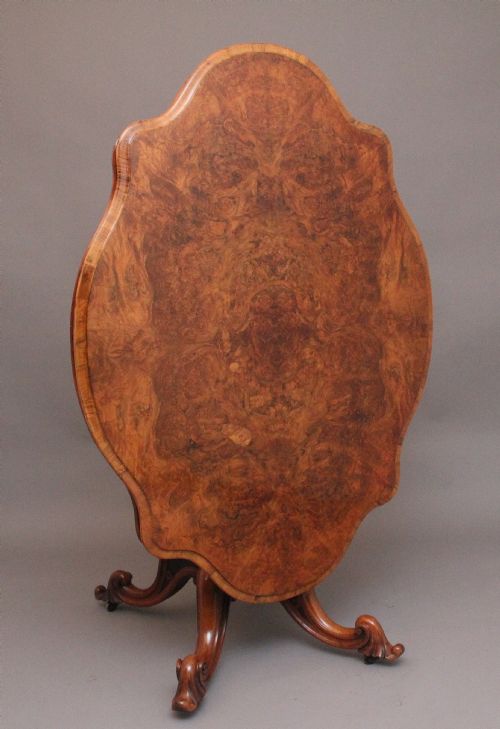


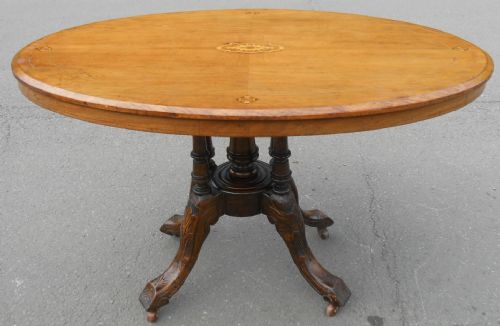


Edwardian Walnut Breakfast Table
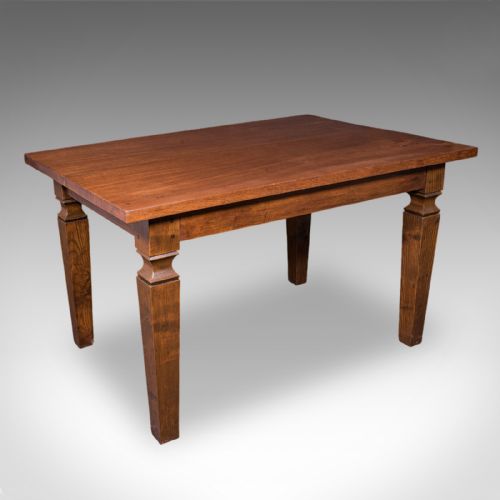
These edwardian walnut breakfast table examples span solid timbers and figured veneers, built for formal sitting rooms and intimate dining.
Edwardian Walnut Breakfast Table
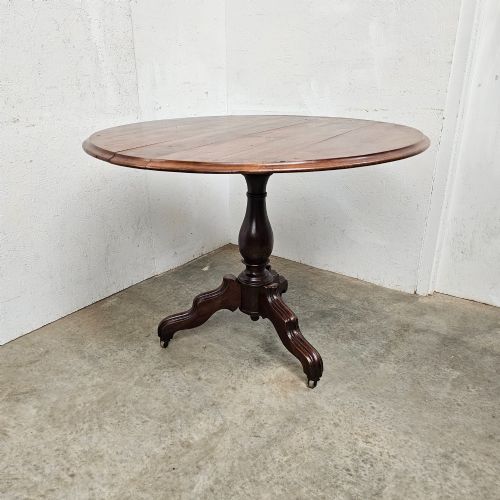
An edwardian walnut breakfast table combines the timber warmth of the era with practical dining and sitting room forms. Buyers examining this category encounter pedestal dining tables, loo tables, and tilt-top breakfast pieces.
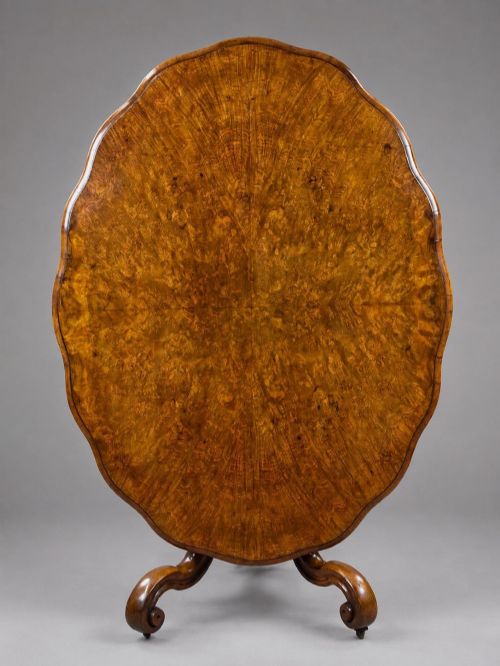
The evidence shows forms ranging from oval pedestal centre tables to tripod tables and Sutherland tables. Most pieces meet the eye as walnut, burr walnut veneer, and mahogany constructions with brass fittings.
Makers and workshops of the period produced these walnut tables to serve as both decorative centrepieces and functional furniture. The selection reflects styles spanning the Victorian era through to Edwardian production.
How they were made
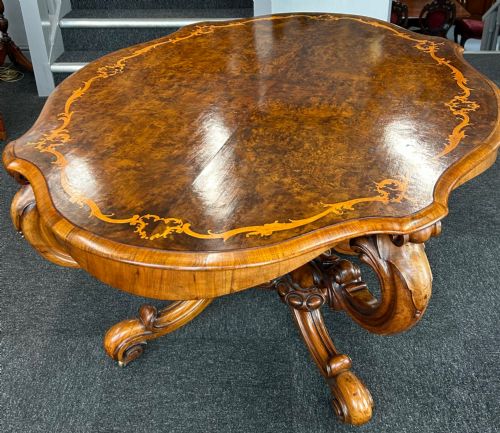
Craftsmen utilised solid walnut and figured burr walnut veneer over secondary timbers to achieve striking top surfaces. Marquetry inlay and fruitwood inlay frequently embellish the outer borders of these tables.
Pedestal bases, tripod supports, and till-top mechanisms require precise joinery to ensure stability during daily use. Brass castors and hinges appear across the pieces to facilitate movement and operation.
Some tables double as card tables for nineteenth-century games, proving our ancestors took their evening entertainment very seriously.
What varies in quality
The choice of timber grain fundamentally separates standard examples from exceptional ones, particularly regarding burr walnut veneer selection. Rich figuring and balanced marquetry inlay display greater workshop skill.
Structural integrity in pedestal columns and tilt mechanisms dictates everyday utility and longevity. Fine carving work and crisp fruitwood details elevate the overall distinction of the piece.
Edwards & Roberts
The Edwardian Walnut Breakfast Table Glossary
- Burr walnut
- A prized timber veneer sourced from walnut tree growths, displaying swirling knot patterns. This grain type creates highly decorative table tops.
- Loo table
- A large round or oval table designed for nineteenth-century card games and general use. These often feature tilt-top mechanisms for storage against walls.
- Marquetry inlay
- Decorative patterns formed by fitting small pieces of contrasting veneer into the main surface. Fruitwood is commonly utilised for these floral or geometric motifs.
- Pedestal table
- A table supported by a central pillar resting on feet rather than four corner legs. This construction allows maximum seating space around the perimeter.
- Till top
- A table top hinged to tilt vertically when not in use. This clever mechanism saved space in smaller rooms.
Edwardian Walnut Breakfast Table: Frequently Asked Questions
What is an edwardian walnut breakfast table?
An edwardian walnut breakfast table is a versatile wooden table designed for dining or parlour use. These pieces often feature pedestal bases and figured walnut veneers.
Makers utilised materials like burr walnut and fruitwood inlay to decorate the surfaces. They serve both functional dining and decorative display roles.
How do I use a tilt top table?
Tilt top tables feature a hinged mechanism beneath the surface that allows the top to lock vertically. This saves floor space when the table is placed against a wall.
Releasing the catch lets the surface rest flat upon the central pedestal. They were originally intended for flexible rooms.
Are these tables suitable for daily dining?
Many of these pieces function well for intimate meals seating two to four people. Pedestal designs offer comfortable legroom without corner legs obstructing chairs.
Care should be taken with veneer surfaces by utilising heat mats and coasters. Regular polishing helps maintain the timber condition.
How do I identify burr walnut?
Burr walnut exhibits swirling, organic patterns caused by tree growth anomalies rather than straight grain lines. It creates a highly decorative mottled texture across the wood.
Craftsmen sliced this timber thinly as a veneer for prominent table tops. This technique highlighted the natural figured beauty of the material.