
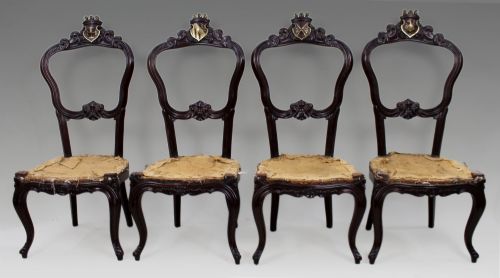
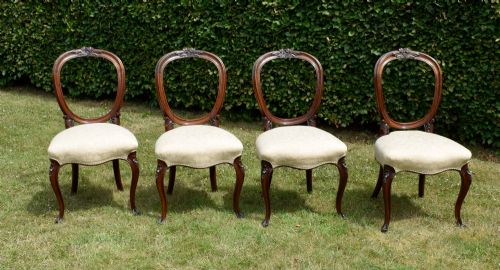
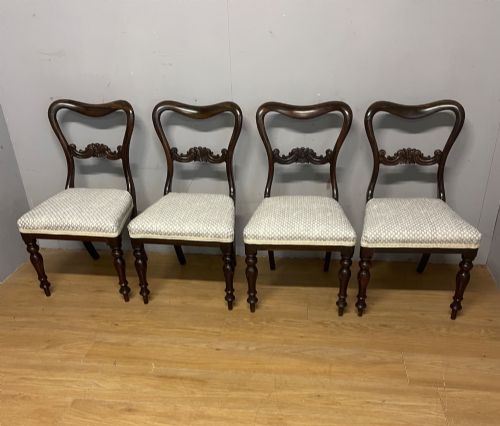

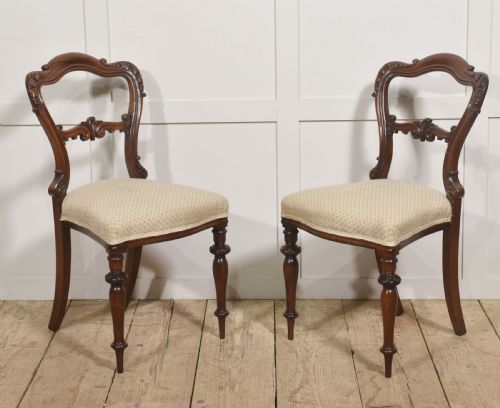


Mid Victorian Balloon Chairs
Mid Victorian balloon chairs offer the curved elegance and dependable comfort that collectors seek for period dining rooms.
Mid Victorian Balloon Chairs
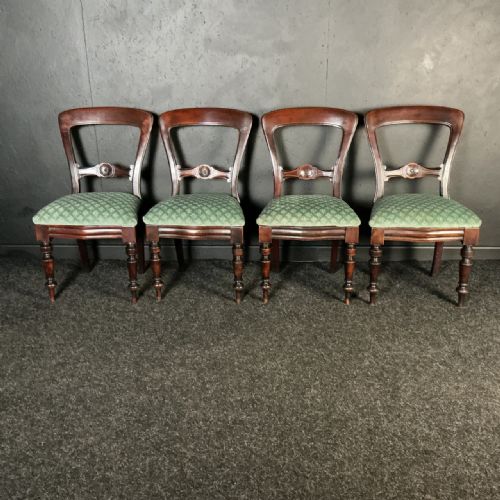
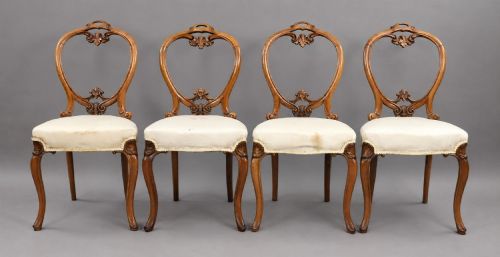
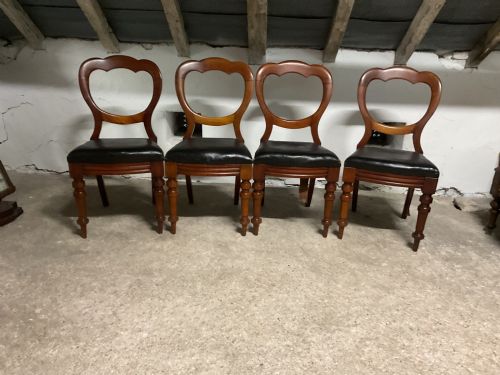
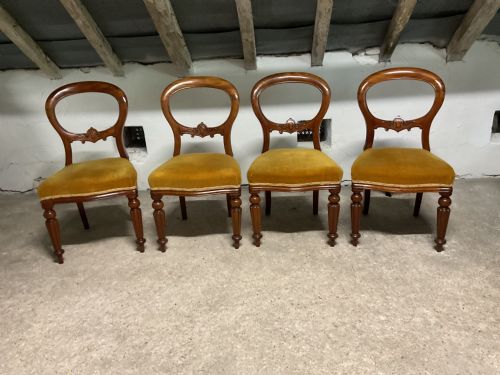
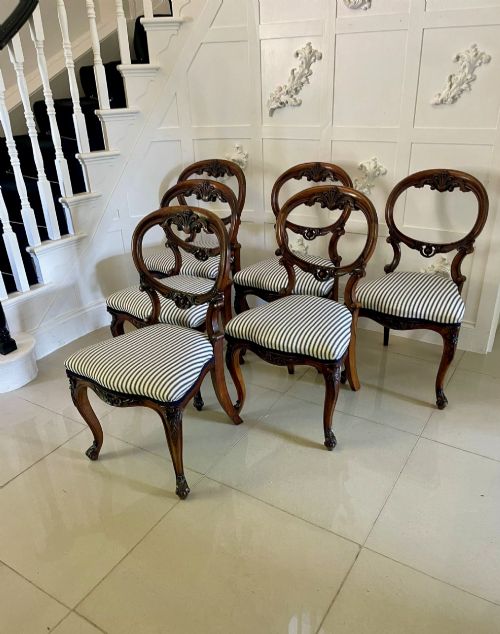
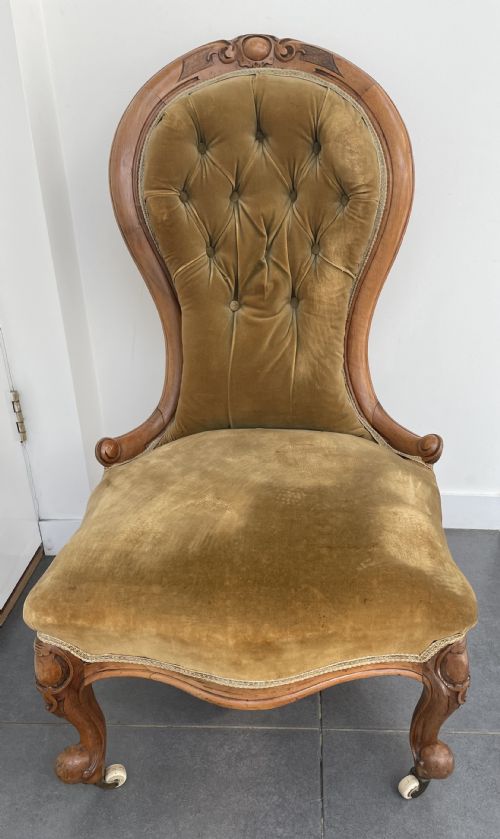
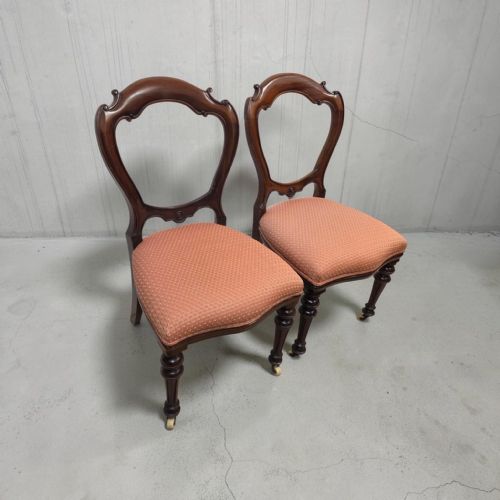
Mid Victorian balloon chairs represent a distinct nineteenth century seating form defined by the rounded, curving outline of the backrest. These pieces appear primarily as dining chairs, alongside occasional, side, nursing, and desk chair variants.
The material record shows sets ranging from pairs up to eight pieces, constructed predominantly in walnut, mahogany, and rosewood. Walnut and mahogany examples dominate the current selection, while rosewood appears frequently in sets and pairs.
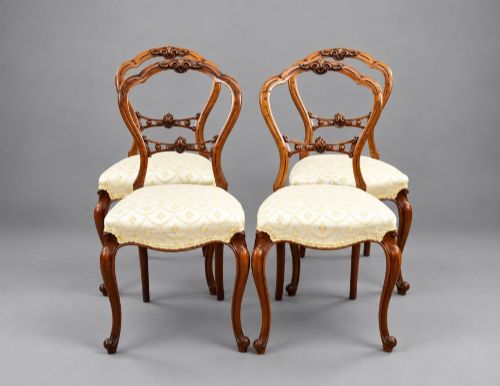
Originating during the Victorian period with dates spanning the mid nineteenth century, these chairs reflect the dominant Rococo Revival influence of the era. Buyers encounter them individually, in matched pairs, or in larger dining sets.
How they were made
Cabinetmakers constructed these frames using dense hardwoods like walnut, mahogany, rosewood, and golden oak, often shaping the timber with elaborate carving. The characteristic balloon back relies on steam bending or careful joinery to achieve the continuous curved profile.
Upholstery completed the seat, utilising materials such as fabric, velvet, and textile, sometimes paired with needlepoint or brass details. Makers secured the padding over supportive springs or webbing to provide functional seating.
Mid Victorian Balloon Chairs Retail Price Guide 2026
Typical asking prices for mid victorian balloon chairs among the pieces listed under this phrase on Sellingantiques today, from the lower quarter to the upper quarter. They describe what is for sale here now, not the wider market.
Listings feature woods including walnut, mahogany, rosewood, and golden oak, spanning the Victorian period around the mid nineteenth century.
What varies in quality
The refinement of the carved details on the walnut, mahogany, or rosewood frame separates standard examples from exceptional pieces. Crisp floral or scroll motifs demonstrate superior craftsmanship by the workshop.
Timber selection dictates the visual presence of the chair, with highly figured grains commanding greater appreciation. Matching across a larger set of chairs indicates careful initial selection of materials by the maker.
John Taylor & Son
The Mid Victorian Balloon Chairs Glossary
- Balloon back
- A chair back shaped in a continuous curved oval resembling the silhouette of a balloon. This form defines mid nineteenth century seating design.
- Rococo Revival
- A nineteenth century design movement favouring asymmetrical scrollwork, naturalistic curves, and ornate floral carving. It heavily influences the decorative details on these chairs.
- Side chair
- An upright chair without arms designed primarily for dining or occasional use around a room. These pieces form the majority of surviving sets.
- Nursing chair
- A low-seated chair originally intended for nurseries and dressing rooms, often featuring upholstered button backs. They sit closer to the floor than standard dining chairs.
- Needlepoint
- Stitched textile work used to cover seat pads, frequently seen in geometric or floral patterns. This decorative element adds colour and texture to the timber frame.
Mid Victorian Balloon Chairs: Frequently Asked Questions
What are mid Victorian balloon chairs?
These pieces are nineteenth century seating furniture characterised by an oval, curved backrest shaped like a balloon. They were produced primarily as dining chairs in sets of various sizes.
Cabinetmakers utilised dense timbers such as walnut, mahogany, and rosewood to form the frames, often incorporating carved details and upholstered seats.
How were balloon chairs used originally?
Dining chairs served around the formal dining tables of mid nineteenth century homes, accommodating guests during long meals. Smaller side and occasional chairs functioned in parlours and drawing rooms.
Nursing chairs provided low seating for domestic tasks in private chambers, while desk chairs supported writing and administrative work.
How do I care for antique wood and upholstery?
Protect the timber frames from direct sunlight and extreme temperature fluctuations to prevent the wood from drying or splitting. Regular dusting with a soft, dry cloth preserves the finish.
Upholstered seats require gentle vacuuming using a low suction attachment. Professional cleaning helps maintain delicate textiles and needlepoint.