


Mid Century Writing Table
A mid century writing table brings purposeful surface area and refined storage into a room, joining utility with period craftsmanship.
Mid Century Writing Table
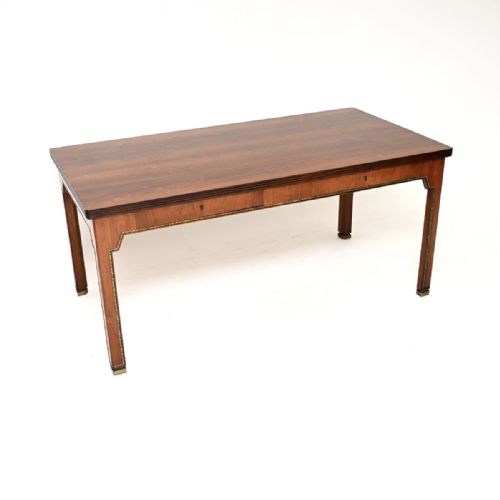
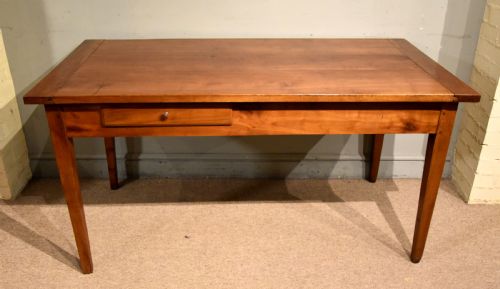
A mid century writing table encompasses diverse forms designed for correspondence and study, including pedestal desks, compact lowboys, and library tables. The selection ranges widely from eighteenth-century Georgian mahogany pieces to nineteenth-century walnut and satinwood examples.
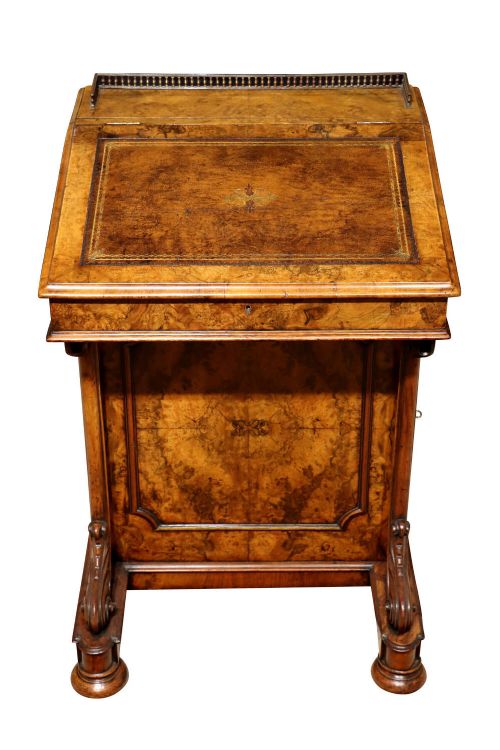
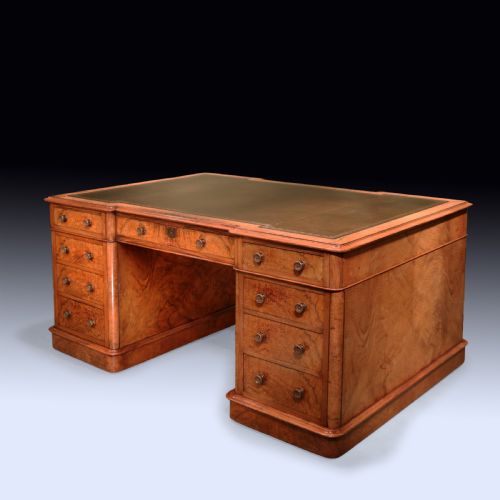
Buyers frequently encounter nineteenth-century mahogany and burr walnut iterations featuring inset leather writing surfaces and drawers. These practical variants bridge domestic writing tasks and grander architectural furniture traditions.
How they were made
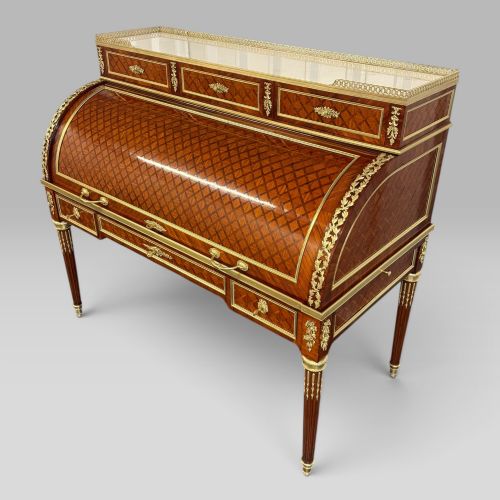
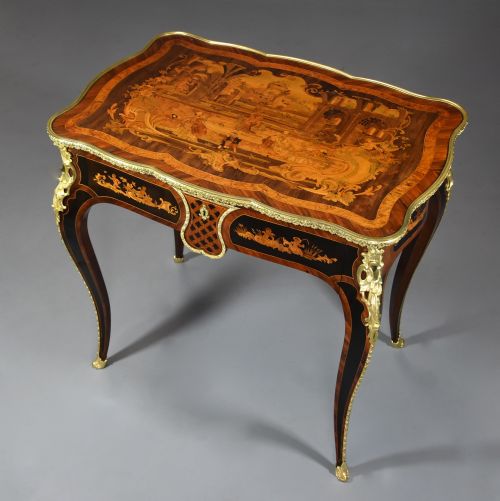
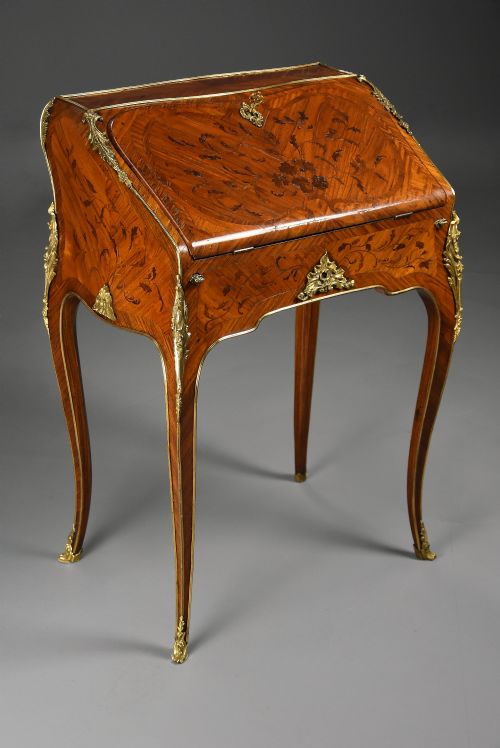
Cabinetmakers utilised dense timbers such as mahogany, oak, and walnut as structural carcases, frequently applying burr veneers and figured grains to prominent surfaces. Marquetry and parquetry patterns introduced intricate geometric and floral imagery using contrasting exotic woods.
Metal mounts in ormolu, gilt bronze, and brass reinforced structural corners while framing leather writing panels. Hand-cut dovetails secured drawer construction, ensuring durability across decades of daily use.
Listings feature periods spanning from the mid eighteenth century through to the Edwardian era, incorporating mahogany, oak, burr walnut, and satinwood.
What varies in quality
Excellence in a mid century writing table rests upon the precision of veneer selection and the fluidity of carved or cast ornamentation. Superior examples display continuous grain matching across drawer fronts and finely chased ormolu mounts.
The architectural balance of proportions and the refinement of internal secondary woods signal higher standards of construction. Subtle details like satinwood drawer interiors and meticulous marquetry elevate certain pieces above standard utilitarian desks.
James Winter And Sons
The Mid Century Writing Table Glossary
- Lowboy
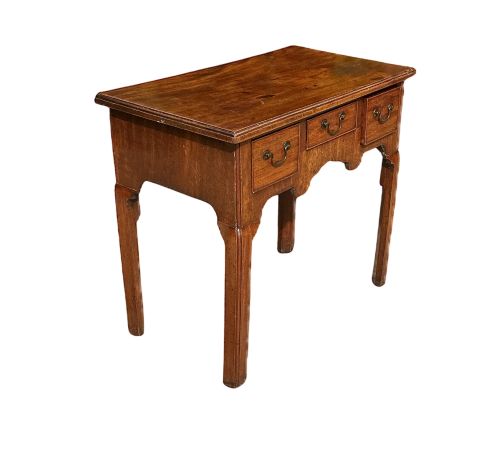
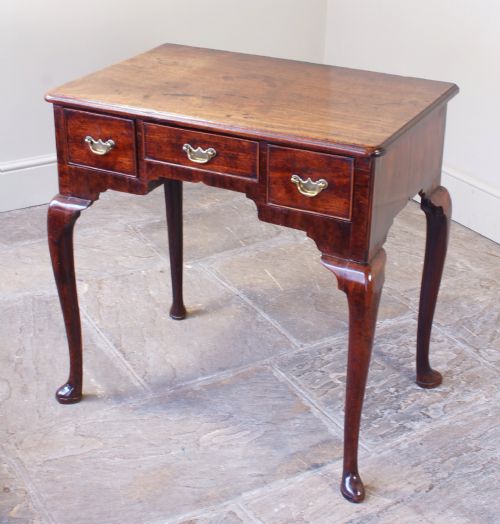
- A small occasional table featuring one or more rows of drawers, commonly produced in eighteenth-century oak or mahogany. It frequently serves as a compact writing or side table.
- Ormolu
- Gilt bronze ornamentation applied to furniture mounts and decorative accents during the eighteenth and nineteenth centuries. It adds metallic contrast to wood surfaces.
- Partners desk
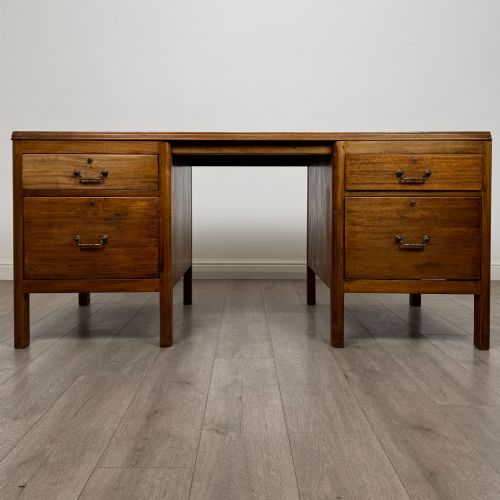
- A large double-sided pedestal desk designed for two people to work opposite one another, featuring matching banks of drawers or cupboards on both faces.
- Marquetry
- Decorative veneer work arranged in pictorial or geometric patterns using diverse coloured woods. Craftsmen assemble these thin wood slices onto the primary furniture carcase.
Mid Century Writing Table: Frequently Asked Questions
How do I use a writing table today?
These tables adapt easily to modern home offices or living rooms as functional desks and display surfaces. Their traditional proportions offer generous knee clearance and practical drawer storage for daily stationery.
Placing one against a wall or floating it in the centre of a room highlights finished backs and decorative detailing. They provide a sophisticated workspace without dominating domestic interiors.
What is a partners desk?
A partners desk is an expansive double-sided workstation built to accommodate two people sitting face to face. These large pieces feature identical drawer configurations on both sides.
Originating for professional offices and libraries, they require substantial room placement. Their grand scale makes them the visual focal point of any large study.
How do I distinguish eighteenth and nineteenth century styles?
Eighteenth-century pieces typically exhibit restrained Georgian lines, solid oak or mahogany construction, and simpler structural forms like lowboys. They prioritise understated timber quality over heavy ornamentation.
Nineteenth-century variants frequently introduce elaborate revival aesthetics, complex burr veneers, and exhibition-quality marquetry. They embrace diverse European influences, from French Louis styles to English Chippendale revivals.
What is a bureau plat?
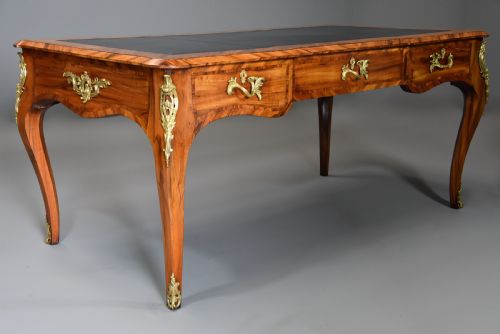
A bureau plat is a formal freestanding French writing table equipped with a leather top and frieze drawers. Unlike pedestal desks, it stands on slender legs without banks of drawers beneath.
These tables are finished on all sides so they can float in the middle of a room. They often incorporate elaborate ormolu mounts and exotic wood veneers.