
Vintage Oak Executive Desk
A vintage oak executive desk provides a substantial workspace with period character, grounding a study or office in solid timber and history.
Vintage Oak Executive Desk
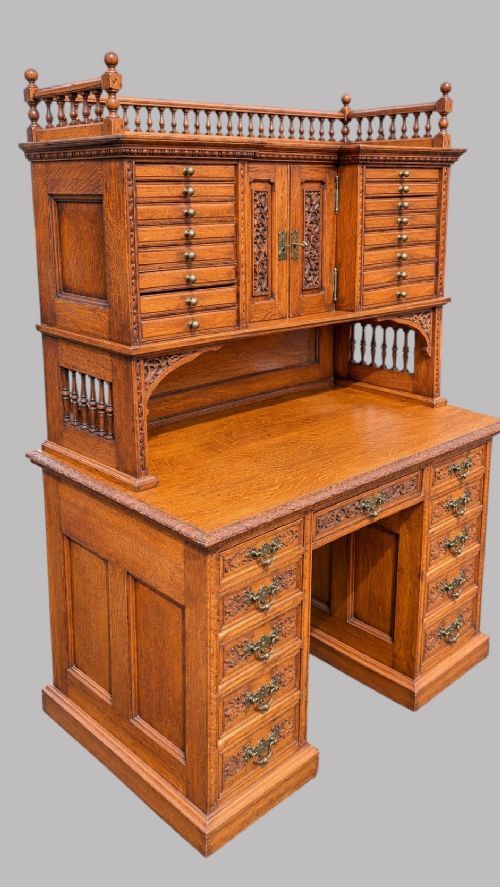
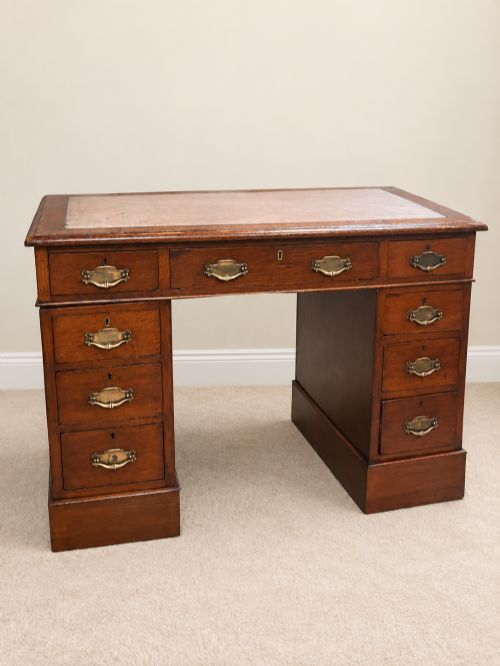
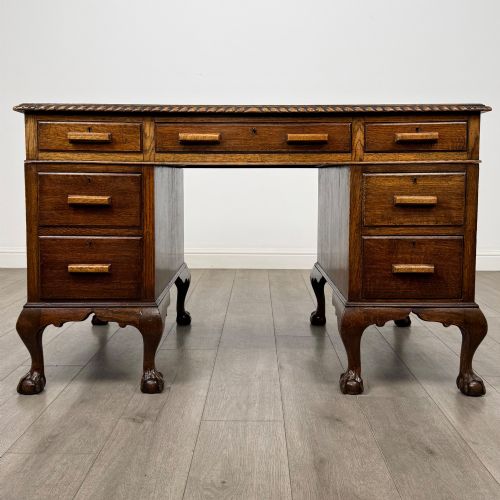
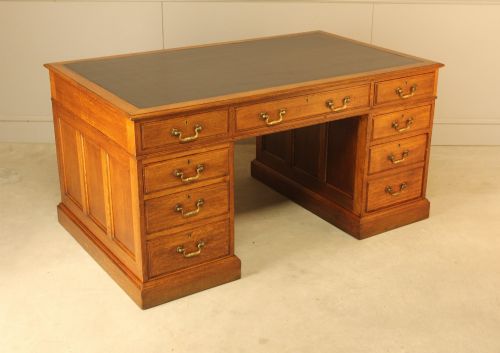
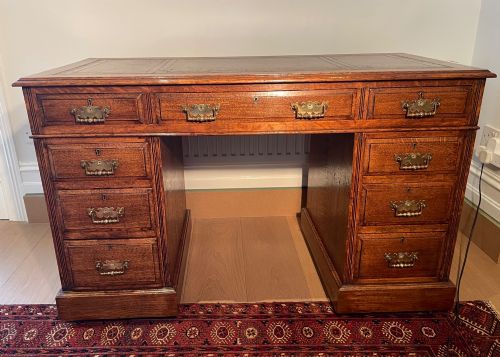
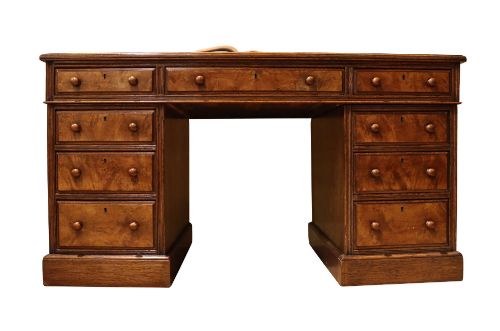
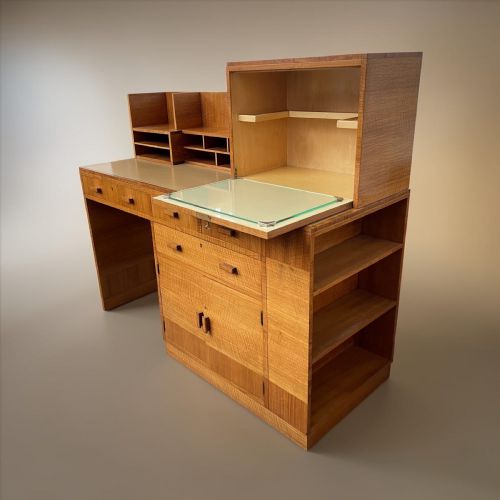
A vintage oak executive desk is a substantial writing or office workspace built primarily from oak, taking the form of a pedestal desk, kneehole desk, partners desk, or library table. These pieces span the Victorian, Edwardian, and Art Deco periods, encompassing designs from simple estate manager desks to exhibition quality office furniture.
Buyers meeting these pieces on this page will most frequently encounter nineteenth-century pedestal desks and early twentieth-century office variants featuring multiple drawers and inset writing surfaces. Solid oak construction dominates, though some examples incorporate burr walnut veneers or ash.
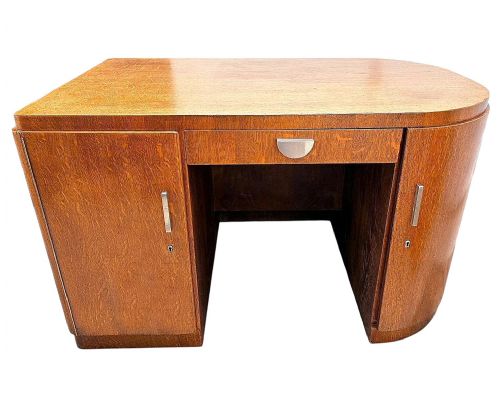
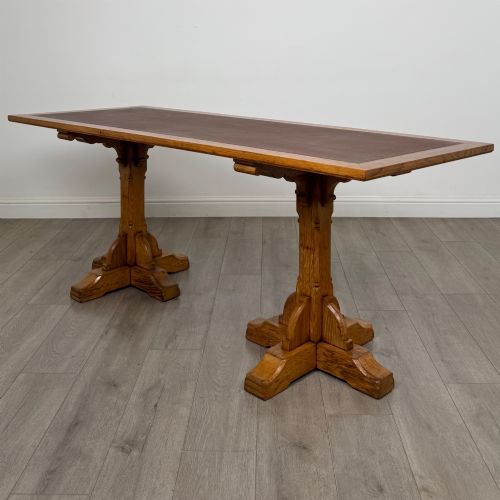
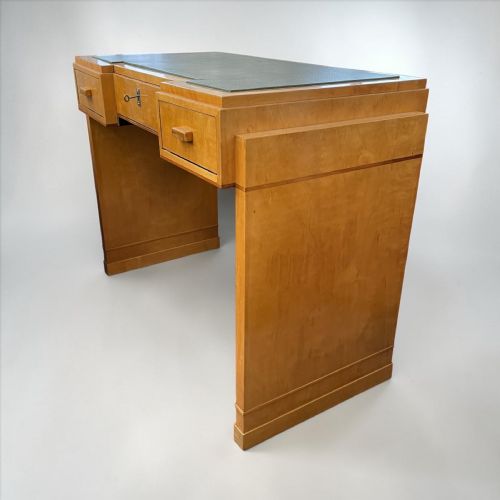
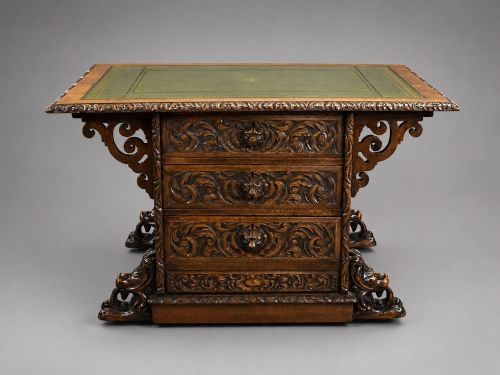
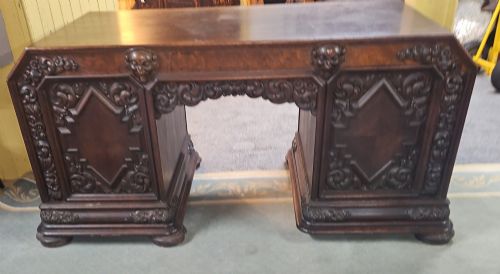
The styles range from heavy Victorian carvings and Jacobean revivals to clean-lined Art Deco modernist designs and Arts & Crafts simplicity. Larger partner desks and library tables also appear, providing workspace accessible from multiple sides.
Materials and construction methods
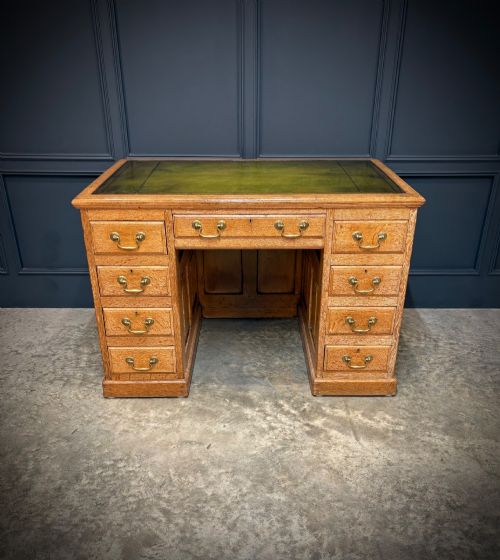
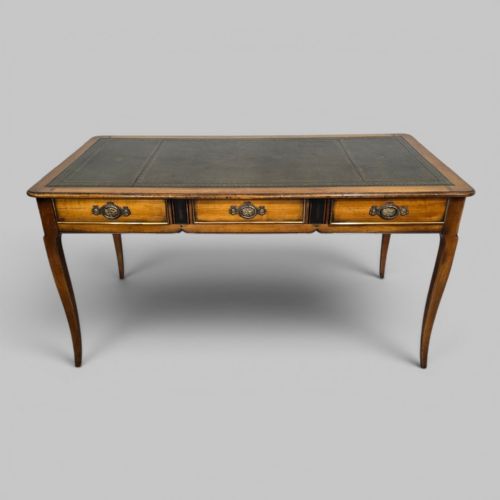
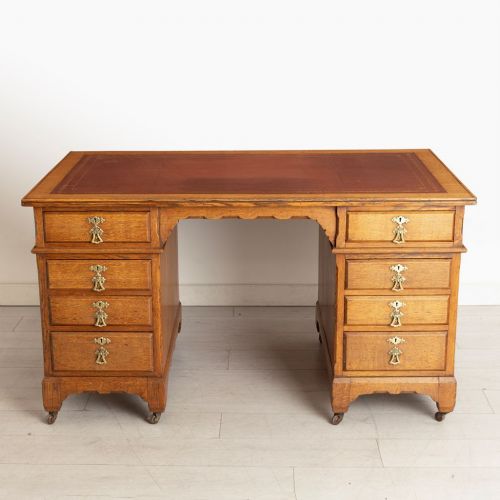
Solid oak serves as the primary structural material, often paired with inset leather writing surfaces framed by brass or wooden surrounds. Carpenters utilised traditional joinery techniques to construct multi-drawer pedestals and large partners tables designed to withstand decades of administrative use.
Secondary materials appear in specific design movements, such as chrome and metal elements on Art Deco pieces, or turned iron and bentwood in associated desk chairs. Burr walnut veneers accent select Victorian pedestal desks, adding visual contrast to the dense oak grain.
Surface treatments vary from hand-carved panels and linenfold details on revival pieces to smooth, polished finishes on modernist Art Deco tables. Structural hardware includes brass drawer pulls and handles that reflect the manufacturing period.
Listings feature Victorian, Edwardian, and Art Deco periods, utilising solid oak, burr walnut, brass, leather, and chrome.
Differentiating quality across examples
Quality separates standard office furniture from exhibition pieces through the selection of timber and the complexity of the cabinetry. Finer examples display highly figured oak, book-matched burr walnut accents, and meticulous hand-carving rather than mass-produced machine milling.
The integration of secondary materials such as tooled leather writing surfaces and substantial brass hardware distinguishes superior examples. Maker attribution also elevates certain desks, with pieces bearing workshop signatures or labels commanding specific attention.
Proportion and scale dictate the success of the design, ranging from compact kneehole configurations to grand partners desks finished on all sides for central room placement.
Heal's·Étienne Kohlmann·T Wilson·Gillow & Co
The Vintage Oak Executive Desk Glossary
- Pedestal desk
- A heavy writing table consisting of two box-like drawer pedestals supporting a top surface with a central opening. This form offers extensive storage flanking the sitter.
- Partners desk
- A large double-sided desk designed for two people to work opposite one another, featuring drawers and cupboards accessible from both sides. These typically command central placement in large rooms.
- Kneehole desk
- A compact desk featuring a recessed space for the legs beneath a single bank or multiple banks of drawers. They suit smaller studies while retaining traditional timber construction.
- Library table
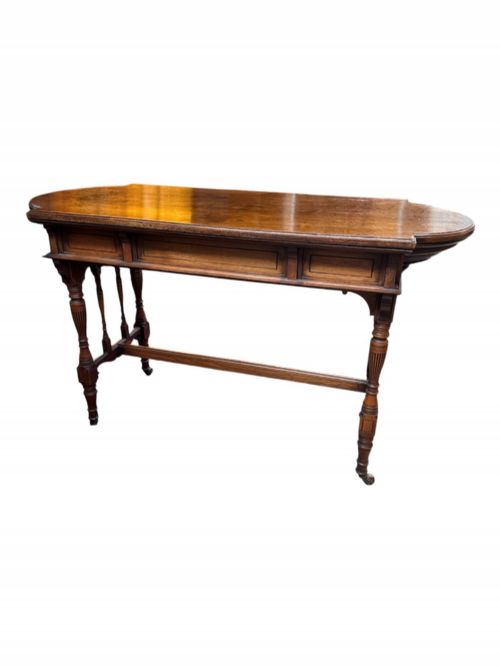
- A large freestanding table used for reading and sorting papers, lacking the pedestal drawer stacks of a standard office desk. They often feature generous proportions and four working legs.
- Burr walnut
- A prized wood veneer showing swirling, knotty grain patterns used to accent drawer fronts and panels on select desks. It provides a striking contrast against standard oak framing.
Vintage Oak Executive Desk: Frequently Asked Questions
What is a partners desk?
A partners desk is a large, double-sided workspace designed for two individuals to sit opposite each other. These pieces feature drawers and cupboards accessible from both sides.
They traditionally served professional offices and large libraries where two colleagues needed simultaneous access to storage and writing surfaces.
How do I identify the period of an oak desk?
Period identification relies on observing structural styles, decorative motifs, and hardware. Victorian examples often display heavy carving or burr walnut accents, while Edwardian pieces lean toward generous proportions in figured oak.
Art Deco desks from the nineteen-thirties introduce modernist geometry, cleaner lines, and alternative materials like chrome alongside the traditional timber.
Where should I place a large pedestal desk?
Large pedestal desks and partners desks require ample floor space to allow movement around the pedestals and comfortable chair clearance. Freestanding partners desks look best positioned centrally in a room rather than pushed against a wall.
Kneehole and smaller writing desks fit more easily into perimeter spaces or home studies without dominating the room.