




Rosewood Office Desk
A rosewood office desk brings deep grain and dark warmth to a room, offering a solid writing surface shaped by centuries of cabinet-making.
Rosewood Office Desk
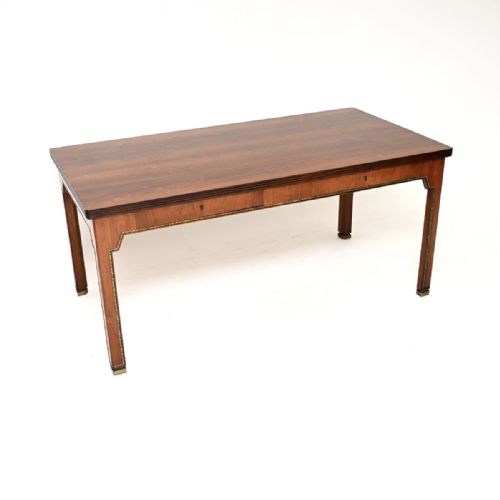
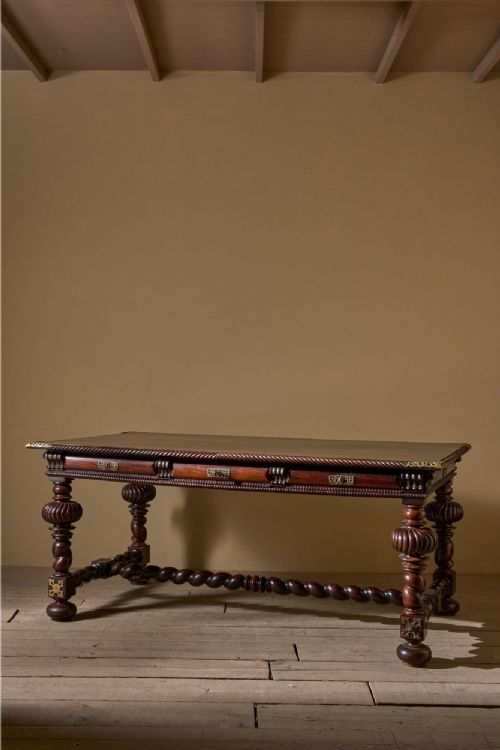
A rosewood office desk represents a substantial investment in domestic and library furniture, appearing across periods from the Regency era through to the mid-twentieth century. Buyers searching for a rosewood office desk will encounter various forms, including writing tables, pedestal desks, compact Davenports, and supportive desk chairs. These pieces originate from English, French, Portuguese Colonial, and Danish workshops, displaying distinct regional proportions and decorative schemes.
The most frequent examples on this page date from the nineteenth century, particularly the Victorian and William IV periods, alongside Regency designs and twentieth-century Danish modern creations. Writing tables and Davenport desks dominate the selection, often featuring fitted interiors with small drawers and pigeonholes. Alongside these writing surfaces, matching rosewood desk chairs appear frequently to complete a traditional study arrangement.
Materials and construction methods
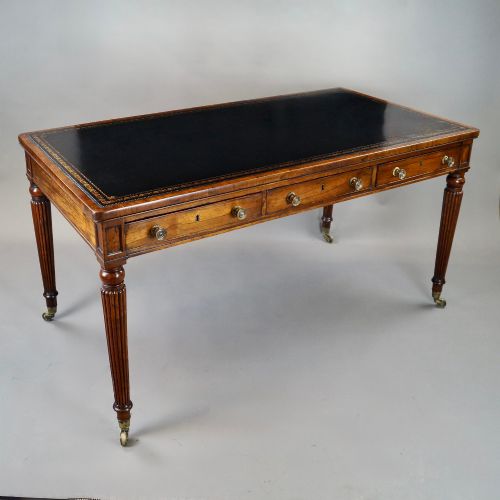
Construction relies heavily on solid and veneered rosewood, valued for its dense grain and rich hue, frequently augmented by secondary timbers like fruitwood. Cabinet-makers utilised brass for handles, casters, and decorative stringing, while gilt bronze or ormolu mounts appear on continental pieces. Leather inserts provide a traditional writing surface, often framed with delicate satinwood inlay or marquetry work.
Joinery methods reflect the specific period of manufacture, ranging from hand-cut dovetails in nineteenth-century drawer construction to the streamlined framing of 1930s Danish cabinetry. Marquetry and satinwood inlay demand precise hand-cutting and fitting, embedding contrasting lighter woods directly into the darker rosewood background. Ormolu mounts are secured mechanically to the timber chassis, completing surfaces finished with traditional shellac polishes.
Campaign desks were built to travel the empire, meaning someone once packed this entire office flat inside a wooden crate.
Distinguishing quality and craftsmanship
Superior examples of a rosewood office desk display exceptional grain selection, where figured timber is matched symmetrically across large surfaces like table tops and fall-fronts. The crispness of carved details, such as the reeded legs on William IV pieces or the fine casting of ormolu mounts, separates workshop output from mass production. Internal construction, including solid mahogany drawer linings and secret compartments, indicates the tier of original commission.
Proportion and structural integrity dictate the long-term standing of each piece, distinguishing balanced designs from awkward conversions or later alterations. The retention of original leather writing surfaces, patinated brass hardware, and period-appropriate polish depth all contribute to an object's integrity. Continental revival pieces and English library tables show variance in the complexity of their marquetry and the weight of their brass mounts.
Ray and Miles of Liverpool
The Rosewood Office Desk Glossary
- Davenport
- A compact desk featuring a sloping, leather-lined writing lid above a bank of side drawers. This form became popular during the nineteenth century for writing and storage in smaller rooms.
- Marquetry
- The art of applying decorative veneer pieces in various woods to a structure to form geometric or floral patterns. It differs from inlay by assembling the pattern before fixing it to the surface.
- Ormolu
- Gilt bronze ornamentation mounted onto furniture pieces, particularly common on nineteenth-century French designs. The technique involves applying a gold amalgam to bronze before firing.
- Pedestal desk
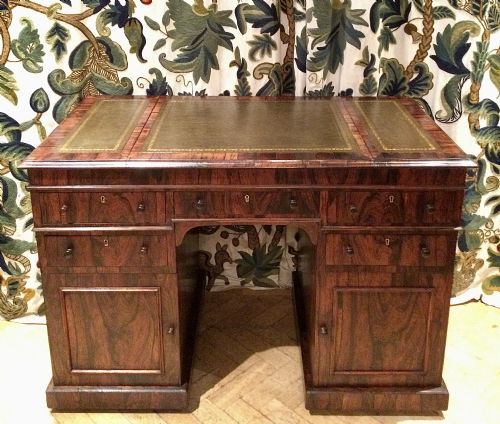
- A heavy freestanding writing table supported by two pedestals of drawers or cupboards. These often incorporate a central drawer above the kneehole space.
- Writing table
- A freestanding table designed primarily for correspondence, usually featuring one or more drawers beneath the top. Unlike pedestal desks, they stand on open legs or trestle ends.
Rosewood Office Desk: Frequently Asked Questions
How do I care for rosewood?
Rosewood benefits from consistent humidity levels and protection from direct sunlight, which can alter the deep tones of the timber over time. Applying a traditional wax polish occasionally helps nourish the wood and maintain its natural sheen.
Avoid placing hot cups or damp items directly onto the surface to prevent marking the polished finish. A soft, dry cloth is sufficient for routine dusting.
What is a Davenport desk?
A Davenport is a small, upright desk featuring a hinged, sloping writing surface covered in leather. The body typically contains a set of drawers opening to one side.
Originating in the early nineteenth century, this form provides a writing space and storage without occupying the floor area of a traditional library desk.
Are these desks suitable for laptops?
Many nineteenth-century and vintage writing tables offer sufficient surface area and height to accommodate modern laptops and paperwork comfortably. Library tables and pedestal desks provide sturdy platforms for daily administrative work.
Buyers should check the internal clearance of kneeholes and central drawers to ensure adequate ergonomic seating positions.
How do I date a rosewood desk?
Dating relies on examining construction techniques, hardware styles, and the overarching design period, such as Regency, Victorian, or Edwardian. Hand-cut dovetails, brass caster types, and secondary woods like oak or mahogany offer strong chronological indicators.
Makers' stamps, paper labels, and regional construction traits help narrow the origin and decade of manufacture further.