





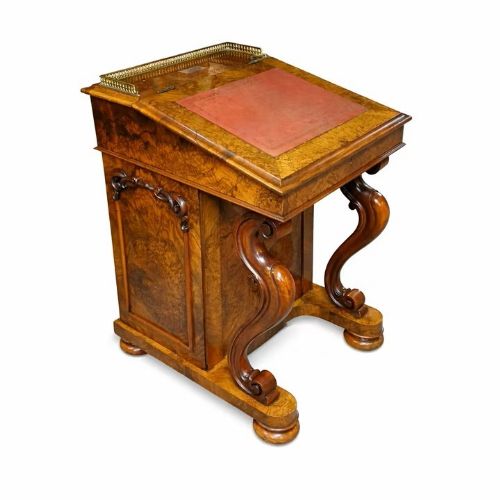

Antique Furniture Davenport
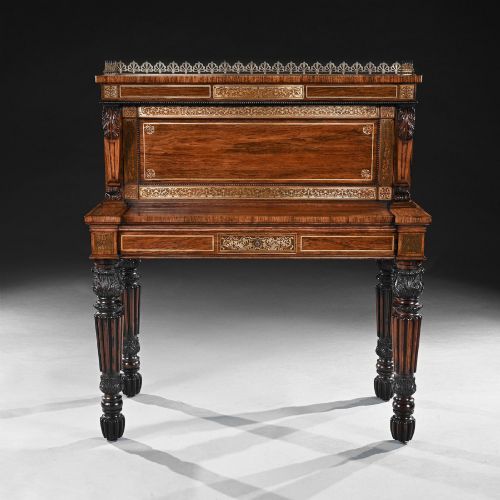
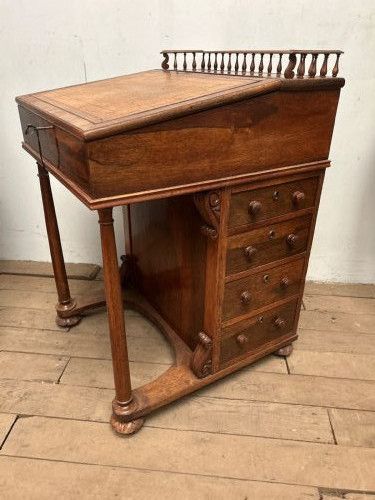
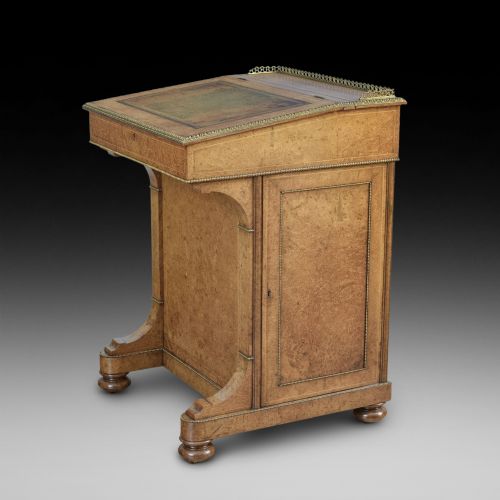
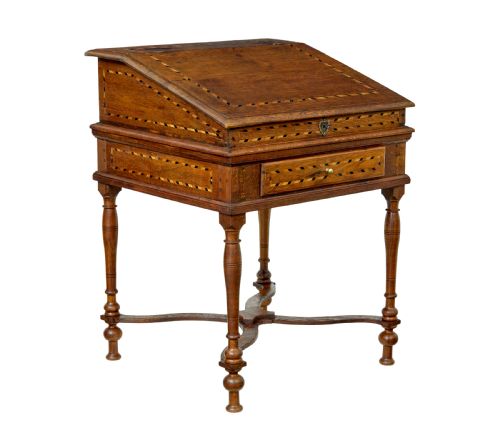
These antique furniture davenport pieces are compact writing desks defined by sloping hinged tops and pedestal drawers, prized for efficient workspace organisation.
Antique Furniture Davenport
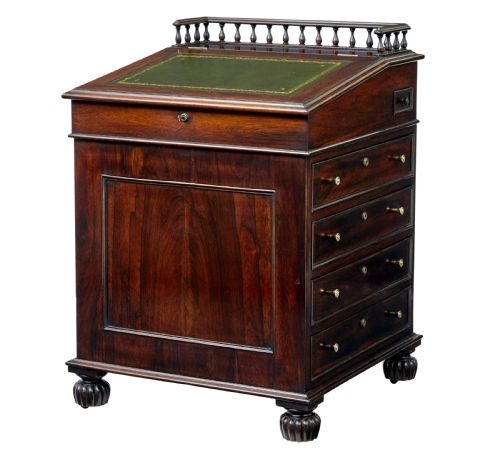
When you search for antique furniture davenport, you encounter a specialised form of compact writing desk that emerged during the Georgian and Regency periods. These pieces combine a sloping writing surface with a pedestal base containing drawers, offering a complete writing station within a remarkably small footprint.
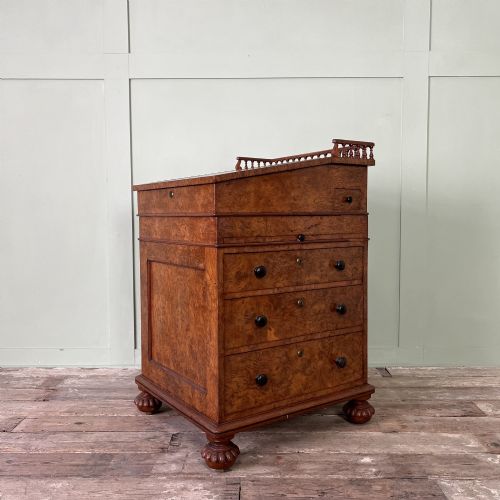
You are most likely to meet Victorian examples on this page, particularly those constructed in burr walnut or mahogany. Many Victorian and 19th-century variants incorporate refinements such as side drawers, stationary boxes, and pop-up superstructures.
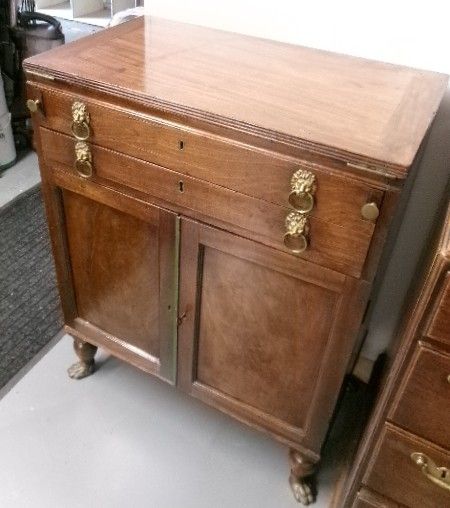
Beyond standard writing desks, the evidence shows related forms including writing tables, writing slopes, and occasional sofas or chests, though the Davenport remains the distinct centrepiece of this selection.
Materials and construction
Cabinetmakers utilised rich timber veneers such as burr walnut, rosewood, amboyna, pollard oak, and mahogany over solid secondary woods, often enhancing the surfaces with marquetry, inlay, and satinwood interiors. These woods were selected for their striking grain patterns and finished to a high polish.
Functional metal hardware played a vital role in construction, with brass inlays, handles, and paw feet providing structural contrast and decorative detail. Leather writing inserts, frequently tooled or gilt, were fitted directly into the sloping surfaces.
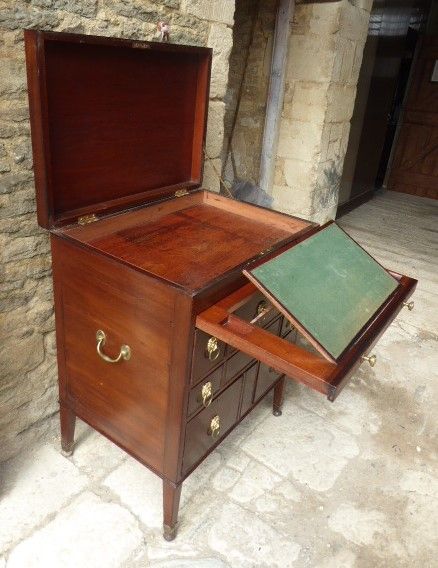
Joinery methods accommodated complex interior compartments, sliding desk mechanisms, and side-opening drawers, requiring precise carpentry to ensure smooth operation of pop-up components and concealed stationery fittings.
Materials across these listings span burr walnut, mahogany, rosewood, oak, amboyna, pollard oak, olivewood, satinwood, leather, and brass.
Distinctions in quality
Quality rests significantly on the choice and matching of timber veneers, where symmetrical burr walnut or figured rosewood grain elevates a piece far above plain timber carcases. The sophistication of interior satinwood drawer arrangements and the crispness of floral marquetry or brass inlay further set apart the finest work.
Maker attribution marks structural excellence, with pieces bearing signatures or associations with notable workshops commanding attention for their superior framing, drawer dovetailing, and mechanical reliability. Lesser pieces show simpler joinery and straightforward secondary woods without specialised cabinetmaker detailing.
Gillows Oxford Street Workshop·Gillow and Co·Gillows of Lancaster·Hampton and Sons of Pall Mall
The Antique Furniture Davenport Glossary
- Davenport
- A compact pedestal desk featuring a sloping, hinged writing surface above a bank of drawers. This form became a staple of 19th-century domestic interiors.
- Burr walnut
- A highly figured timber veneer taken from the growth excrescences of walnut trees. It provides swirling, knotty patterns prized for decorative cabinet fronts.
- Marquetry
- The art of applying decorative pieces of veneer to a structure to form intricate designs. Floral motifs are common on Victorian desk lids.
- Pop-up
- A mechanical superstructure rising from the rear of the desk to reveal stationary slots and compartments. This mechanism utilises internal weights or springs.
- Writing slope
- A portable or desk-mounted hinged box that opens to provide an angled writing surface. It represents the functional precursor to the enclosed pedestal desk.
Antique Furniture Davenport: Frequently Asked Questions
What is a Davenport desk?
A Davenport is a small, freestanding writing desk featuring a sloped leather-inset writing surface that lifts to reveal storage. Beneath this slope sits a pedestal base typically fitted with drawers opening to the side.
First appearing in the late Georgian era, these desks were designed for domestic use where space was limited. Their compact proportions made them popular for drawing rooms and boudoirs.
How were Davenport desks used originally?
They served primarily as personal writing desks for correspondence, journaling, and managing household accounts. The sloping top provided an ergonomic angle for handwriting while concealing papers within.
Interior compartments held inkwells, pens, and stationery, keeping writing materials organised within a single piece of furniture. Side drawers secured personal documents away from view.
How do I date a Davenport desk?
Dating relies on stylistic shifts in timber choice, hardware, and leg design across the Georgian, Regency, and Victorian periods. Georgian and Regency examples often feature simpler mahogany or rosewood framing with brass paw feet.
Mid-to-late 19th-century Victorian pieces frequently showcase elaborate burr walnut veneers, marquetry inlay, and mechanical pop-up superstructures. The construction of the drawer linings and interior stationery fittings also offers clues to the decade of manufacture.
Where should I place a Davenport in a room?
Because many examples feature finished backs and freestanding construction, they can sit away from walls in the centre of a study or living space. Their compact footprint allows them to fit comfortably into corners or alcoves.
Consider natural light sources when positioning the desk to illuminate the writing slope effectively. Ensure adequate clearance beside the pedestal for side-opening drawers to function smoothly.