





Vintage Rosewood Writing Table
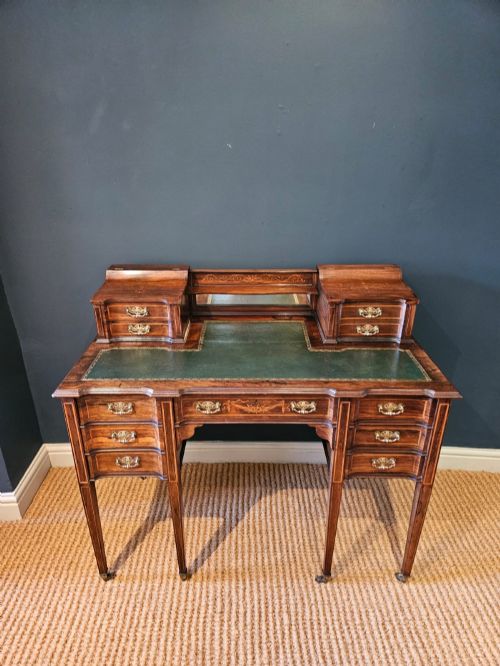
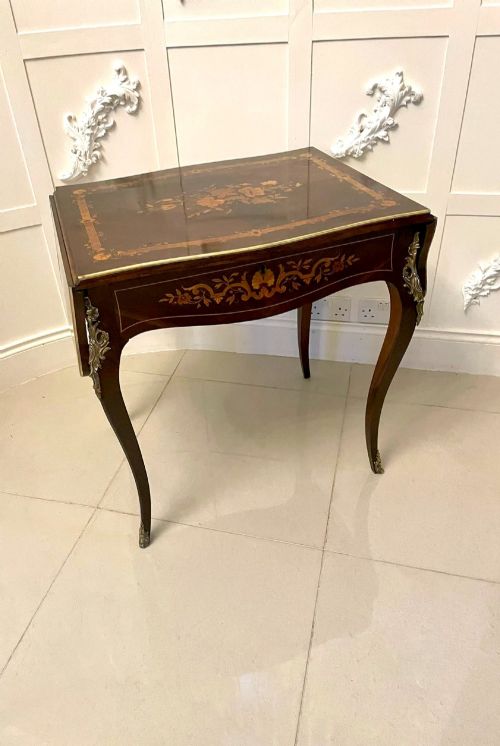
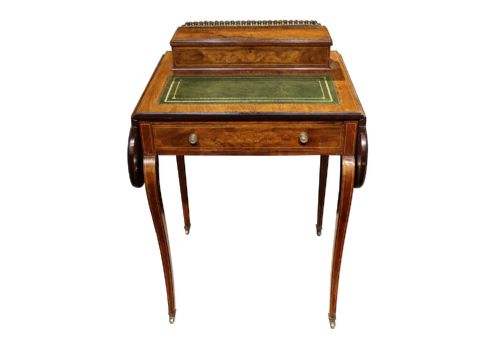
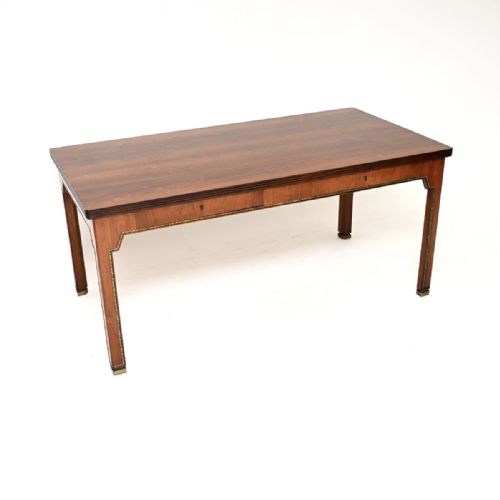
These vintage rosewood writing table examples combine rich timber with practical drawers and surfaces, offering both beauty and a functional workspace.
Vintage Rosewood Writing Table
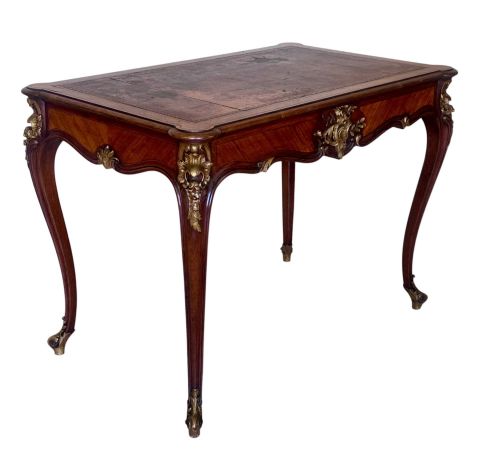
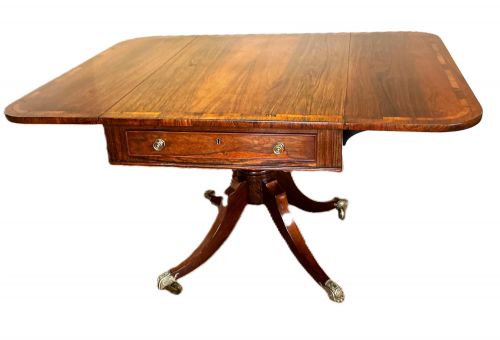
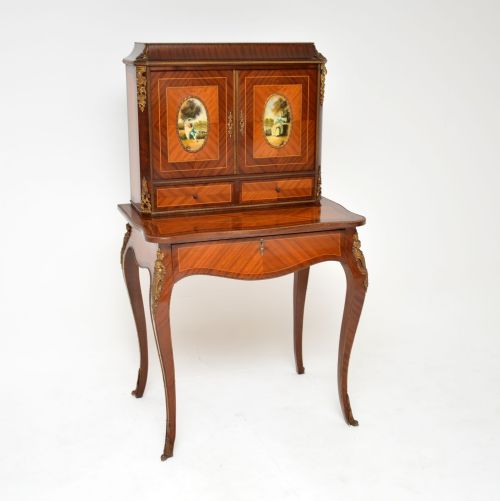
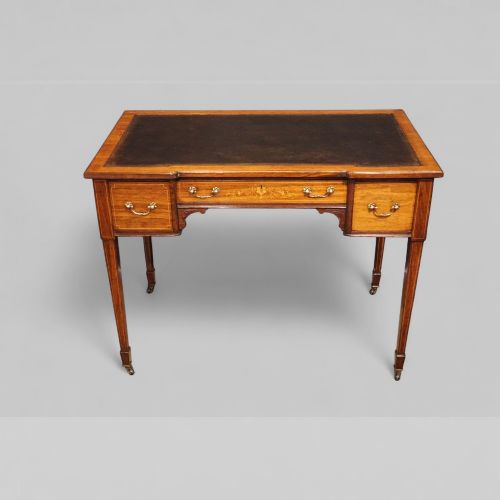
A vintage rosewood writing table spans compact ladies desks, freestanding centre tables, and large library forms across the nineteenth and twentieth centuries. English Regency and Victorian examples sit alongside French Louis XV revival pieces and Danish modern designs.
Buyers frequently encounter nineteenth century French creations featuring marquetry or ormolu mounts, alongside simpler Regency and Edwardian variants suited to domestic studies. These objects served elite correspondence and administrative tasks in period drawing rooms and libraries.
Materials and Technique
Cabinetmakers utilised dense rosewood solids and veneers, frequently enriched with contrasting satinwood, fruitwood, and kingwood marquetry or parquetry. Brass stringing, ormolu mounts, and gilt bronze details accent structural lines.
Writing surfaces frequently integrate tooled leather inserts, while interior compartments rely on precision joinery for small drawers and pigeonholes. Drop flaps, extending mechanisms, and freestanding frames demonstrate sophisticated nineteenth and twentieth century construction methods.
Materials recorded across the inventory include rosewood, leather, ormolu, kingwood, fruitwood, satinwood, and brass.
The Spectrum of Make
Quality rests in the depth of the rosewood grain, the crispness of marquetry inlay, and the finesse of bronze or ormolu mounts. Finer pieces demonstrate meticulous hand-finishing within fitted interiors and seamless integration of leather writing surfaces.
Lesser examples display simpler secondary timbers and heavier, less refined structural proportions. The distinction lies in whether the maker prioritised decorative excess or restrained, harmonious proportions.
CH. Jeanselme and Co·Maurice Dufrêne
The Vintage Rosewood Writing Table Glossary
- Marquetry
- Decorative patterns formed by inserting small pieces of wood veneer into a master panel. This technique creates complex floral or geometric motifs across table tops.
- Ormolu
- Gilt bronze mounts applied to furniture for decorative effect. The metal is cast and chased before receiving a gold amalgamation coating.
- Bureau Plat
- A flat-topped freestanding writing desk originating in France. These pieces typically feature multiple frieze drawers and cabriole or tapered legs.
- Gonçalo Alves
- A dense exotic hardwood sometimes utilised in nineteenth century cabinetmaking. It displays striking contrasting dark streaks on a warm brown ground.
Vintage Rosewood Writing Table: Frequently Asked Questions
What is a bureau plat?
A bureau plat is a freestanding writing table with a flat top and drawers beneath the surface. Originating in France, these pieces are finished on all sides so they can sit in the middle of a room.
They often feature leather inserts and elaborate ormolu mounts rather than stacking superstructures.
How do I use a lady's writing table?
These smaller writing surfaces suit compact modern studies or bedrooms as laptop stations or correspondence desks. The fitted interiors provide neat storage for stationery and small items.
Their modest proportions allow them to fit into spaces where standard large desks overwhelm the room.
How do I tell Regency from Victorian tables?
Regency tables generally favor classical restraint, clean architectural lines, and brass inlay. Victorian examples lean towards heavier proportions, elaborate marquetry, and revival styles.
Examining the turning on the legs and the style of the brass mounts helps clarify the period.
Are these tables freestanding?
Many rosewood writing tables and centre tables are finished on the reverse side. This allows them to float in the middle of a room rather than backing against a wall.
Check whether the back matches the front before placing it away from walls.