




Mid Century Maritime Artwork
Mid century maritime artwork captures the enduring pull of coastal life and working harbours through mid-century brushwork.
Mid Century Maritime Artwork
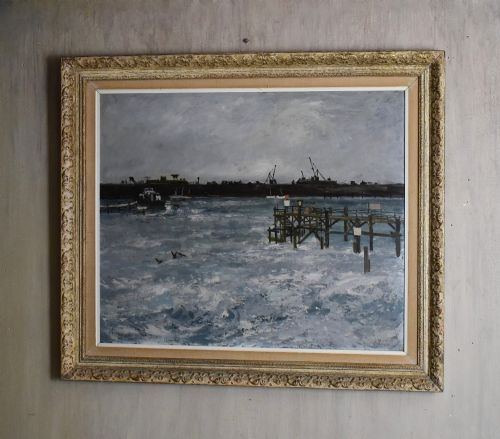
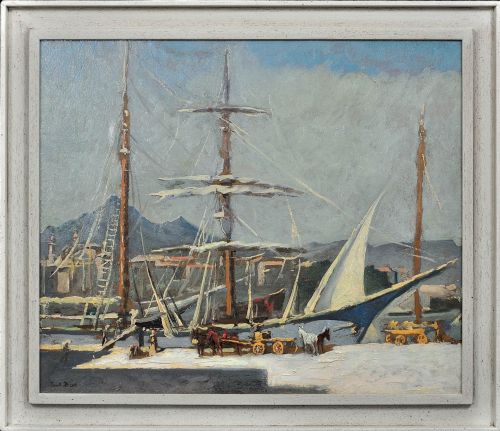
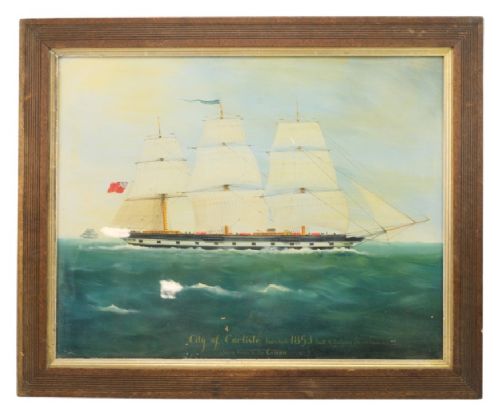
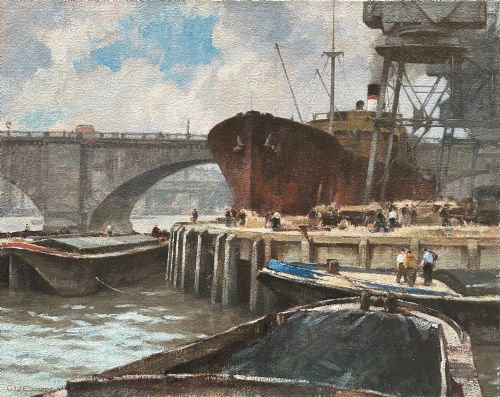
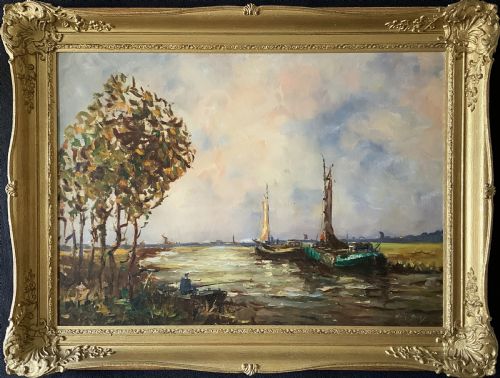
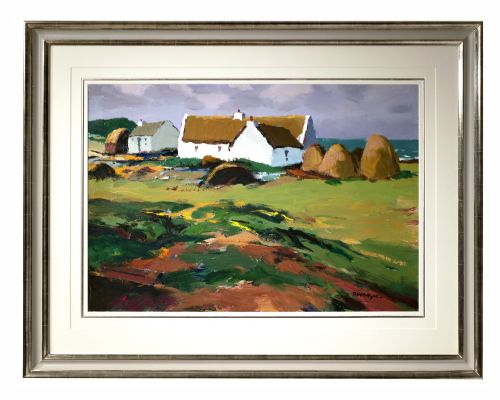
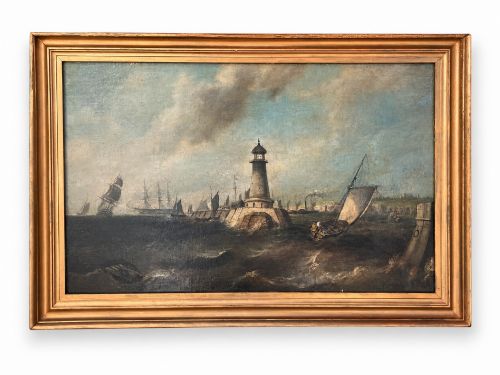
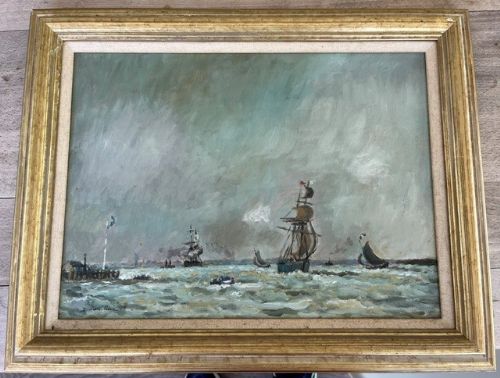
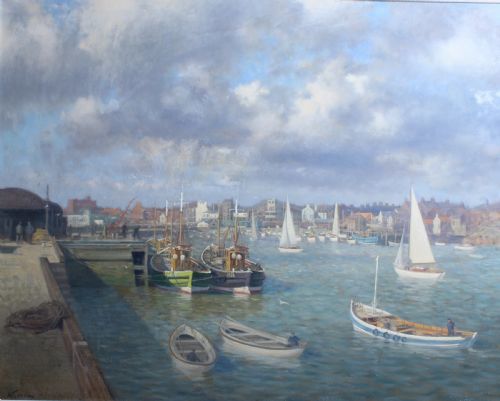
Mid century maritime artwork focuses on coastal scenes, harbour views, estuaries, and open water produced around the middle decades of the twentieth century. These paintings and watercolours document working vessels, naval ships, and fishing boats against British and European shores.
The selections available here range from mid-century impressionist canvases to modern British watercolours and framed wall art. Works stretch from local Cornish harbours and London riversides to Mediterranean ports in France and Italy.
Buyers encounter distinct regional styles, including depictions by mid-century French, British, and Dutch artists who recorded maritime commerce and coastal topography during the 1930s, 1940s, 1950s, and 1960s.
Materials and techniques
Artists painted primarily with oil paint on canvas, wood panels, or board, building textures that sometimes include impasto application. Watercolours on paper provide lighter, more transparent interpretations of light on water and sky.
Framed artwork typically relies on traditional wood framing that protects the canvas or paper support while framing the composition for domestic display.
The selection includes contributions from established British and continental European schools active between the 1920s and 1960s.
Distinctions in quality
Quality rests upon the artist's ability to handle light, water, and atmosphere within the composition rather than the subject matter alone. Confident brushwork and accurate tonal relationships separate accomplished mid-century impressionist output from routine decorative painting.
The integrity of the original medium, whether oil on canvas or watercolour on paper, alongside stable preservation of the support surface, defines the long-term merit of each piece.
Kenneth Cozens·Peter Brannan·Paul Bret·Cyril Walduck Edwards·Willem Bos·Donald McIntyre·Nicholas Condy·Walter Goodin·Eric Tufnell·Gyrth Russell·Raymond Picque·James Fry·Fred Pailhes·Edward Seago·Fernando Del Basso·William Tuck·George Shaw·Dion Pears·Stanley Orchart·Henry Barlow Carter·Sam Bough·Edward M Elliott·Antonio Godoy·Charles Cameron Baillie·Pauline Boumphrey
The Mid Century Maritime Artwork Glossary
- Impasto
- Paint applied thickly to a canvas or board so that it stands out from the surface. This technique lets the artist build visible texture in waves or clouds.
- Estuary
- The tidal mouth of a large river where the tide meets the stream. These sites offered artists varied compositions of shipping and mudflats.
- Staithe
- A landing stage or wharf for loading and unloading ships. The term appears frequently in regional British coastal titles.
- Post-Impressionism
- An art movement extending French impressionism while rejecting its limitations. Artists developed personal expression through bold colour and distinct brush strokes.
- Provenance
- The chronology of the ownership or location of a historical object. Documented exhibitions or signatures help confirm authorship.
Mid Century Maritime Artwork: Frequently Asked Questions
How do I identify mid-century maritime paintings?
Look for signature brush techniques, framing materials, and subject matter reflecting mid-century European and British coastal infrastructure.
Signatures, exhibition labels on the reverse, and artist dates help confirm the active period of production.
Where were these maritime scenes typically painted?
Artists worked directly along British fishing ports, Cornish harbours, and major rivers like the Thames, as well as Mediterranean harbours in France and Italy.
Many painters travelled to specific coastal communities to capture working vessels and local trade.
How should I care for vintage oil and watercolour artwork?
Keep framed paintings away from direct sunlight and fluctuating humidity to protect canvas, wood panels, and paper supports.
Watercolours require glass protection and acid-free mounting to prevent fading over time.
What is the difference between oil on canvas and watercolour?
Oils offer heavier pigment build-up and textured surfaces that suit dramatic coastal weather and deep seas.
Watercolours rely on thin washes over paper to capture bright light and atmospheric coastal haze.