





Mid Century Brooch
A mid century brooch brings together bold metalwork, vibrant enamel and precious stones to define the distinctive aesthetic of the period.
Identifying the mid century brooch
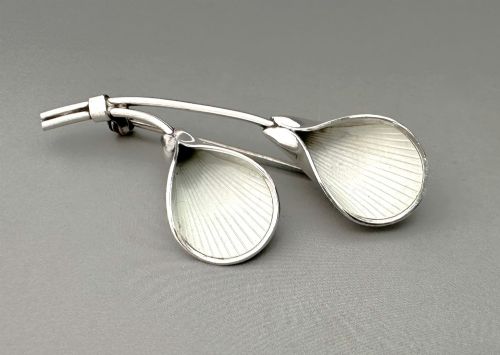
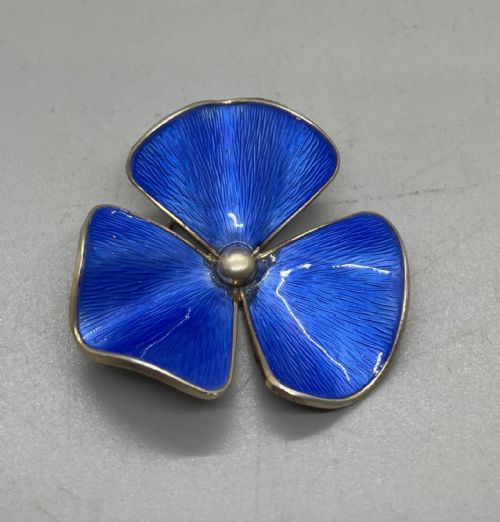
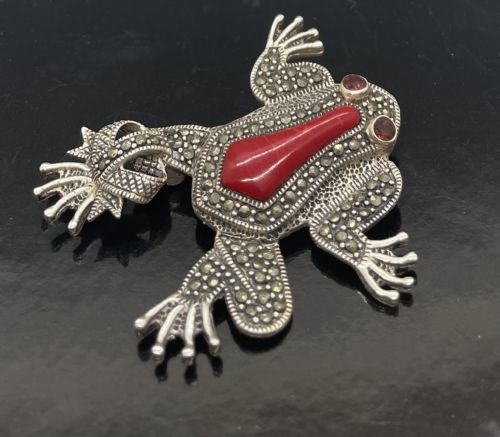
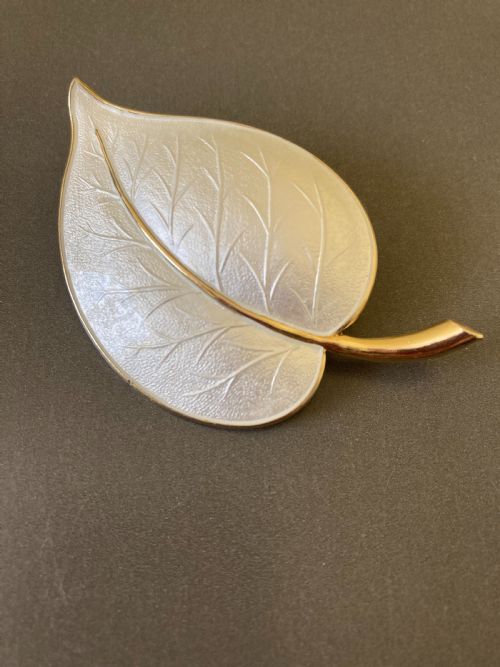
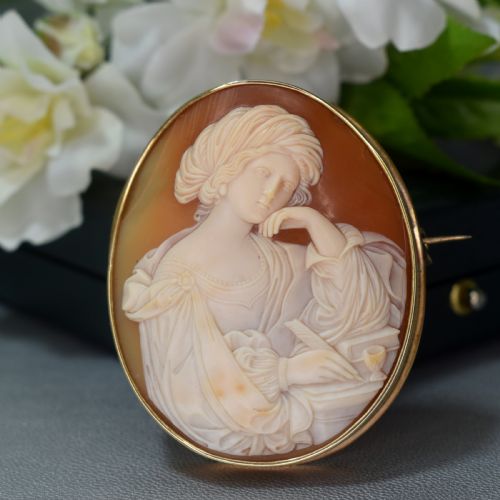
A mid century brooch captures the design confidence of the 1940s, 1950s and 1960s through diverse forms ranging from abstract Scandinavian silver to gem-set floral sprays. Buyers exploring this category encounter everything from workshop-produced enamel leaves to high-end diamond and coloured stone dress pieces.
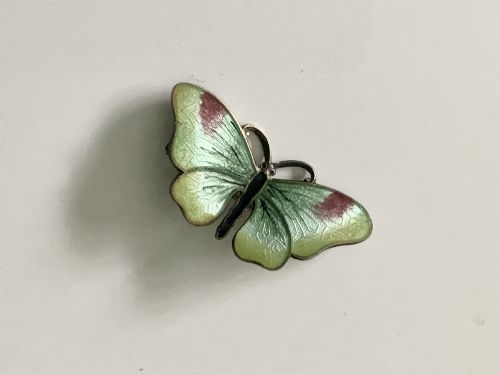
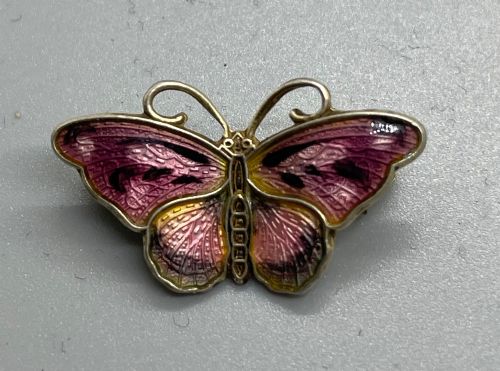
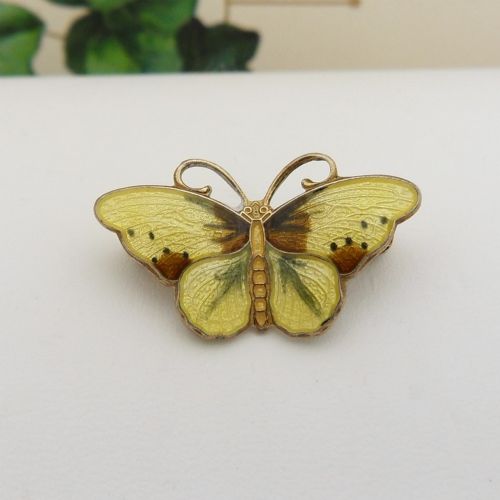
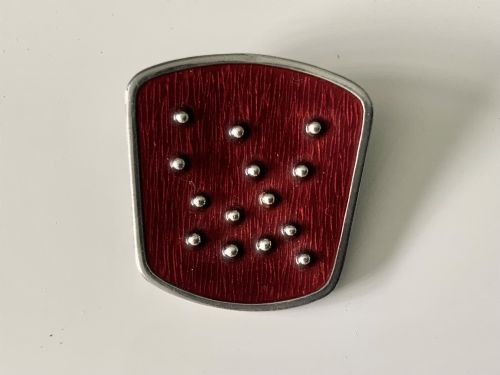
The most common iterations on this page combine sterling silver with vitreous enamel, particularly Scandinavian floral and abstract motifs. Alongside these sit precious gold dress clips featuring diamonds, amethysts, rubies, sapphires and emeralds set in mid-century modern or transitional art deco frameworks.
Materials and construction
Maker workshops utilised sterling silver, silver gilt, 14ct yellow gold and 18ct white or yellow gold as structural foundations. Stones including diamonds, amethysts, topazes, emeralds, rubies, sapphires and opals were secured using claw, channel and step-cut settings.
Enamelling techniques played a central role, applying vitreous enamel in opaque and translucent shades to silver or gold bases. Filigree work, hand-carved gemstones and precise pin mechanisms completed the assembly.
Retail Price Guide 2026
Typical UK retail prices for mid century brooch, calculated from the Sellingantiques database of over a million retail prices indexed since 2003. This retail price guide relies exclusively on Sellingantiques data; no external sources or auction records are used, so the figures do not describe the wider market.
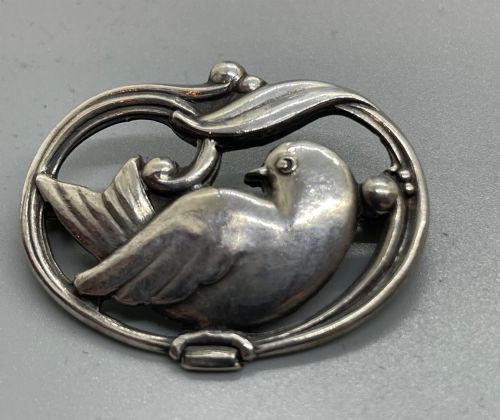
A few clever birds and giraffes managed to sneak into the metalwork alongside the flowers.
Distinguishing quality across the range
Quality rests on the precision of the goldsmithing and the artistry of the lapidary work. Finer examples display meticulous stone matching, superior gemstone carat weights and intricate hand-finished metal textures rather than mass-produced castings.
In enamelled pieces, the depth of colour, absence of firing flaws and sophistication of the guilloché or cell structure divide standard workshop output from exceptional Scandinavian and British studio creations.
Aksel Holmsen·A H Darby And Son·Gubelin·Celtic Art Industries·Georg Jensen·Assentorp·John Lauritzen·Einar Modahl·Finn Jensen·Alan Martin Gard
The Mid Century Brooch Glossary
- Vitreous Enamel
- A material made by fusing powdered glass to a metallic substrate at high temperatures. This technique creates a durable, glossy surface with rich colour saturation.
- Silver Gilt
- Silver that has been coated with a thin layer of gold. This finish provides the visual warmth of gold while utilising silver as the primary base metal.
- Step Cut
- A gemstone cutting style featuring rectangular facets arranged parallel to the girdle. This cut emphasises clarity and colour over brilliant sparkle.
- Filigree
- Delicate jewellery metalwork formed from fine threads of gold or silver soldered together. It creates intricate openwork patterns resembling lace.
- Guilloché
- A decorative mechanical technique that etches precise repeating patterns into metal. Enamel applied over this texture produces a shimmering translucent effect.
Frequently Asked Questions
How do I wear a mid century brooch?
Pin these pieces to heavy lapels, wool coats, or scarves where the weight of the metal and stones is properly supported. Secure the safety clasp firmly to prevent loss during daily wear.
Experiment with placement on hats, waistbands, or clustered together with other pins to create a bold styling statement.
What metals are typical for these brooches?
Sterling silver and 18k or 14ct gold form the primary metal framework for most designs in this category. Silver gilt is also frequently encountered on enamelled botanical and abstract motifs.
Precious metals were chosen not just for durability, but to complement the tones of mounted diamonds, amethysts, and brightly coloured vitreous enamels.
How can I tell a 1950s brooch from an earlier piece?
Mid-century pieces often favour organic, asymmetrical, or modernist geometric lines that depart from rigid traditional symmetry. Look for Scandinavian influences, stylized flora, and abstract silver work characteristic of the post-war era.
Heavier gem-set pieces from this decade frequently incorporate transitional art deco elements alongside contemporary cluster settings.
Are these brooches fragile?
While gold and silver settings are robust, pieces featuring vitreous enamel require care to avoid sharp impacts that could chip the glass surface. Gemstone prongs should also be checked periodically to ensure stones remain secure.
Store each brooch individually in a lined box to prevent scratching against other items in your collection.