
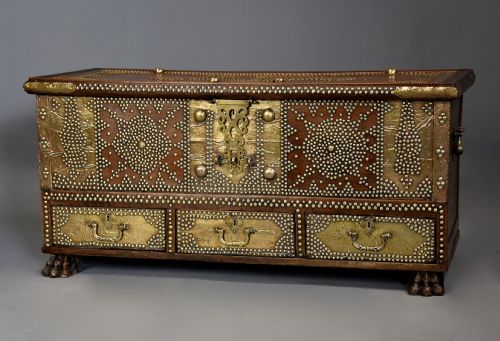


Mid 19th Century Trunk
A mid 19th century trunk offers robust domestic storage carrying the distinct regional character of Victorian, Scandinavian, and colonial craftsmanship.
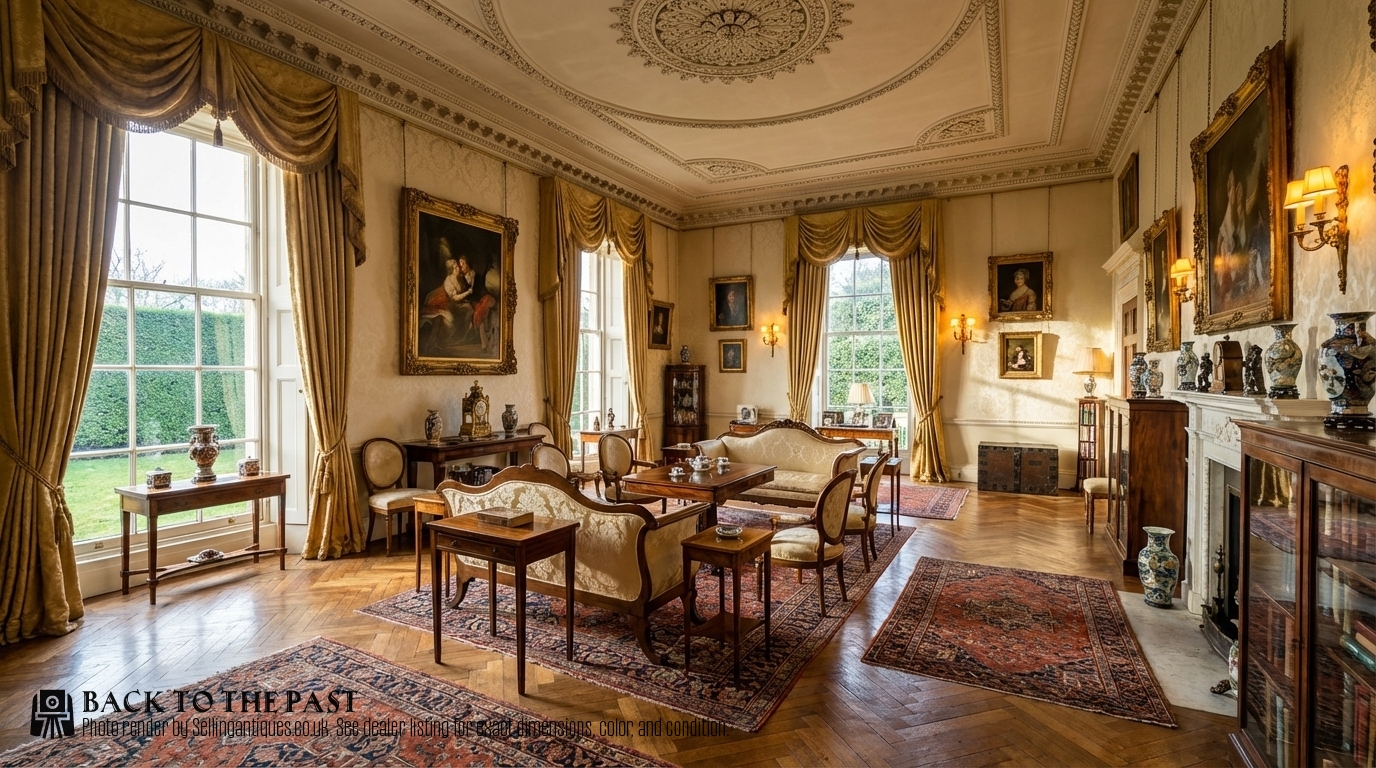
Mid 19th Century Trunk
A mid 19th century trunk encompasses heavy storage boxes, dome top coffers, strong boxes, and specialised travelling chests. These pieces originate from diverse stylistic traditions including Scandinavian country, Victorian English, Anglo-Indian, and Zanzibar workshops.
Scandinavian painted pine and folk art coffers dominate the available selection alongside oak silver chests and heavily decorated trading boxes. Naval and military variants utilise durable timbers suited for long journeys and maritime use.
Materials and Construction
Construction relies heavily on sturdy timbers such as pine, oak, teak, camphorwood, and mahogany, chosen for strength and resilience. Artisans reinforced these wooden bodies using wrought iron bands, brass studs, and leather bindings to withstand rough handling.
Surface treatments vary from hand-painted folk art finishes and lacquered Chinoiserie to profuse inlay work and plain waxed grain. Brass bound corners and recessed handles provide both functional utility and decorative accentuation.
Current listings feature pine, oak, teak, and walnut timbers alongside hand-painted Scandinavian folk art and Zanzibar brass stud decoration.
Judging Quality
Quality rests in the integrity of the original hardware, the complexity of surface decoration, and the preservation of structural joinery. Hand-painted Scandinavian motifs or dense brass stud work elevate standard utility boxes into decorative focal points.
The choice of secondary woods and the survival of original interior compartments distinguish utilitarian blanket boxes from high-status merchant chests and military grade trunks.
The Mid 19th Century Trunk Glossary
- Dome top
- A rounded lid construction designed to shed water and allow extra interior storage capacity. This profile appears frequently on Scandinavian and continental coffers.
- Strong box
- A heavily fortified small chest fitted with secure iron hardware and robust locks designed for valuables. These pieces prioritise security over casual storage.
- Camphorwood
- An aromatic tropical hardwood utilised in maritime trunks due to its natural insect-repellent properties. It protected textiles and uniforms during long sea voyages.
- Naval trunk
- A utilitarian travel chest fashioned from dense timbers like teak and fitted with brass bindings to resist marine humidity. These trunks served officers at sea.
- Zanzibar chest
- A heavily constructed trading chest embellished with intricate brass studding and strapwork. They reflect East African and Indian trade routes of the period.
Mid 19th Century Trunk: Frequently Asked Questions
How were these trunks used originally?
These trunks served multiple purposes ranging from household blanket storage to securing valuables and transporting personal belongings across oceans.
Travellers utilised camphorwood and naval trunks for long voyages, while domestic spaces housed painted pine coffers for everyday linens.
Where should I place a trunk at home?
A trunk functions effectively as a coffee table in a living room, providing hidden storage beneath a flat or dome top surface.
They also sit well at the foot of a bed for spare blankets or serve as a standalone decorative piece in a hallway.
How do I identify a Scandinavian piece?
Scandinavian trunks are typically constructed from pine and finished with hand-painted folk art motifs or muted regional colours.
They often feature simpler iron hardware and traditional joinery distinct from ornate Victorian or colonial styles.
What maintenance do these trunks require?
Maintain the timber by applying appropriate natural waxes periodically to keep the wood nourished and prevent drying.
Avoid placing painted or lacquered surfaces in direct sunlight to protect the historic finishes from fading.