



Metal Umbrella Container
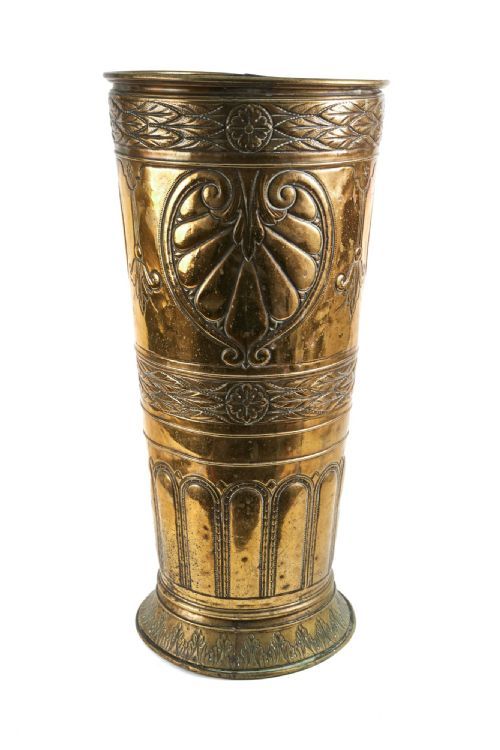
A metal umbrella container keeps hallways tidy, taking the form of robust brass, copper, and cast iron vessels built to hold wet sticks.
Metal Umbrella Container
When searching for a metal umbrella container, buyers encounter a utilitarian group of hallway vessels designed to hold walking sticks and wet umbrellas. These pieces span the Victorian, Edwardian, and Art Deco periods, drawing from 19th-century domestic and agricultural forms.
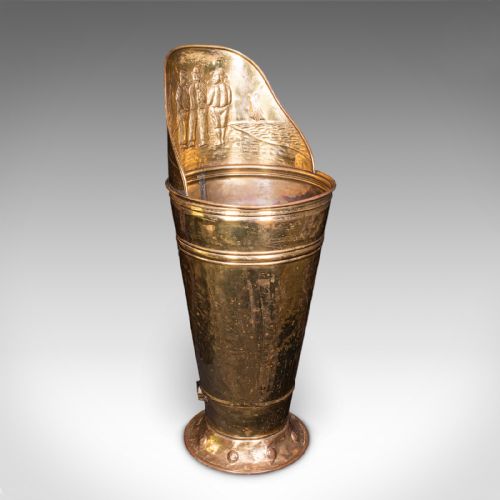
The objects listed take several distinct shapes, including traditional umbrella stands, stick stands, demi-lune designs, and repurposed agricultural barrels or grape hods. Materials range from solid brass and copper to cast iron, zinc, and painted iron.
Originating from English, French, Dutch, and Scandinavian traditions, these containers reflect both formal country house utility and rustic European country style. The most common versions met on this page are brass and copper stands from the Victorian era and the early twentieth century.
How they were made
These vessels rely on durable metal construction, utilising beaten copper, heavy cast iron, and sheet brass formed into secure cylindrical or demi-lune bodies. Many pieces incorporate riveted seams, pierced decoration, and wrought iron supports to handle daily moisture and weight.
Agricultural adaptations, such as French grape hods and water barrels, bring industrial utility into the hallway, combining iron frames with copper and zinc bodies. Surface treatments range from polished brass finishes to painted iron and natural aged patinas.
Listings feature brass, copper, and cast iron materials spanning Victorian, Edwardian, and Art Deco styles.
What varies in quality
Quality in a metal umbrella container lies in the integrity of the metalwork, the weight of the casting, and the retention of original form without heavy distortion. Substantial gauge brass and thick cast iron provide structural stability that lighter, thinner alternatives lack.
Refinement in design distinguishes simple utility from decorative presence, seen in pierced brass patterns, crisp demi-lune shapes, and well-balanced pairs of hall stands. The depth of the metal patina and the honesty of the construction dictate the standing of each piece.
The Metal Umbrella Container Glossary
- Demi lune
- A half-moon shape designed to sit flush against a hallway wall. This profile saves floor space while holding multiple sticks.
- Hotter
- A regional variation in spelling for a grape hod or carrier used in vineyards. These agricultural vessels are frequently adapted as tall umbrella containers.
- Pierced brass
- Metalwork pierced with decorative holes or patterns to allow ventilation. This technique lightened the visual weight of heavy Victorian stands.
- Water barrel
- A coopered or riveted cylindrical vessel designed to hold liquids. In a domestic setting, these heavy copper or iron containers serve as umbrella holders.
Metal Umbrella Container: Frequently Asked Questions
What is a metal umbrella container?
A metal umbrella container is a utilitarian vessel made from brass, copper, or cast iron designed to hold wet umbrellas and walking sticks in a hallway.
These pieces range from purpose-built Victorian hall stands to repurposed agricultural grape hods and water barrels.
How do I clean brass and copper?
Brass and copper surfaces can be maintained with a soft cloth to preserve the aged patina developed over centuries of use.
Harsh chemical polishing often strips the authentic character valued by collectors of nineteenth-century metalwork.
Where were these umbrella stands made?
These containers originate from various European traditions, including English country houses, French vineyards, and Scandinavian farmsteads.
Makers utilised local metals like cast iron and sheet brass to produce regionally distinct hallway furniture.
How do I date an antique metal stand?
Dating relies on stylistic markers from periods such as the Victorian era, Edwardian period, and Art Deco design.
Construction methods like riveted copper seams and cast iron bases also help distinguish nineteenth-century pieces from later versions.