

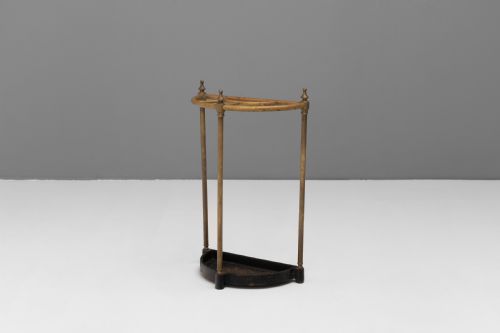


Brass Cane Storage
Brass cane storage pieces are practical hallway furnishings that organise walking sticks and umbrellas while bringing metallic warmth to an entrance.
Brass Cane Storage
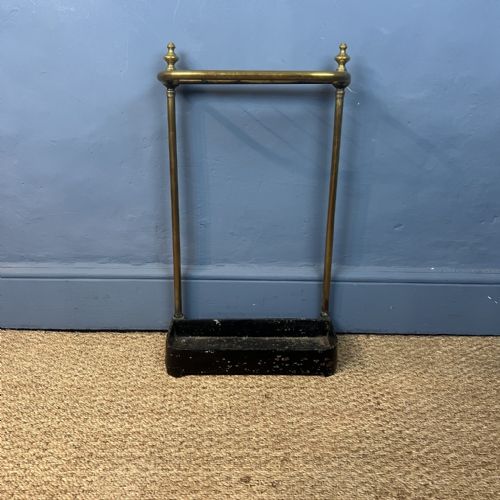
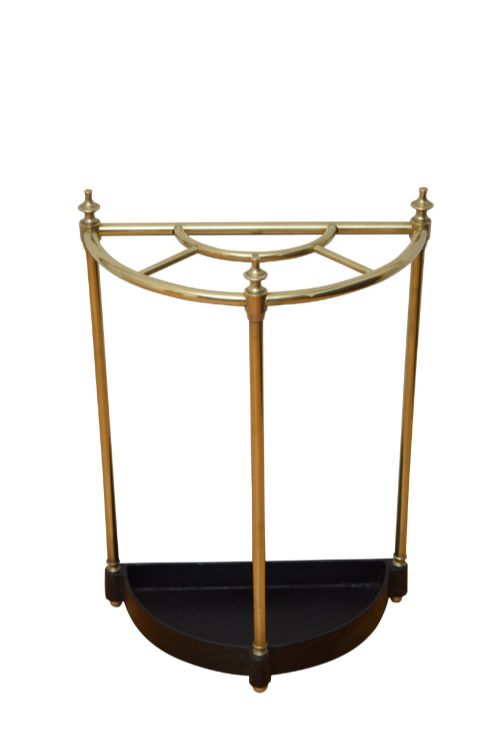
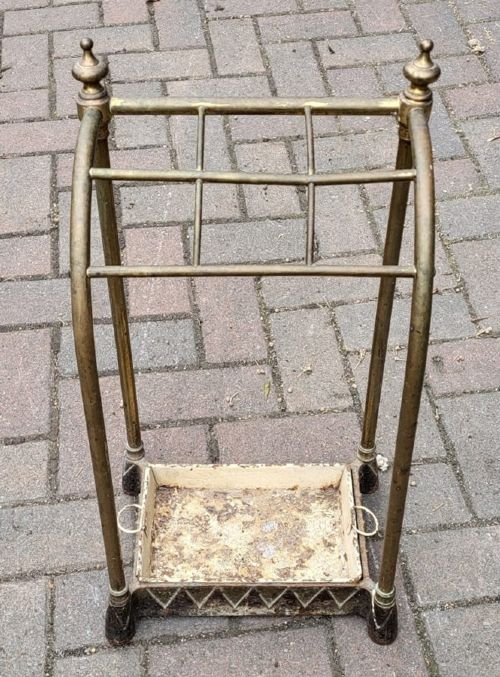
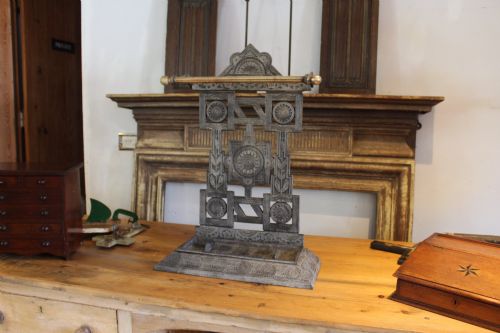
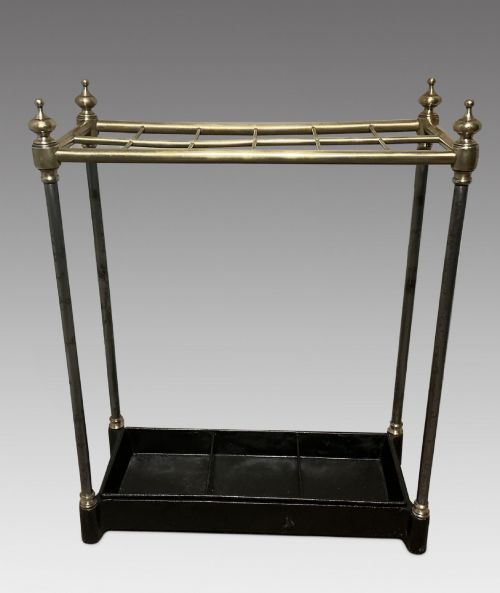
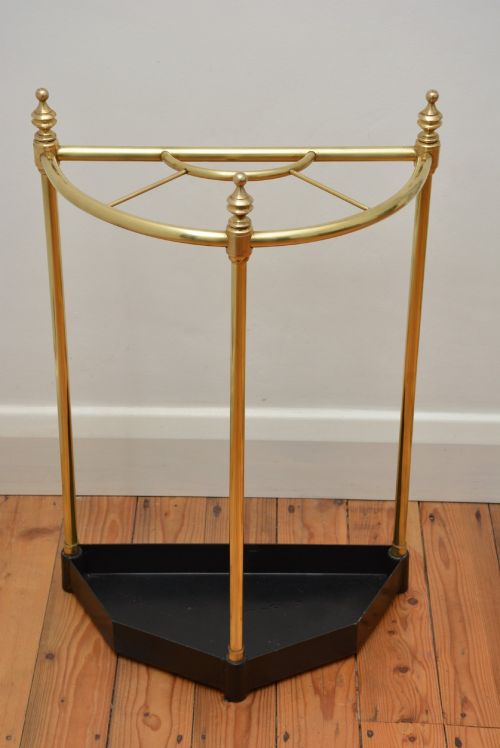
Brass cane storage encompasses stick stands and umbrella holders designed for hallways and boot rooms, ranging from utilitarian hall pieces to decorative decorative items. When searching for brass cane storage, buyers frequently encounter half-moon and demi-lune shapes designed to sit flat against a wall.
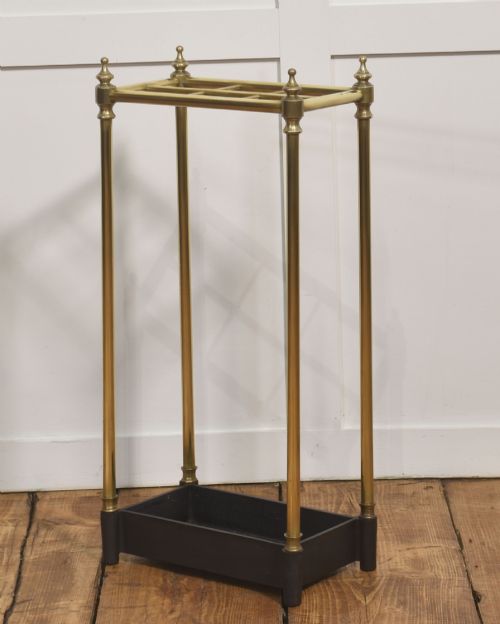
The material combination typically joins gleaming metal frames with heavy cast iron bases or wooden staves to keep walking sticks upright. These furnishings span the Victorian and Edwardian periods, featuring in styles from Aesthetic Movement and Art Nouveau to English Country.
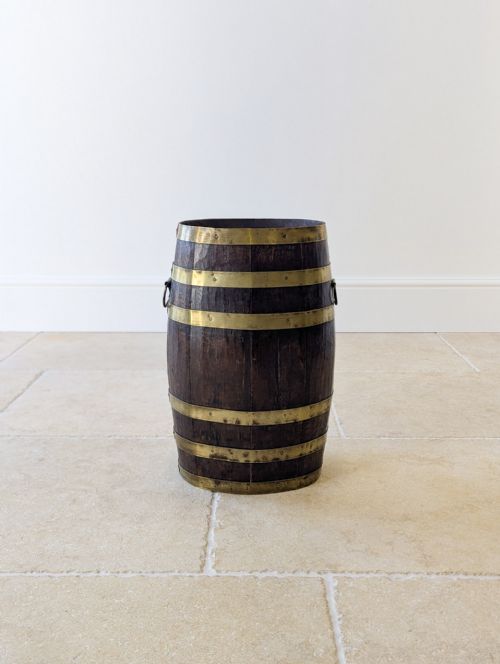
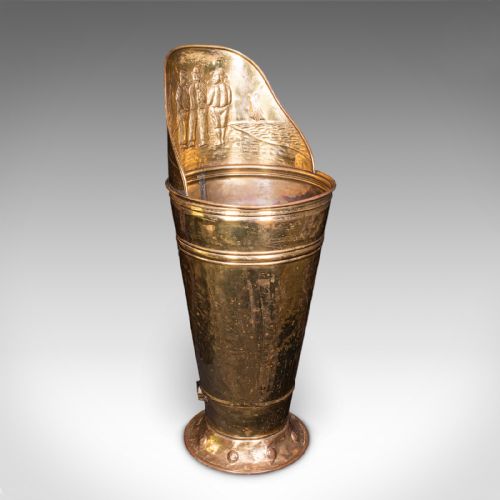
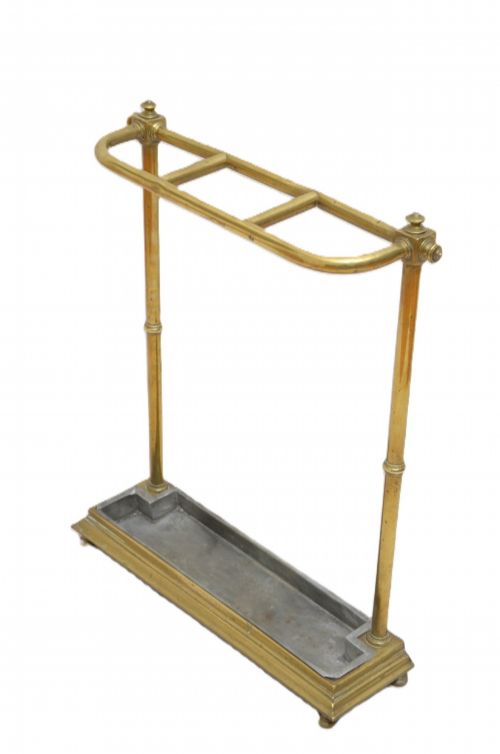
Makers produced these umbrella and stick stands in various configurations including corner units, oval barrels, and pierced cylindrical containers. Many examples incorporate a drip tray at the base to catch moisture from wet weather gear.
How they were made
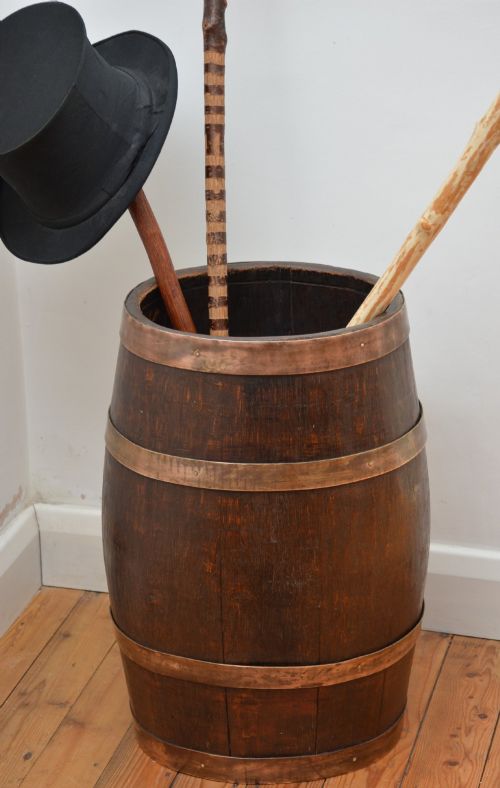
Makers constructed these hallway items using brass sheet, tubing, and cast components, often pairing the metal with cast iron to provide stability for heavy walking aids. Coopered wood versions utilise wooden staves bound with brass hoops, similar to traditional barrel-making techniques.
Surface decoration involved piercing, repoussé work, and turning, while structural joints relied on rivets, screws, and metal collars. Copper and steel elements occasionally supplement the primary brass construction.
Timber elements such as oak, mahogany, and walnut appear alongside the metal work, finished to highlight the natural grain of the wood.
Listings for brass cane storage span the Victorian and Edwardian eras, combining brass, cast iron, oak, mahogany, and copper into functional hallway furnishings.
What varies in quality
Quality in these hall furnishings rests on the substance of the materials and the solidity of the construction. Pieces utilising heavy cast iron weighted bases and thick gauge brass stand up to daily use far better than lighter, pressed-metal alternatives.
The refinement of the decorative detailing separates standard utility items from finer examples. Pierced brass work, crisp casting, and well-fitted original drip trays indicate superior workshop output.
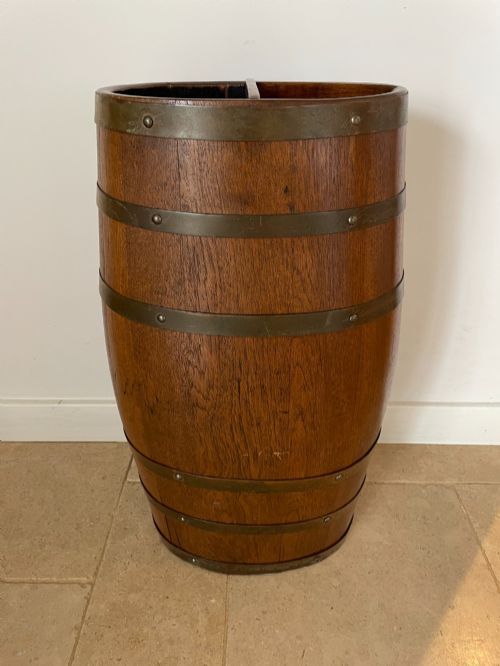
The integration of mixed materials, such as coopered oak barrels bound with substantial brass bands, demonstrates skilled craftsmanship that affects the longevity and visual weight of the piece.
Thomas Jeckyll·Shoolbred
The Brass Cane Storage Glossary
- Demi-lune
- A half-moon shape designed to stand flat against a hallway wall. This configuration saves valuable floor space in narrow entryways.
- Coopered
- Constructed from wooden staves bound together with metal hoops. This technique originates from traditional barrel-making.
- Drip tray
- A removable metal basin located at the base of the stand. It catches water running off wet umbrellas to protect hallway floors.
- Repoussé
- A metalworking technique where the pattern is hammered into relief from the reverse side. This creates decorative texture on brass panels.
- Cast iron
- A heavy, durable metal alloy used for bases. It provides necessary weight to prevent tall stands from tipping over.
Brass Cane Storage: Frequently Asked Questions
Where should I place a brass stick stand?
Position your stand in a hallway, porch, or boot room where guests enter the house. This keeps walking aids and wet umbrellas accessible right by the door.
Ensure there is enough clearance around the piece so that longer umbrellas and canes can be removed easily without striking nearby furniture or walls.
How do I protect my floor from water?
Most traditional stands include an integrated or removable metal drip tray at the bottom. Check that your piece retains this internal basin to catch moisture from wet items.
If a historic piece lacks its original tray, placing a small rubber mat or shallow dish inside the base prevents water from reaching wooden floors.
How do I clean brass hall stands?
Dust the metal regularly with a soft, dry cloth to prevent grime buildup. Avoid harsh chemical polishes that strip away the aged patina accumulated over decades.
For coopered wooden elements, use a mild beeswax to nourish the timber without damaging the surrounding metal bands.
What is the difference between a demi-lune and a corner stand?
Demi-lune stands feature a flat back and a curved front, allowing them to sit flush against a straight hallway wall. They offer a compact footprint while holding multiple items.
Corner stands are shaped at a right angle to fit directly into room corners, making use of awkward junctions in smaller entryways.