
Metal Planter Tub
These metal planter tub items bring utilitarian history into the garden, combining heavy copper, brass, and iron with enduring horticultural purpose.
Metal Planter Tub
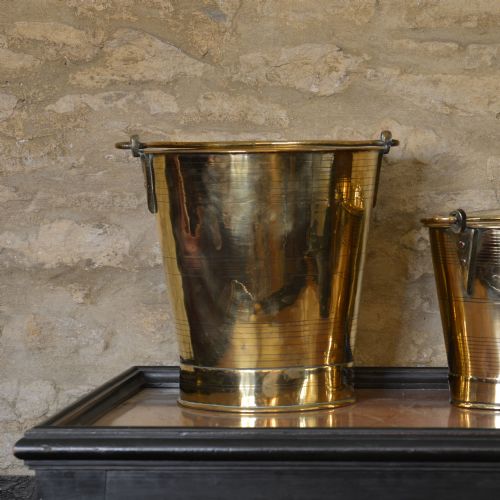
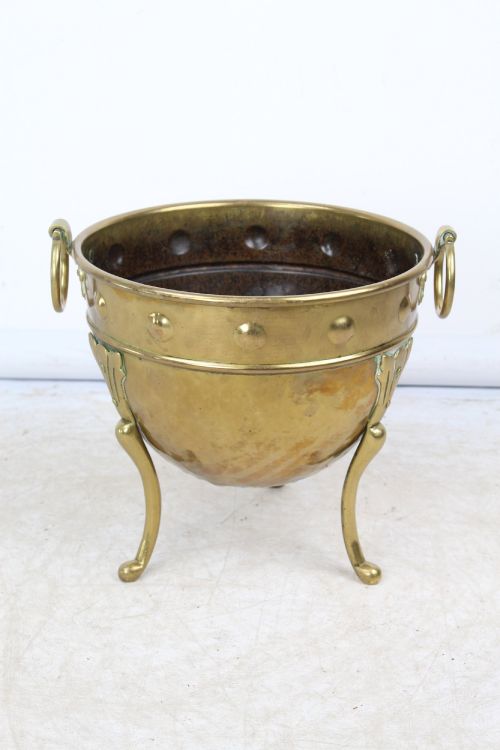
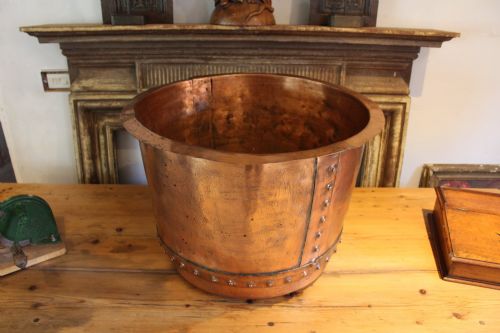
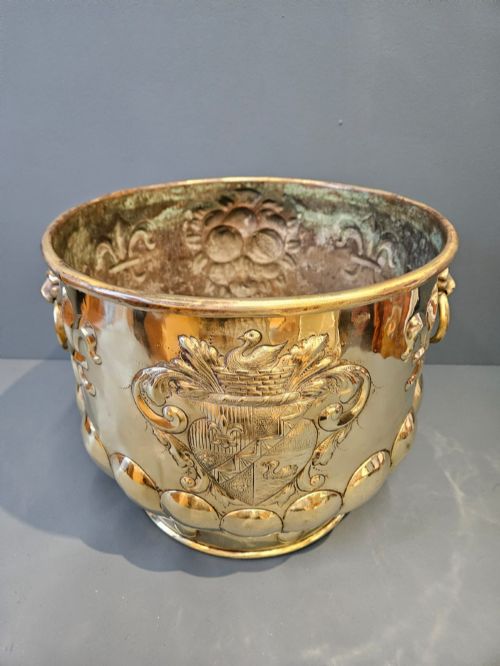
When you search for metal planter tub, you encounter vessels that began life as wash tubs, cheese vats, grain measures, coal buckets, and cauldrons before finding new utility as garden containers. The pieces seen on this page span the 19th century, the Victorian era, and the early 20th century, originating from English, French, and Anglo-Indian workshops.
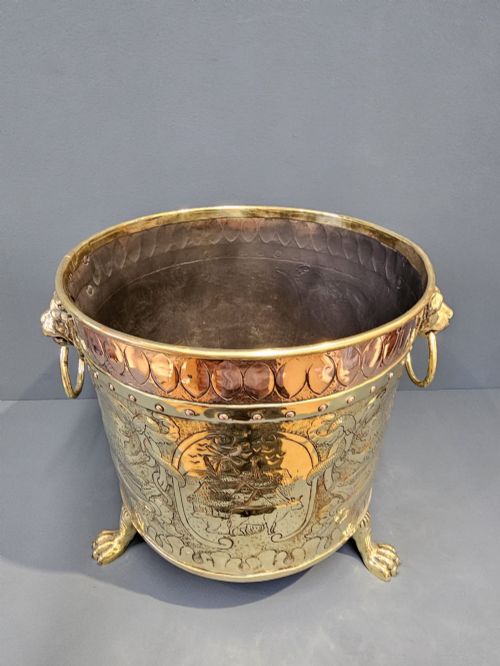
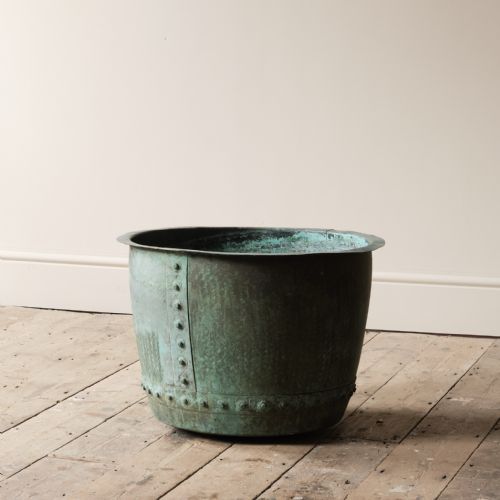
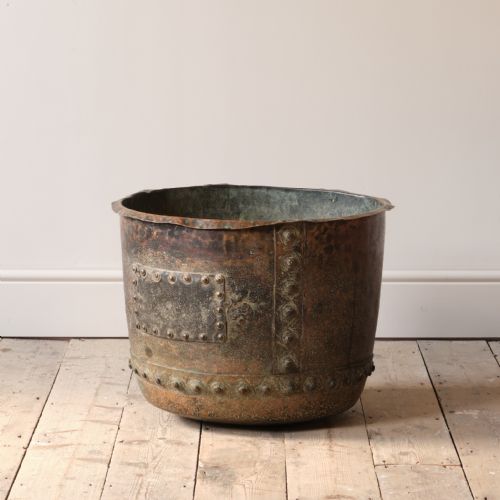
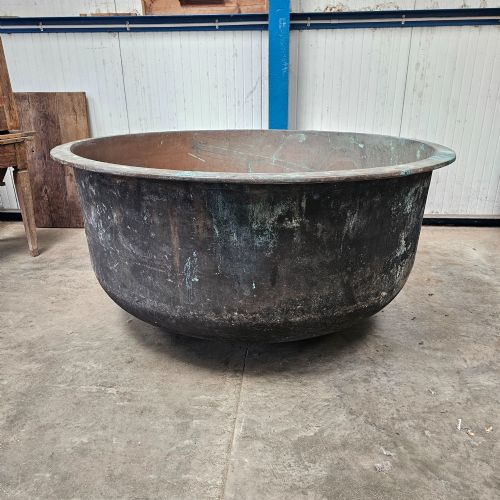
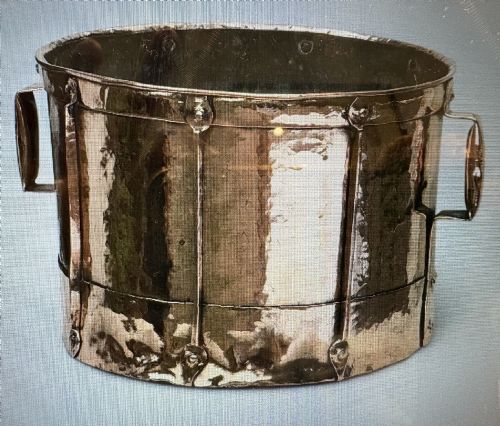
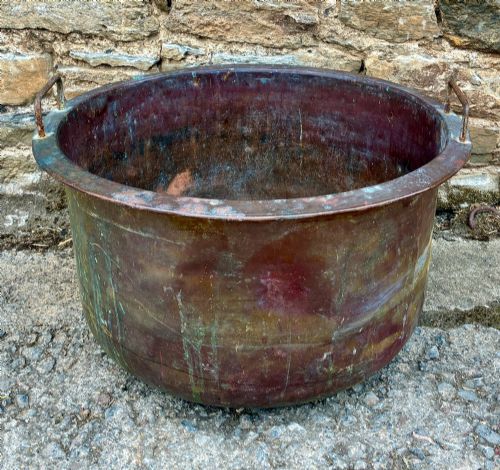
The forms range from large riveted copper pots and brass jardinieres to galvanised metal log baskets and cast iron temple baths. Many retain dual identities as fireside accessories or log bins, reflecting their original domestic or agricultural functions before transitioning to plant display.
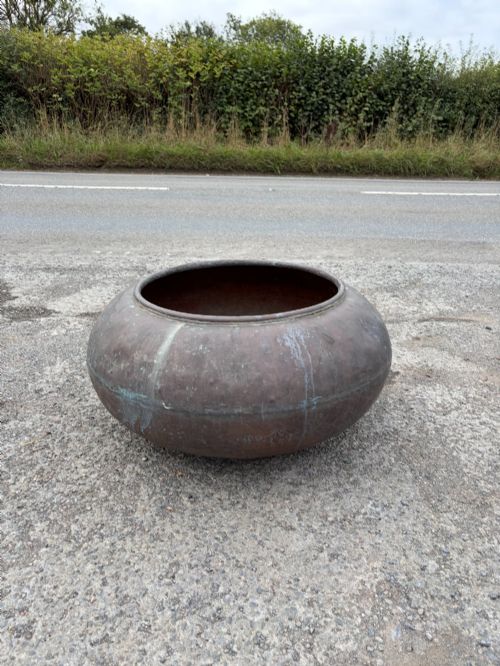
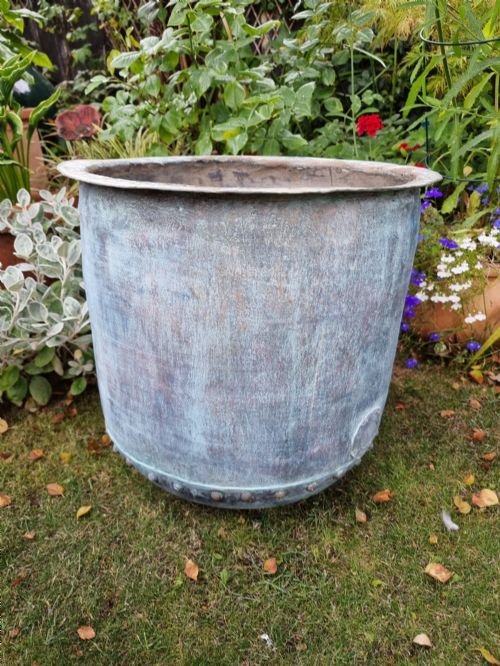
French country, rustic farmhouse, and Victorian styles dominate the selection, bringing patinated surfaces and generous proportions to contemporary settings. Buyers frequently encounter heavy copper boilers and grain measures repurposed specifically for holding large shrubs and trees.
Materials and construction methods
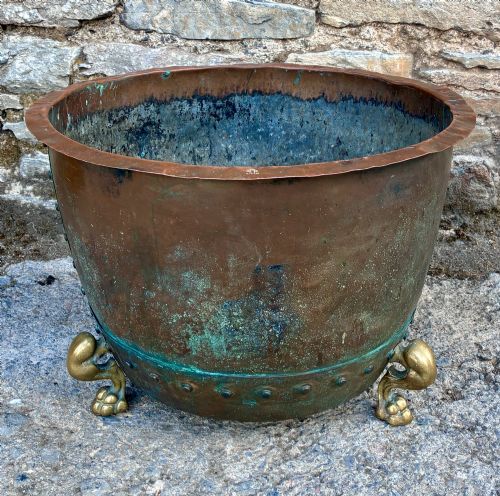
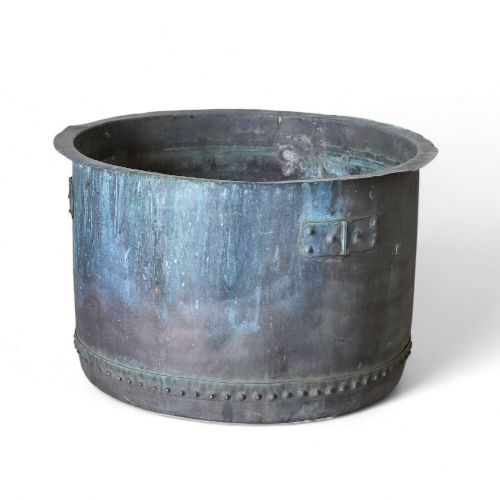
Construction relies heavily on hand-hammered and hand-riveted sheet metal, joining thick copper, brass, and iron plates with visible seams and robust fasteners. Many vessels incorporate wrought iron swing handles, brass bands, and oak components to reinforce the heavy metal bodies.
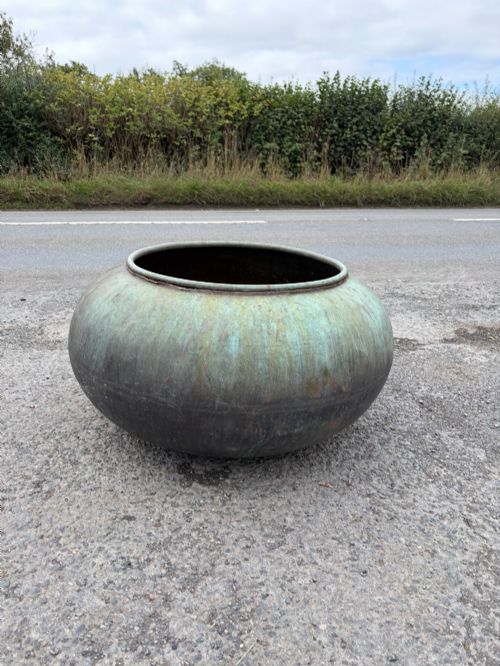
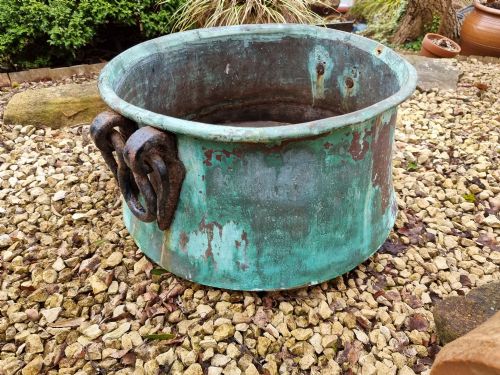
Makers utilised copper and brass for their malleability and corrosion resistance, allowing large pots, cauldrons, and cheese vats to hold liquids safely. Surface finishes develop naturally over decades, leaving rich patinas, verdigris highlights, and hammered textures across the metal.
Materials span copper, brass, iron, wrought iron, oak, galvanised metal, zinc, steel, and lead.
Distinctions in craftsmanship and condition
Quality separates through the weight of the metal, the integrity of hand-riveted joints, and the subtlety of embossed or hammered details. Superior examples display balanced proportions, original wrought iron handles, and rich, undisturbed natural patinas rather than over-polished surfaces.
The presence of maker marks, cast crests, or specific regional forms elevates certain pieces from standard utilitarian hardware to notable examples of 19th-century metalwork. Structural soundness in the base and walls determines whether a heavy copper or galvanised vessel holds plants successfully without leaking.
Henry Loveridge·Petrus Ramus
The Metal Planter Tub Glossary
- Jardiniere
- An ornamental pot or stand for plants, usually manufactured from brass, copper, or ceramic during the Victorian period.
- Verdigris
- A green or bluish deposit formed on copper, brass, or bronze surfaces through natural weathering and oxidation over time.
- Patina
- The surface appearance alters through age, use, and exposure, creating distinct colour variations and textures on metal.
- Coopered
- Constructed from wooden staves bound together with metal hoops, a technique commonly applied to historical buckets and tubs.
- Cauldron
- A large metal pot with a swing handle, traditionally used over an open fire for boiling or heating.
Metal Planter Tub: Frequently Asked Questions
How were metal planter tubs originally used?
Many of these metal vessels served practical domestic or agricultural functions before becoming garden ornaments. They worked as wash tubs, cheese vats, grain measures, and fireside coal buckets.
Over decades, their robust construction made them ideal for repurposing as large plant containers and log bins. Their original utilitarian strength ensures they endure outdoors.
Can these tubs stay outdoors all year?
Copper, brass, iron, and galvanised metal withstand outdoor conditions well, developing protective weathering and verdigris over time. Heavy metal construction resists most seasonal changes.
Ensure adequate drainage if planting directly into the tub to prevent standing water. Lined versions protect the interior metal from prolonged damp soil contact.
How do I identify a 19th-century piece?
Look for hand-riveted seams, heavy hand-hammered copper body panels, and wrought iron swing handles attached with traditional fixings. These manufacturing methods reflect 19th-century workshop practices.
Materials like thick sheet copper, brass bands, and cast iron carry distinct patinas built up over generations. Stylistic clues such as Victorian embossing or Arts and Crafts details also point to specific periods.
What is the best way to clean them?
Preserving the natural patina and verdigris is generally preferred by collectors and gardeners alike. Gentle washing with warm soapy water removes dirt without disturbing the aged surface.
Avoid harsh chemical metal polishes that strip away historical character. Leaving the surface untouched allows the metal to continue ageing gracefully outdoors.