

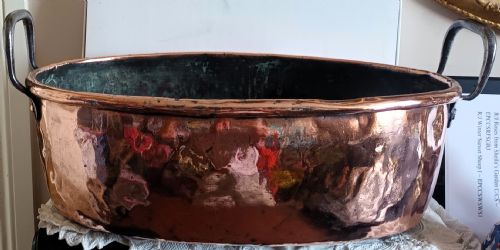


English Country Planter
An english country planter brings rustic utility indoors or out, prized for honest vernacular craftsmanship and tactile materials.
English Country Planter
When you search for an english country planter, you encounter robust vessels originally built for domestic labour or agricultural work. The selection on this page ranges from Georgian and Victorian periods, taking forms such as garden planters, well buckets, log boxes, and stone troughs.
Forms cross boundaries between kitchenware, garden ornaments, and wine coolers. Whether rendered in oak, copper, cast iron, or sandstone, each piece carries the straightforward character of English country vernacular design.
How they were made
Construction relies on honest joinery and durable metals suited to heavy daily use. Oak and pine pieces utilise traditional stave construction, often reinforced with brass or iron bands to hold heavy contents.
Metal vessels combine wrought iron, cast iron, copper, and galvanised metal through riveting and beating techniques. Stone and sandstone examples display hand-cut masonry traditions designed to weather the elements.
Materials are chosen for strength and resilience rather than delicate ornament. The resulting objects wear their structural joinery openly, showing the marks of the smith and the carpenter.
English Country Planter Retail Price Guide 2026
Typical asking prices for english country planter among the pieces listed under this phrase on Sellingantiques today, from the lower quarter to the upper quarter. They describe what is for sale here now, not the wider market.
Materials recorded across the selection include oak, pine, mahogany, sandstone, cast iron, wrought iron, copper, and galvanised metal.
What varies in quality
Quality rests in the integrity of the original construction and the character of the surface patination. Pieces that retain their original metal binding and uncompromised timber show superior survival through years of service.
Proportion and scale dictate the visual weight of the object within a space. Well-balanced forms with honest signs of age command attention over later or lesser reproductions.
The choice of material sets the baseline for durability and presence. Heavy cast iron, thick sandstone, and dense oak represent the robust upper tier of these utilitarian survivals.
The English Country Planter Glossary
- Vernacular
- Everyday architecture and object design shaped by local traditions and practical needs rather than academic architectural styles. These pieces reflect regional materials and straightforward utility.
- Jardiniere
- An ornamental pot or stand for holding plants or flowers, usually designed for display indoors or on a terrace. They appear in materials ranging from ceramic to cast iron and mahogany.
- Stave
- One of the narrow vertical blocks of wood fitted together to make the sides of a bucket, tub, or cask. Coopered vessels rely on tight stave joints secured by metal hoops.
- Patina
- The surface sheen and colour developed through age, use, and handling over generations. A desirable surface shows the honest history of the object without modern intervention.
English Country Planter: Frequently Asked Questions
What is an english country planter?
An english country planter is a utilitarian vessel, such as a wooden well bucket, stone trough, or metal tub, repurposed for horticulture or interior storage. These items originate from periods like the Georgian and Victorian eras.
They bridge the gap between practical rural work and domestic display. Their appeal lies in durable materials like oak, copper, and cast iron.
How were these planters used originally?
Many examples served demanding roles in rural or domestic life before becoming decorative pieces. Items began as well buckets, cream setting pans, wine coolers, or fuel stores.
Their sturdy construction made them ideal for holding water, logs, or earth. Over time, their practical utility naturally transitioned into garden and fireside display.
How do I date an antique planter?
Dating relies on examining the materials, construction methods, and tool marks visible on the object. Georgian and Victorian pieces exhibit specific joinery techniques, such as hand-beaten metal or coopered wooden staves.
Comparing the style to established vernacular forms helps narrow the period of origin. Natural wear and patination provide further clues to the age of the piece.
Can I use these planters outdoors?
Many of these pieces, particularly those made from cast iron, sandstone, and galvanised metal, suit outdoor garden use. Stone troughs and iron urns naturally withstand weathering in a garden setting.
Wooden items require more care to protect timber from continuous moisture. Assessing the specific material helps determine whether a piece belongs on the patio or by the fireside.
How do I clean antique wood and metal?
Preserving the historic surface requires gentle maintenance rather than harsh chemical restoration. Dusting wooden staves and lightly oiling dry timber maintains the material without stripping its character.
Metal components benefit from removing loose debris while retaining stable oxidation or patina. Keeping surfaces dry prevents further deterioration of both wood and iron.