



Metal Champagne Chiller
A metal champagne chiller brings genuine weight and polished presence to a table, keeping wine cold while anchoring the room with historical character.
Metal Champagne Chiller
A metal champagne chiller serves as a functional vessel for keeping bottles cold during dining, spanning various formal and domestic traditions. When searching for a metal champagne chiller, buyers encounter substantial vessels designed to hold ice and water alongside wine bottles.
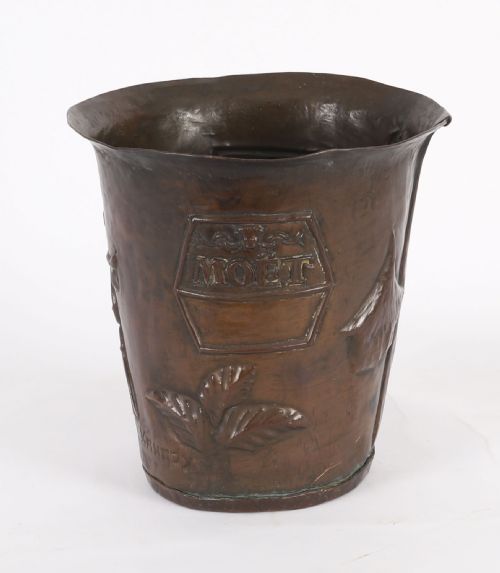
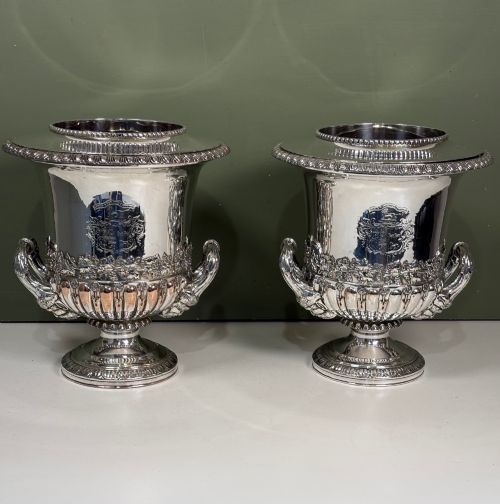
The selections available range from weighty nineteenth-century pieces to mid-twentieth-century modernist designs. Examples run from early twentieth-century French copper vessels to elaborate silver-plated champagne buckets and streamlined chrome ice buckets.
Makers and workshops from France and England dominate the forms seen here, often bearing distinct regional styling such as Art Deco geometric lines or French bistro utility. Buyers frequently meet pieces bearing the hallmarks of major silversmiths alongside heavy provincial copper pieces.
Materials and Construction
Makers utilised heavy base metals, copper, and specialised plating techniques to build durable vessels capable of holding ice and liquid for hours. Silver plate and Old Sheffield plate provide a bright reflective surface over a supportive base metal core.
Many items display hand-embossed decoration, soldered handles, and applied crests or coats of arms, showing skilled metalworking techniques. Copper variants often feature visible hammered textures and brass fittings, reflecting robust domestic and hospitality use.
Several heavy champagne buckets arrive bearing historical coats of arms, ready to host modern ice cubes with aristocratic dignity.
Quality and Distinction
The thickness of the metal plate and the integrity of the underlying base metal dictate the longevity and weight of a cooler. Substantial gauge metal ensures the vessel holds temperature effectively and resists dents from regular handling.
Artistic execution separates standard production items from masterworks designed by notable figures like Luc Lanel. Crisp detail in embossed motifs, balanced proportions, and authentic maker marks elevate particular pieces within the broader range.
Christofle·Elkington·Gallia·Luc Lanel
The Metal Champagne Chiller Glossary
- Silver Plate
- A thin layer of silver bonded to a base metal core such as copper or nickel brass. This technique allowed makers to produce luxurious tableware at a lower cost than solid silver.
- Old Sheffield Plate
- An early method of fusing a thin sheet of silver to a thick copper ingot before rolling and shaping. Pieces produced this way often reveal subtle traces of copper where the silver layer has worn thin over generations of polishing.
- Art Deco
- A design style prevalent during the 1920s and 1930s characterised by sleek geometric shapes, stylised motifs, and streamlined forms. In champagne coolers, this appears as clean vertical lines and stepped handles.
- Base Metal
- Any non-precious metal or alloy, such as brass, copper, or nickel, used as the foundational structure beneath silver plating. The weight and durability of a cooler often depend on the quality of this internal core.
Metal Champagne Chiller: Frequently Asked Questions
How do I clean a silver plated cooler?
Use a soft cloth and a dedicated silver polish designed for plated items to avoid wearing away the delicate silver layer. Rinse with warm water and dry immediately to prevent water spots.
Avoid harsh abrasive scouring pads or chemical dips that can strip the plating and expose the underlying base metal.
Are these coolers suitable for daily use?
Most metal wine coolers are robustly constructed from thick silver plate, chrome, or copper, making them well-suited for regular dining and entertaining. Their original purpose was practical hospitality use.
Dry the interior thoroughly after each use to prevent moisture damage and preserve the integrity of the metal over time.
How can I date an older wine cooler?
Examine the style of any applied decoration, handles, and manufacturer stamps to narrow down the decade of production. Art Deco coolers display distinct geometric lines, whereas nineteenth-century pieces often feature heavy embossing and crests.
Maker marks and registry numbers stamped on the base offer the most reliable clues for identifying the exact period.
What is the difference between silver plate and Sheffield plate?
Silver plate generally refers to later electroplated items where silver is deposited onto a base metal via an electrical current. Old Sheffield plate involves fusing solid silver sheets to copper through heat and rolling.
Old Sheffield pieces often show characteristic copper bleeding along seams and edges due to the older mechanical fusion process.