
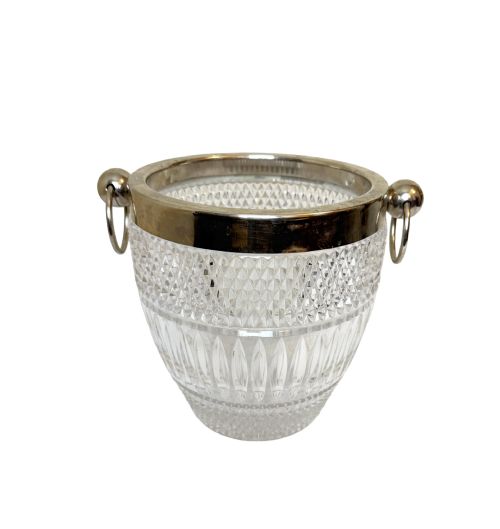


French Silver Plate Bucket
A french silver plate bucket brings functional silver and plated metal to the table for chilling wine and champagne.
French Silver Plate Bucket
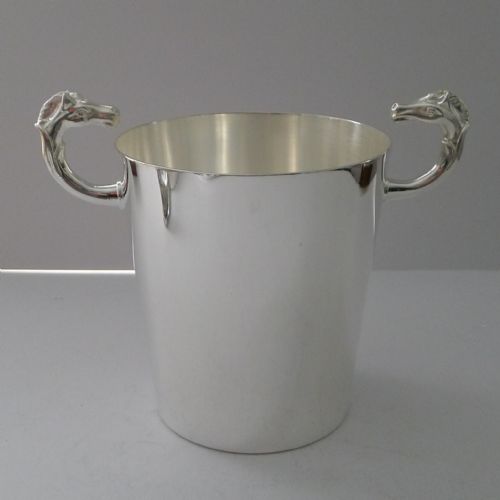
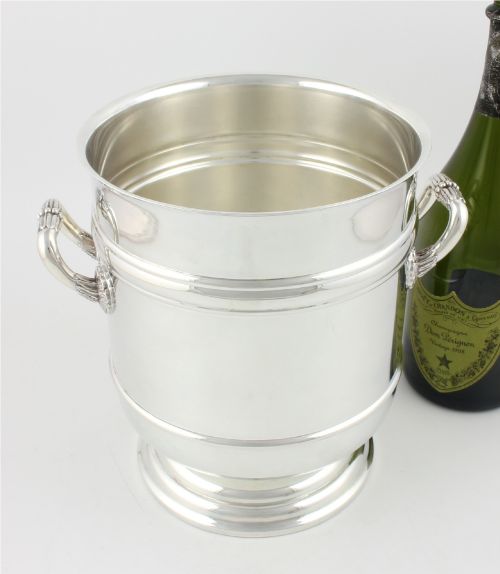
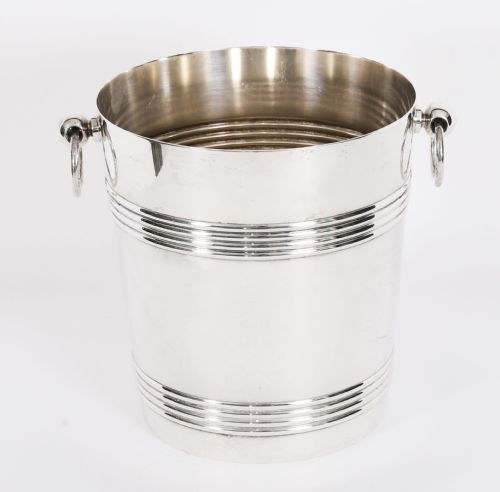
A french silver plate bucket serves primarily as a wine cooler, champagne bucket, or ice bucket for domestic entertaining. These vessels take the form of deep cylindrical containers, often fitted with ring handles, lion masks, horse heads, or grape motifs to aid lifting.
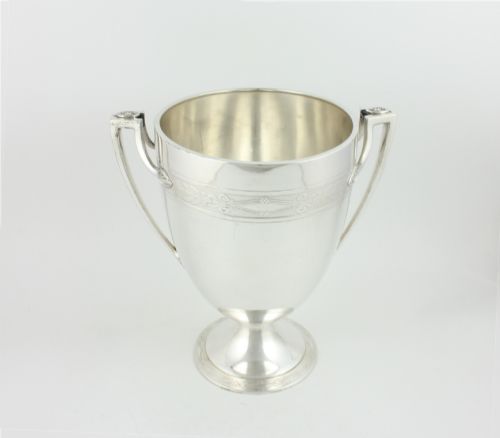
The pieces available span several decades from the early twentieth century through the mid-century modern era. Art Deco designs appear frequently alongside Belle Epoque, French Empire, and mid-century styles, originating from Parisian workshops and silversmiths.
Materials and Technique
Makers constructed these vessels using a base metal or silver plate, applying a silver coating over copper alloys, brass, or other foundational metals. Certain examples combine this silver-plate finish with cut crystal or crackle glass inserts.
Decorative elements involve detailed techniques such as heavy embossing, geometric Art Deco lines, and cast figural handles shaped as animals or equestrian themes. These applied details are secured to the main body to withstand the weight of ice and bottles.
Judging Quality
Quality rests on the weight of the metal and the authority of the design, distinguishing mass production from workshop output. Substantial gauges of base metal support thick silver plating that resists wear across the body and handles.
Attribution to recognised designers and Parisian houses elevates a piece, as seen in specialised forms created by known silversmiths. Crisp casting in handles and motifs separates superior vessels from simpler commercial items.
Hermes Paris·Christofle·Ercuis Paris·Luc Lanel for Christofle·Lino Sabatinni·Le Chardon·Puiforcat Paris·St Medard·Andre Laine
The French Silver Plate Bucket Glossary
- Silver Plate
- A thin layer of silver bonded to a base metal core such as brass or copper. This technique allowed makers to produce substantial vessels with the appearance of solid silver at a lower weight and cost.
- Champagne Cooler
- A deep bucket designed to hold a bottle submerged in ice and water. These vessels often feature sturdy side handles to assist with transport.
- Art Deco
- A design style characterised by streamlined geometric forms, symmetry, and stylized motifs popular during the interwar decades. Many items in this category display these characteristic modernist lines.
- Gallia
- A specific metal alloy and subsidiary brand utilised by Christofle for high-end plated tableware. Pieces bearing this mark often showcase ambitious sculptural designs from the early twentieth century.
French Silver Plate Bucket: Frequently Asked Questions
How do I clean my silver plate bucket?
Wash the vessel in warm soapy water using a soft cloth, avoiding abrasive sponges that can wear away the thin silver layer over the base metal. Dry thoroughly with a lint-free cloth to prevent water spots.
Apply a dedicated silver polish sparingly only when necessary, rubbing gently in straight lines. Rinse away all residue to maintain the finish on the plated surface.
Can I use these buckets for ice?
Many of these vessels function well for holding ice cubes during gatherings, provided they feature an interior suitable for direct contact. Insulated or double-walled variants keep ice solid for longer periods.
Empty remaining ice after use and dry the interior completely. Leaving melting ice inside stagnant for hours can damage the silver plate or underlying base metal.
How do I identify an Art Deco piece?
Art Deco examples display clean geometric lines, stepped rims, and symmetrical ornamentation rather than heavy floral scrolls. Designers from this period favored streamlined shapes and functional austerity.
Examine the handles and base for signature modernist motifs common to the interwar decades. Maker marks from this era often corroborate the manufacturing period.
What is the difference between a wine cooler and champagne bucket?
Champagne buckets generally possess a slightly wider rim and deeper body to accommodate taller bottles alongside a substantial volume of ice. Wine coolers can share these dimensions but often display more varied proportions.
Both forms utilise robust side handles to manage the combined weight of glass, liquid, and ice. The distinction in naming often depends on the specific manufacturer catalogue from the period.