
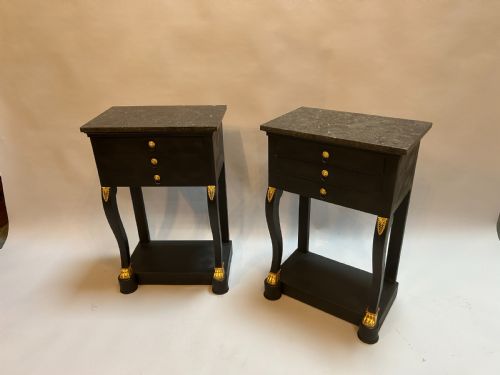
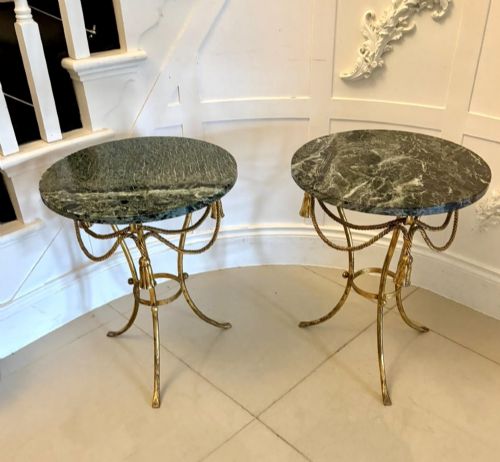
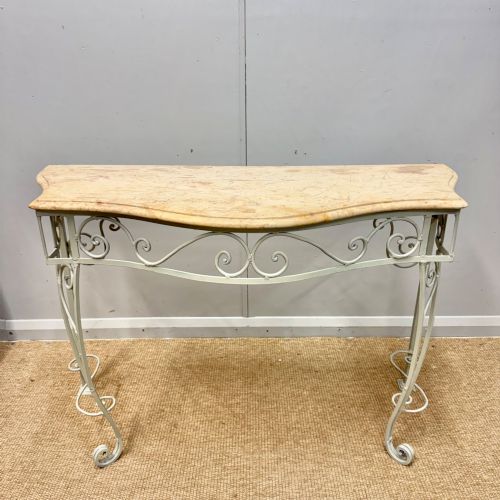
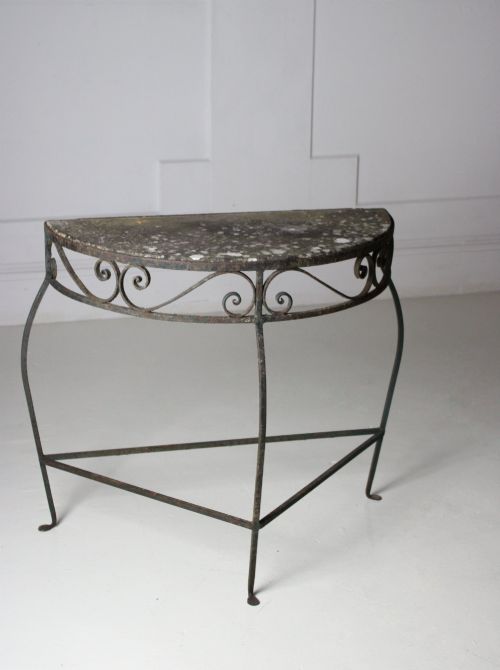
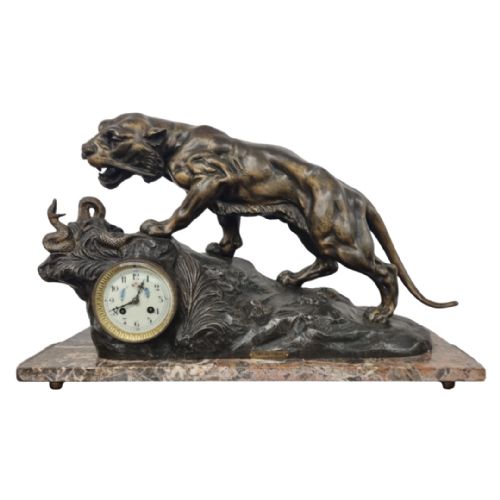
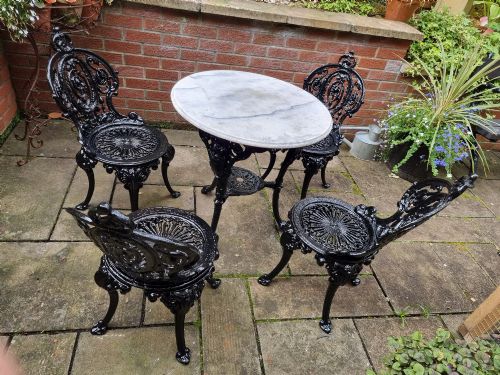
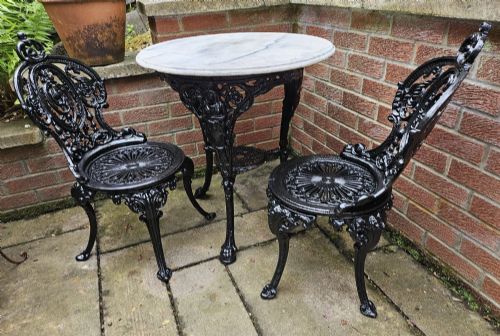

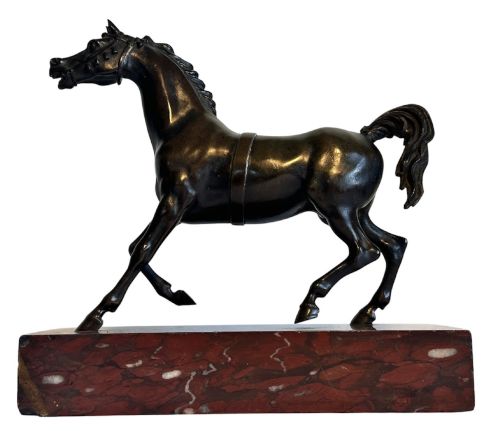
Metal and Marble Table
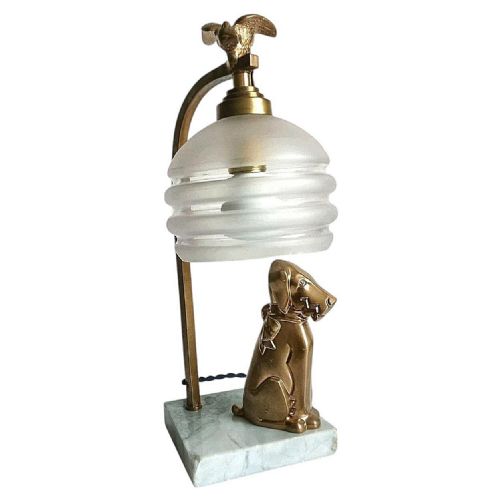
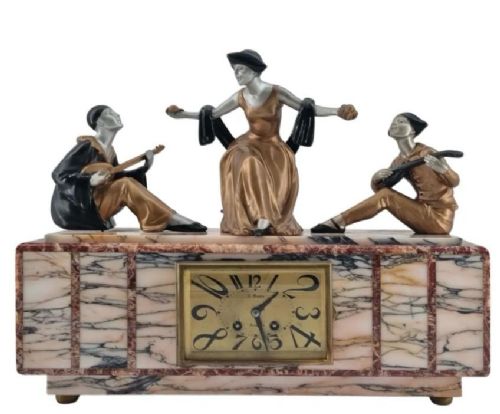
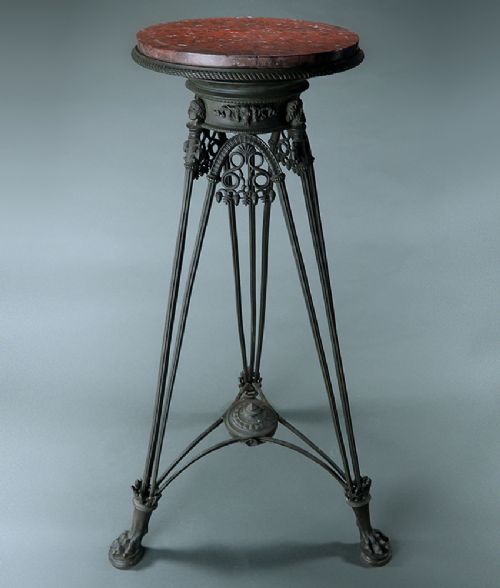
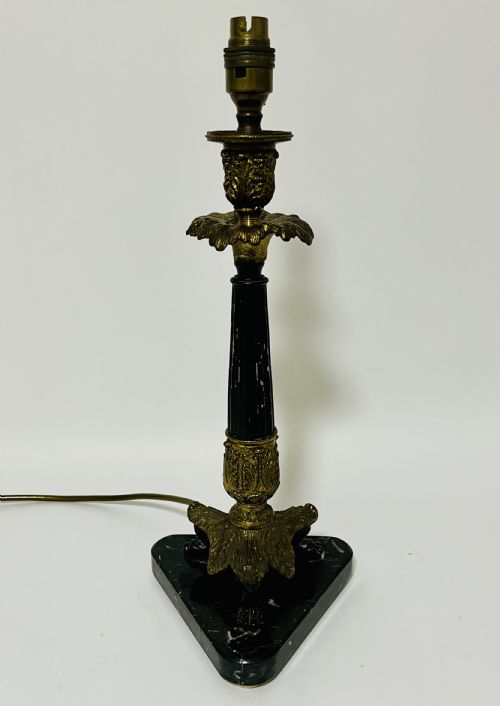
These metal and marble table pieces unite heavy stone with cast and forged metalwork to create functional surfaces and decorative mounts.
Metal and Marble Table
A metal and marble table brings together structural metal frames with solid stone surfaces, spanning console tables, coffee tables, and occasional side stands. These designs appear across nineteenth-century revival styles and early twentieth-century modernist movements.
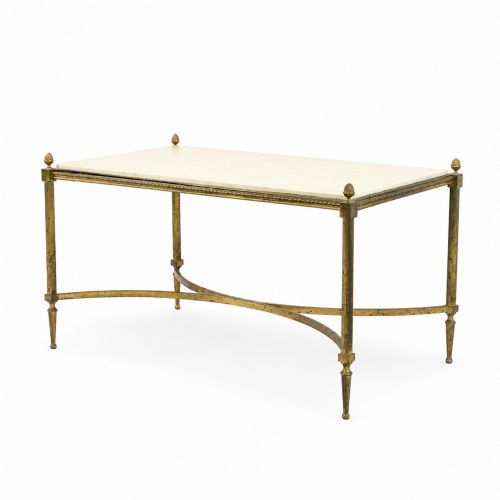
Console tables and coffee tables form the core of the domestic selections, often incorporating heavy stone tops resting on wrought iron, brass, or gilt metal frames. Smaller side pieces and plant stands also emerge frequently from French and English workshops.
The periods range from Victorian and Edwardian iterations through to Art Deco creations. French influence dominates the aesthetic, particularly through Empire, Rococo Revival, and guéridon forms.
Materials and construction
Makers utilised cast iron, wrought iron, brass, bronze, and ormolu alongside polished slabs of white, black, green, or Sienna marble and onyx. Metal frames were forged, cast, or gilded to support the dense stone elements.
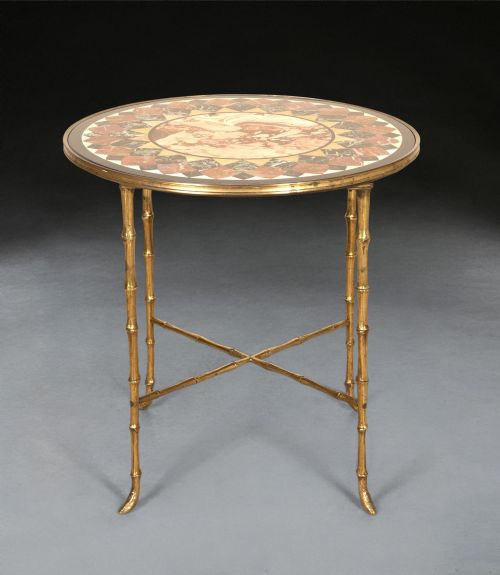
Surface treatments combine patinated or chiseled brass with meticulously cut marble tops, sometimes featuring inset specimen marble panels or classical mounts. Structural joints rely on sturdy metal brackets and fixings to bear the heavy weight of the stone.
The listings span from the mid nineteenth century through the Art Deco era of the 1930s, featuring brass, wrought iron, and various marbles.
Assessing craftsmanship and finish
Quality rests in the crispness of the metal casting, the weight and depth of the marble top, and the refinement of the joinery between stone and metal. Superior examples display hand-chiseled details on ormolu mounts and tightly fitted stone slabs.
R Varnier·Claude Michel Clodian·Masion Ramsay·Weisweiler·Guilmet·Bruno Zach
The Metal and Marble Table Glossary
- Guéridon
- A small French table, often round and supported by a single central column or tripod legs, frequently topped with marble. This form became popular during the neoclassical period.
- Ormolu
- Finely ground high-carat gold applied to a bronze object using a mercury amalgam technique. This finish produces a rich, lasting golden sheen on decorative mounts.
- Console table
- A table designed to be fixed against a wall, typically supported by ornate brackets or legs. These items often feature heavy marble tops.
- Specimen marble
- A decorative technique using various coloured marbles assembled into geometric or pictorial patterns. Such tops denote high skill in stone masonry.
Metal and Marble Table: Frequently Asked Questions
How do I clean a marble top?
Use a soft cloth dampened with warm water and mild, pH-neutral soap to wipe the surface. Avoid acidic cleaners or vinegar, which etch polished stone.
Dry the marble thoroughly with a soft towel to prevent water spots and maintain the natural lustre of the stone.
Are these tables heavy?
These pieces possess substantial weight due to the combination of solid stone tops and cast metal or iron frames. Two people are typically required to lift and position them safely.
Position the furniture on stable, level flooring to ensure the heavy stone remains secure on its metal base.
How do I date an antique table?
Examine the construction methods of the metal frame, such as hand-forged wrought iron versus twentieth-century machine casting. Fasteners and the type of marble finish also provide clues to the manufacturing era.
Stylistic cues like Art Deco geometry or nineteenth-century neoclassical revival motifs help narrow down the decade of production.
Where should I place a console table?
Console tables suit entryways, hallways, or living rooms against flat walls where their slim profiles save floor space. They provide a sturdy surface for lamps, clocks, and decorative objects.
Ensure the wall surface allows for proper anchoring if the console design relies on structural wall brackets for stability.