


Meissen Porcelain Cherub
These meissen porcelain cherub pieces bring sculptural Rococo grace and figurative detail to any room.
Meissen Porcelain Cherub
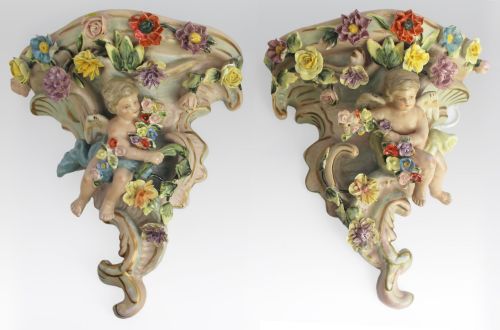
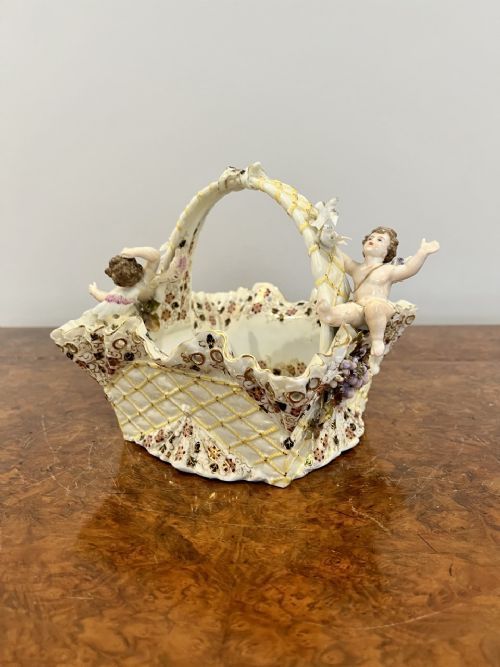
When you search for meissen porcelain cherub, you encounter figures, centrepieces, wall brackets, and candelabra that capture mythological putti in hard-paste porcelain. The most common examples on this page date from the nineteenth century and the Edwardian period, often reflecting Rococo Revival styles.
Makers and modellers such as Paul Scheurich and Johann Joachim Kändler shaped these forms, ranging from single dancing angels holding tricorne hats to large pairs of oil lamps and clock garnitures. Pieces frequently incorporate decorative baskets, urns, and mirrors alongside the central porcelain figures.
The evidence shows German production alongside continental and French interpretations, including items made after Meissen or in the Meissen style. These sculptures and functional objects span figures of Amor and Cupid in disguise, as well as seasonal allegories.
How they were made
Gold leaf, gilt, and enamel embellish many of the pieces, highlighting Rococo scrollwork and the rims of baskets, mirrors, and oil lamps. Brass and glass components occasionally appear in association with lamps and mirrors, while gilt bronze mounts support larger potpourri vessels.
Several cherubs are caught mid-mischief, including a figure attempting to conceal his identity behind a tiny tricorne hat.
What varies in quality
The precision of the hand-painted enamel work and the crispness of the porcelain modelling separate standard domestic wares from exceptional sculptural output. Superior examples display subtle facial expressions, delicate hand-modelled floral elements, and carefully applied gilding that enhances the underlying ceramic contours.
The complexity of the composition also dictates quality, as multi-figure groups, large centrepieces, and figural candelabra require advanced kiln firing and balancing techniques. Modellers such as Kändler achieved anatomical fluency and dynamic drapery that elevate the standing of a piece within the historic output.
Paul Scheurich·Johann Joachim Kändler
The Meissen Porcelain Cherub Glossary
- Hard-paste porcelain
- A durable ceramic composition made from kaolin and petuntse, fired at high temperatures to create a dense, vitrified body. This material allows for crisp moulding and holds fine painted enamel details securely.
- Blanc de Chine
- A French term for white Chinese porcelain, later used to describe unpainted white European figures such as the Amor piece by Paul Scheurich. This finish emphasises the purity of the modelled ceramic form without glaze colours.
- Rococo Revival
- A nineteenth-century design movement that revives the asymmetric scrolls, C-curves, and naturalistic motifs of the eighteenth-century French court style. It provides the dominant aesthetic framework for these mirrors, wall brackets, and candelabra.
- Gilt bronze
- An alloy of copper and zinc treated with a gold amalgam or gold leaf layer, frequently utilised for mounts and decorative frames. It adds a warm metallic contrast to the white and painted porcelain cherubs.
- Putto
- A plump, often winged male infant figure derived from classical art, commonly referred to as a cherub or cupid in these listings. These figures serve as the central motif across oil lamps, clock garnitures, and allegorical figure sets.
Meissen Porcelain Cherub: Frequently Asked Questions
What is a meissen porcelain cherub?
A meissen porcelain cherub is a ceramic figurine or sculptural component depicting a winged infant, often integrated into candelabra, oil lamps, or centrepieces.
These pieces utilise hard-paste porcelain and hand-painted enamels, reflecting eighteenth-century models and nineteenth-century Rococo Revival tastes.
How were these cherub figures used?
Many cherub figures formed part of larger decorative schemes, serving as table centrepieces, clock garnitures, or structural supports for oil lamps and wall brackets.
Others functioned purely as cabinet figurines or decorative wall mirrors, bringing sculptural mythological narratives into domestic interiors.
How do I identify nineteenth-century pieces?
Nineteenth-century examples frequently combine Rococo Revival moulding styles with Victorian manufacturing techniques and heavy gilding.
The listings show specific production dates around eighteen-eighty and eighteen-ninety, alongside broader nineteenth-century and Edwardian attributions.
What materials are used besides porcelain?
Alongside hard-paste porcelain and enamel, these items incorporate gold leaf, gilt highlights, and gilt bronze mounts.
Some functional objects also integrate brass, glass components, and wooden mirror frames to support the porcelain elements.