





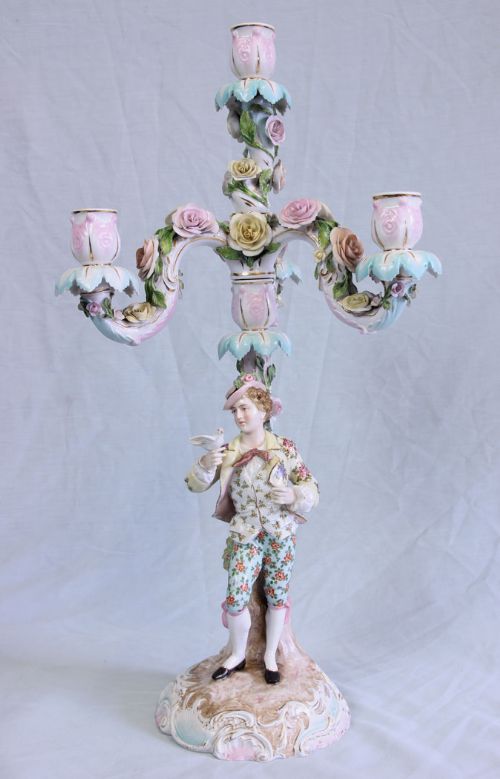
Meissen Ceramic Figurine
When you search for a meissen ceramic figurine, you enter a world of hard-paste porcelain animals, allegorical groups, and finely dressed eighteenth-century figures.
Meissen Ceramic Figurine
A meissen ceramic figurine represents European porcelain modelling at its most historic, originating from the pioneering Saxon factory established in the eighteenth century. Collectors search for these pieces to acquire historical examples ranging from mythological groups and street traders to naturalistic birds and animals.
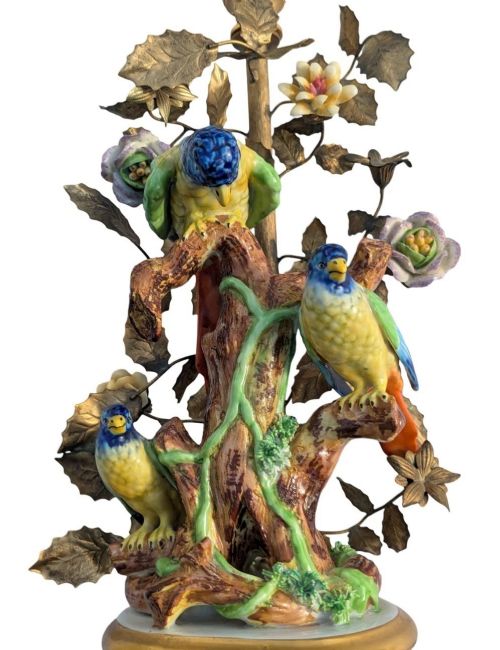
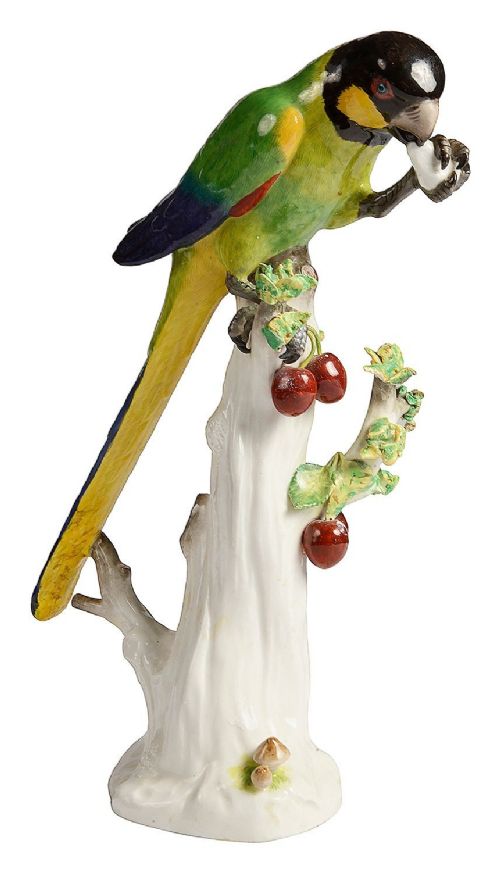
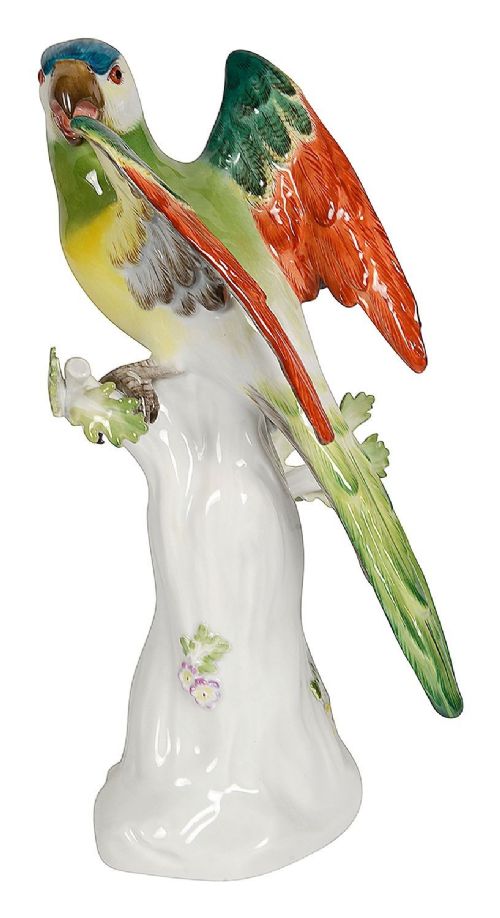
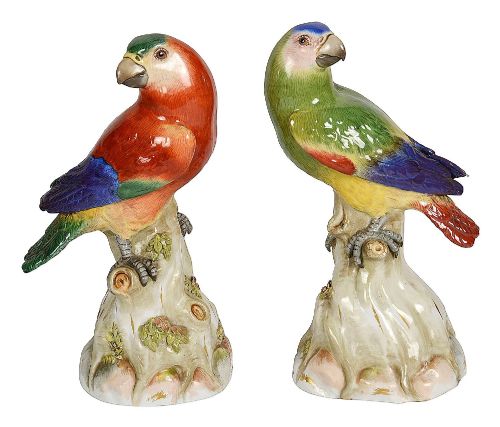
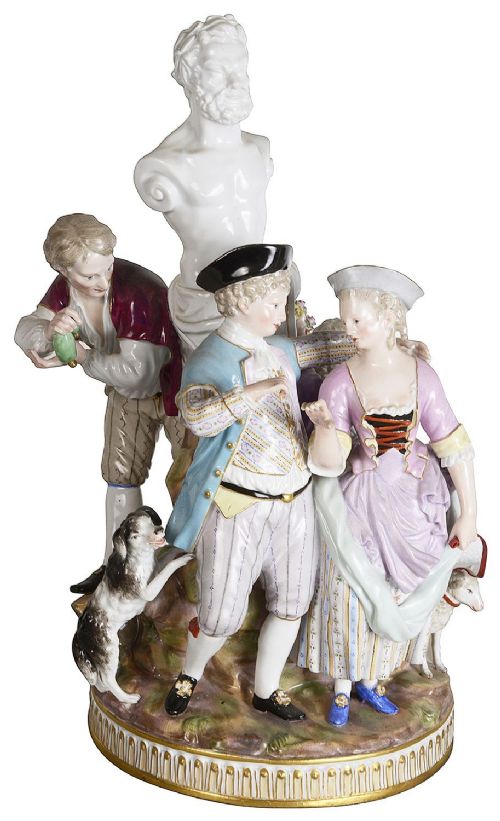
The most common versions encountered on this page date from the nineteenth century, including late nineteenth-century parrots, romantic pastoral groups, and figures of children. Earlier eighteenth-century examples, such as the Marcolini period pieces and street vendor subjects, appear alongside later nineteenth-century interpretations and twentieth-century modernist figures.
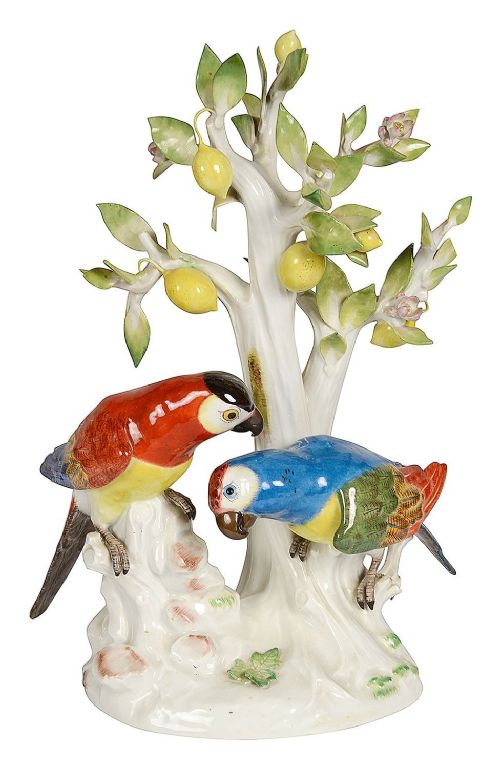
Forms vary considerably, spanning single standing figures, paired birds perched on tree trunks, complex multi-figure allegorical groups, and functional items like figural inkwells. Stylistic influences shift from the exuberant curves of Rococo and Neoclassical themes to Victorian romanticism and Edwardian modelling.
Factors That Separate Quality
The precision of the enamel work and the subtlety of the colour palette dictate the visual impact of each piece. Finer examples display meticulous brushwork on costumes and naturalistic bases, whereas lesser items rely on heavier, block-colour application with less textural nuance.
Meissen Ceramic Figurine Retail Price Guide 2026
Typical asking prices for meissen ceramic figurine among the pieces listed under this phrase on Sellingantiques today, from the lower quarter to the upper quarter. They describe what is for sale here now, not the wider market.
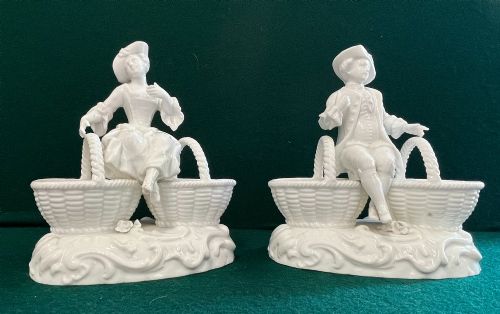
Several eighteenth-century street traders come equipped with tiny baskets of grapes, proving that even porcelain figures had to earn a living.
Edmé Samson·Paul Scheurich·Helena Wolfsohn·Acier
The Meissen Ceramic Figurine Glossary
- Hard-paste porcelain
- A dense, vitrified ceramic compound invented in Europe during the early eighteenth century, fired at extremely high temperatures. It serves as the primary body for authentic Meissen figures.
- Enamel
- Opaque glass-based pigment applied to the surface of fired porcelain to create painted details. Artisans layer these colours by hand before a subsequent firing fuses them to the glaze.
- Blanc de Chine
- A French term for white Chinese porcelain, later adopted to describe European figures produced without polychrome enamel decoration. These unpainted pieces highlight the purity of the white porcelain body and the skill of the modeller.
- Gilt
- A thin layer of gold applied to surface details, highlights, and bases to add ornamental richness. This technique often characterises Rococo revival and nineteenth-century decorative pieces.
- Marcolini Period
- The phase of Meissen production spanning from roughly the late eighteenth into the early nineteenth century. Collectors look for this era by its specific factory mark variations.
Meissen Ceramic Figurine: Frequently Asked Questions
How do I spot a true nineteenth century piece?
Examine the modelling style, the complexity of the enamel palette, and the character of the base. Nineteenth-century examples often adopt Rococo revival or romantic themes with heavier gilding and distinct factory marks compared to eighteenth-century prototypes.
Look closely at the hand-painting and the wear on the porcelain foot rim. Older pieces show natural ageing beneath the glaze and softer enamel tones developed over generations of handling.
Were these figures meant for display?
These porcelain objects served primarily as decorative table centrepieces, mantel ornaments, and cabinet displays for wealthy European households. They demonstrated the owner's cultural literacy through classical, allegorical, and pastoral motifs.
Some specialised forms, such as figural inkwells, combined decorative sculpture with utility on a writing desk. Most figures, however, functioned purely as visual art to impress guests in formal reception rooms.
What subjects are most common?
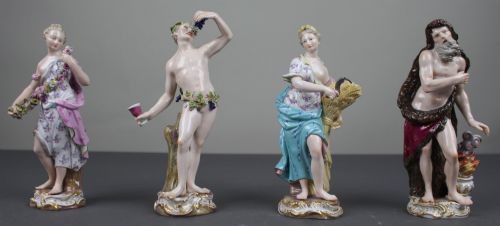
Common subjects include pastoral couples, street traders, allegorical representations of the seasons, and naturalistic birds like parrots and hoopoes. Mythological groups and children at play also appear frequently across various manufacturing periods.
Animals, ranging from monkeys to elephants, reflect the eighteenth and nineteenth-century fascination with exotic wildlife. These varied motifs allowed owners to curate diverse thematic displays.