


Meiji Period Cachepot
A meiji period cachepot brings sculptural weight and horticultural tradition into a room, taking the form of a bronze or porcelain vessel.
Meiji Period Cachepot
A meiji period cachepot functions as an ornamental plant holder or jardiniere, designed to conceal a plain flowerpot inside a decorative exterior. These pieces originate from Japan during the nineteenth century and the early twentieth century, reflecting the craftsmanship of the Meiji era and surrounding transitional decades.
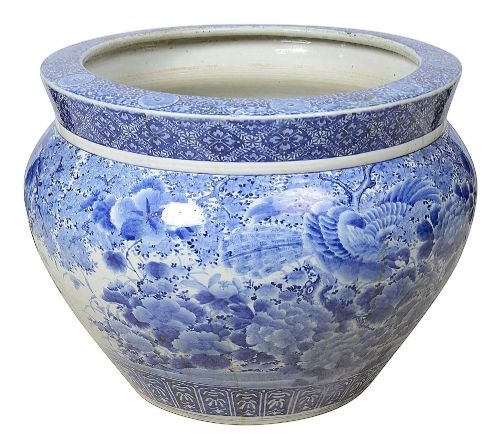
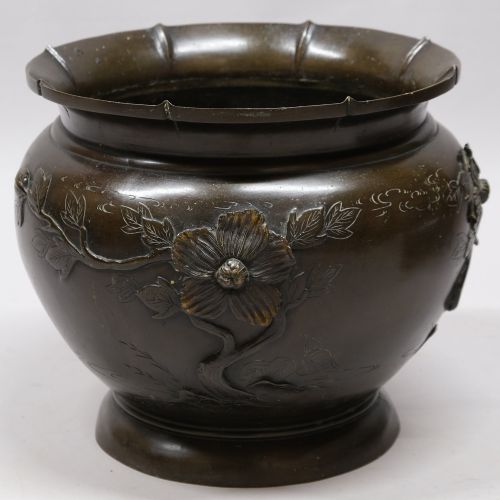
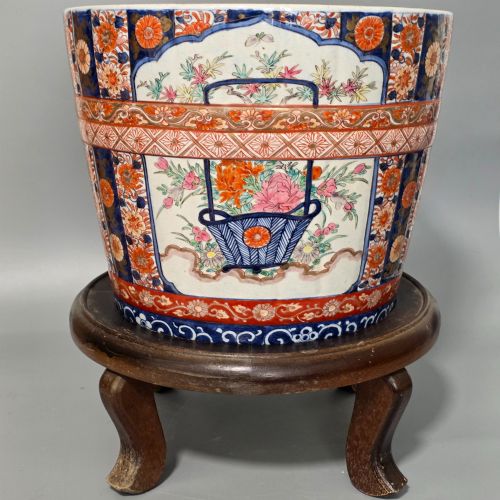
The selections available here lean heavily towards robust bronze bowls and large porcelain planters. Buyers frequently encounter pieces finished in Japanese Imari palettes or deep blue and white glazes, alongside heavy cast bronze bodies.
Forms range from simple circular bowls to oval planters and large vessels equipped with hardwood stands. They appear under various historical descriptions including jardinieres, planters, and decorative bowls.
How they were made
Makers shaped these vessels using traditional metalworking and ceramic techniques, utilising bronze, porcelain, stoneware, brass, and enamel. Bronze pieces involve careful casting and patination, resulting in heavy, durable bowls designed for substantial display.
Ceramic examples rely on cobalt underglaze and intricate hand-painted decoration, often incorporating Imari colours or satsuma glazing. Stoneware and porcelain bodies undergo high-temperature firing to achieve dense, impermeable structures suitable for holding plants and water.
Listings feature items spanning the nineteenth century, Victorian era, and early twentieth century up to nineteen-ten, utilising bronze, porcelain, brass, and stoneware.
What varies in quality
The distinction between standard vessels and superior examples rests on the crispness of the casting in bronze or the precision of the brushwork on porcelain. Heavier bronze bowls, weighing several kilograms, demonstrate substantial material investment and confident hand-finishing.
Surface preservation and decorative depth define the upper tier of these pieces. Fine examples retain complex enamel details, sharp cobalt underglaze definition, or associated hardwood stands that complement the main vessel.
Makuzu Kozan II
The Meiji Period Cachepot Glossary
- Cachepot
- A decorative container used to hold an ordinary flowerpot and catch drainage water. The term translates from French as hiding pot.
- Jardiniere
- A large ornamental pot or receptacle for plants or flowers. These items often stand on the floor or a dedicated table rather than a windowsill.
- Imari
- A style of Japanese porcelain decorated in underglaze blue, iron red, and gold. This aesthetic gained significant popularity for export during the Meiji period.
- Satsuma
- A type of Japanese earthenware featuring a crackled ivory glaze decorated with polychrome enamels and gilt. It represents a distinct branch of Meiji era ceramic production.
- Cobalt underglaze
- A blue pigment applied to ceramic pottery beneath a transparent glaze before firing. This technique produces deep, permanent blue decoration that resists fading.
Meiji Period Cachepot: Frequently Asked Questions
How were these pots used?
These vessels served primarily as decorative containers for indoor plants, holding potted greenery within formal rooms and parlours. Their waterproof ceramic or metal construction protected interior surfaces while adding sculptural interest.
Larger versions often sat directly on the floor or upon low stands, while smaller bowls occupied tables and pedestals. They integrated horticulture with interior decoration during the late nineteenth century.
Are bronze or porcelain better?
Bronze and porcelain offer entirely different visual qualities rather than a strict hierarchy of excellence. Bronze vessels provide heavy, industrial weight and subtle metallic patination suited to sculptural displays.
Porcelain and stoneware options bring colour, narrative painted scenes, and traditional glaze patterns into a space. The choice depends on whether a room requires metallic warmth or bright ceramic decoration.
How do I care for the surface?
Bronze surfaces benefit from gentle dusting and occasional dry wiping to preserve the natural patina without stripping historical finishes. Harsh chemical cleaners can damage ancient patinas and delicate enamel work.
Ceramic and porcelain bodies tolerate careful cleaning with mild soap and water when removing dust. Protecting the interior with a secondary inner pot prevents moisture from sitting directly against historic materials.
How do I identify a Meiji piece?
Meiji period vessels display stylistic markers from the late nineteenth and early twentieth century, including traditional Japanese motifs, Imari palettes, and cast bronze manufacturing techniques. Makers often utilised cobalt underglaze or detailed metal chiselling typical of this era.
Cross-referencing stylistic periods like Edo and Victorian helps place pieces within nineteenth-century production contexts. Specific attribution often relies on recorded signatures or distinct regional manufacturing traits.