
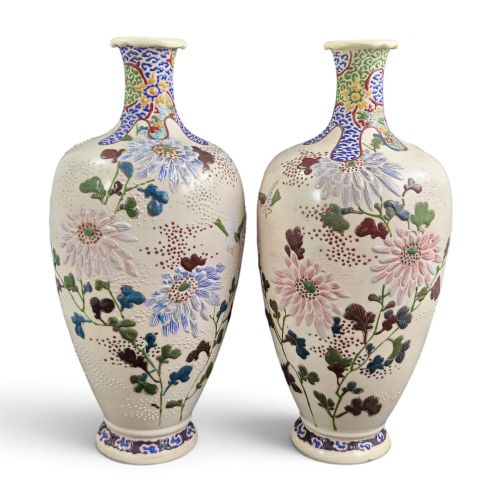
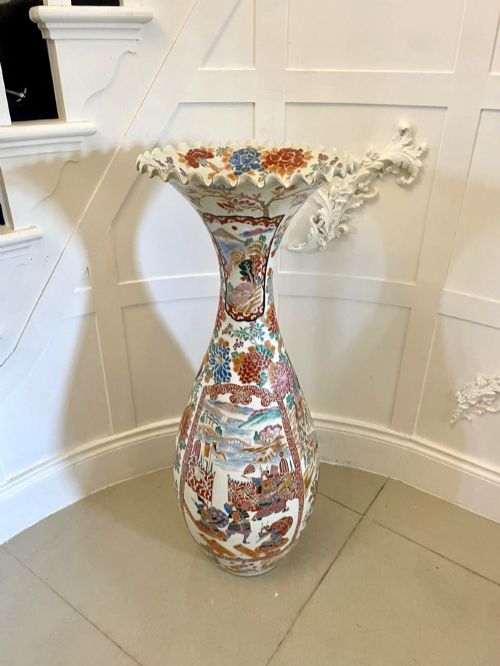
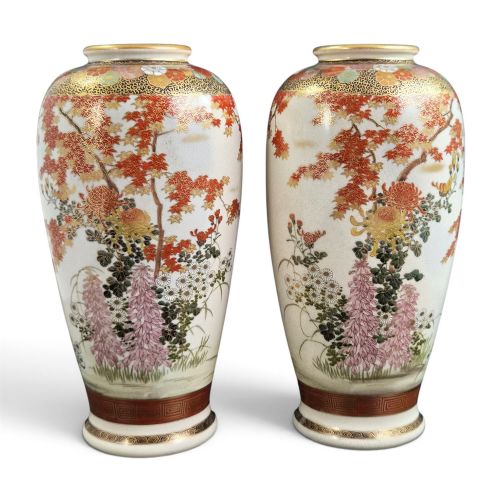
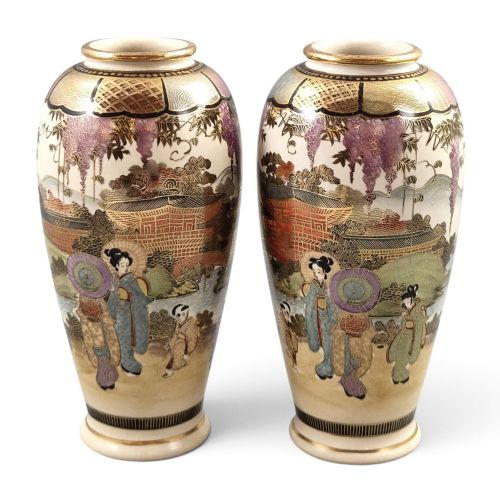
Meiji Ceramic Vase
A meiji ceramic vase brings Japanese artistry into a room through hand-painted scenes, rich glazes and distinct forms from the late nineteenth and early twentieth centuries.
Meiji Ceramic Vase
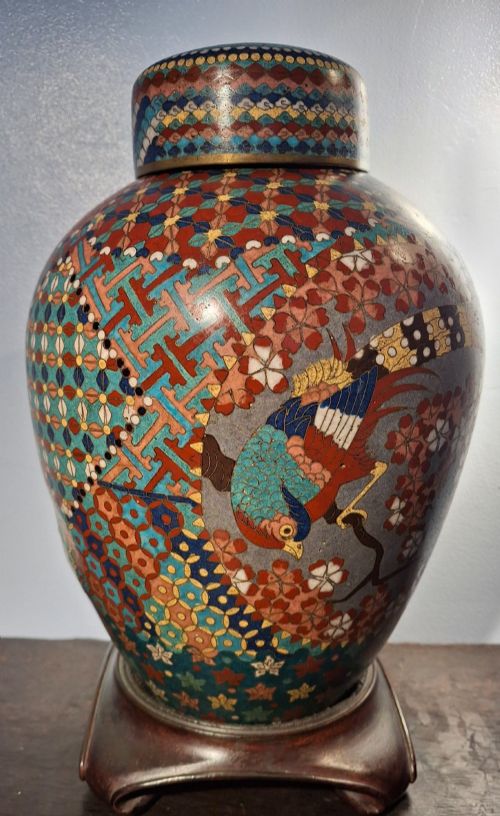
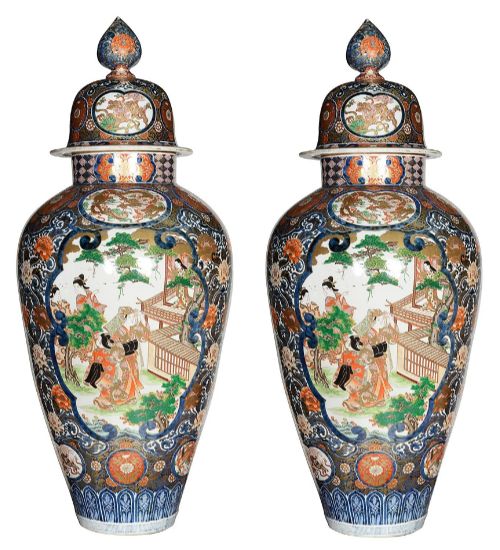
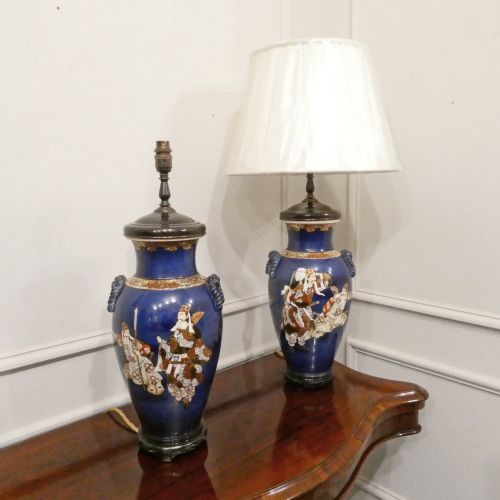
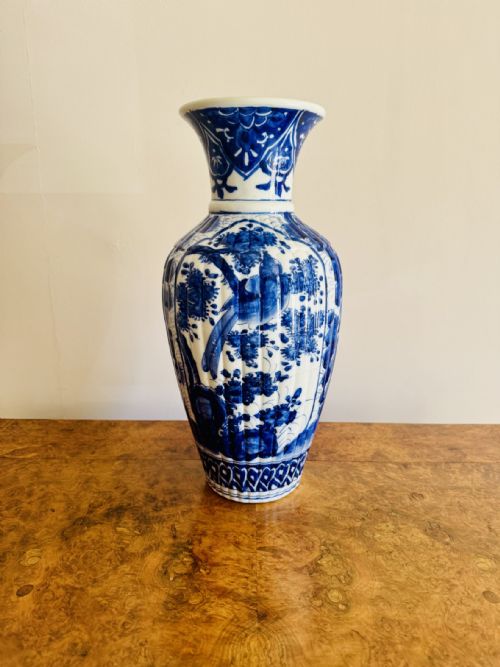
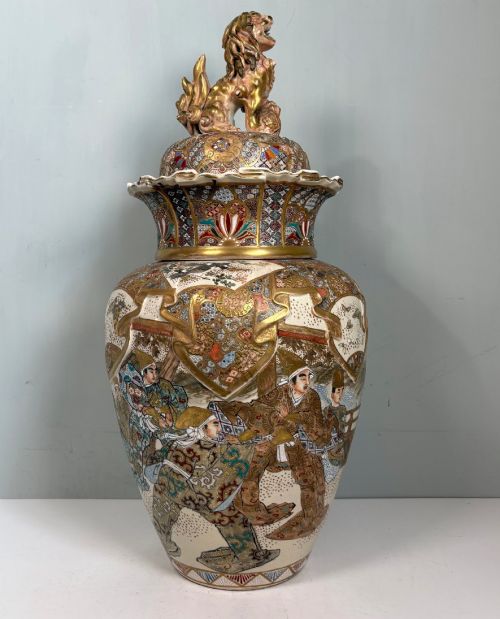
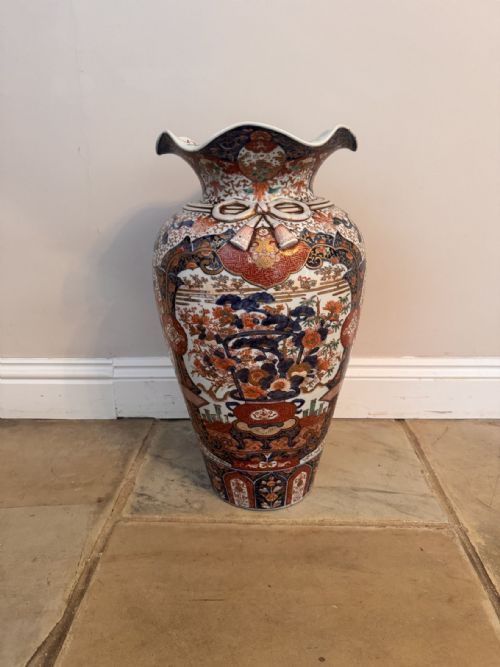
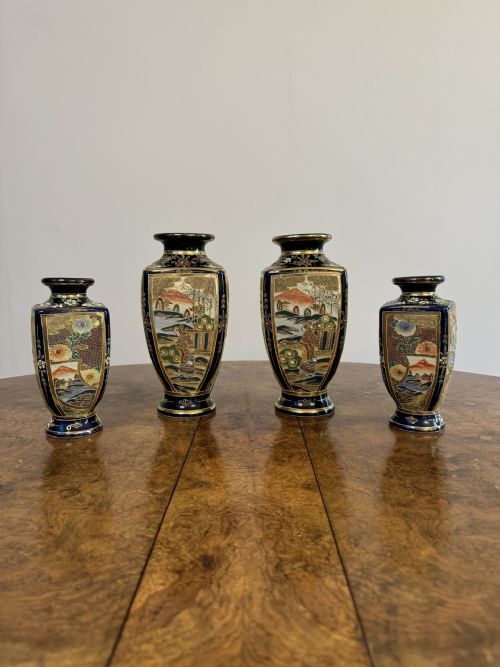
A meiji ceramic vase spans production from the Meiji period alongside related pieces from the Edo, Taisho and Victorian eras. These items appear as floor standing vessels, decorative jars, pitchers and table lamps.
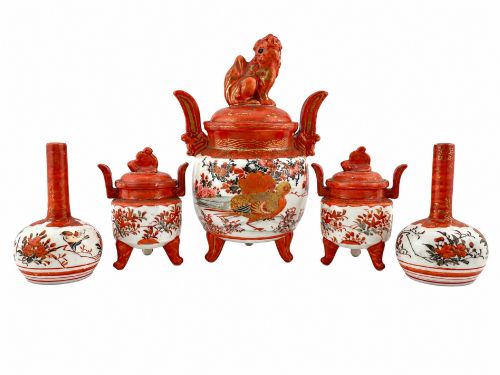
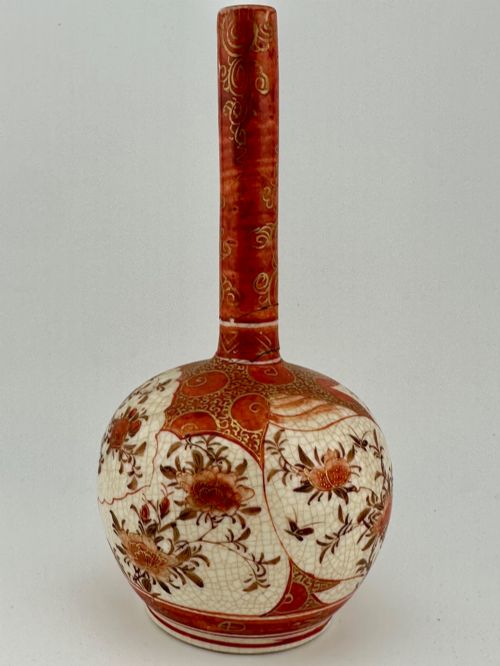
The objects derive from traditional Japanese ceramic centres, including Satsuma, Imari, Kutani and Sumida Gawa wares. Forms range from small baluster shapes to tall floor-standing vessels.
Makers and workshops exported these items widely, resulting in domestic display pieces that retain their decorative panels, figures and floral motifs.
How they were made
Potters shaped porcelain, earthenware and stoneware bodies into vases, pitchers and ginger jars, sometimes adding pinched rims or sculptural figures.
Decoration relied on enamel painting, gold leaf, gilt accents and diverse glaze techniques such as flambe finishes.
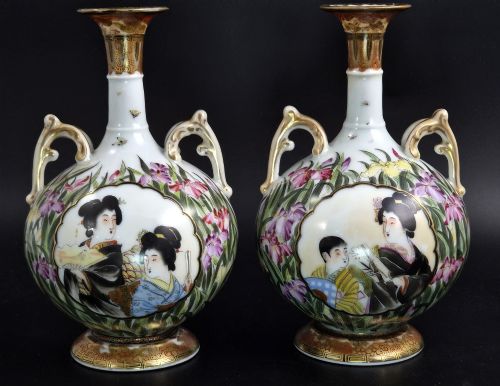
Artisans applied detailed pigments over the ceramic base before firing, producing intricate scenes of figures, landscapes, birds and butterflies.
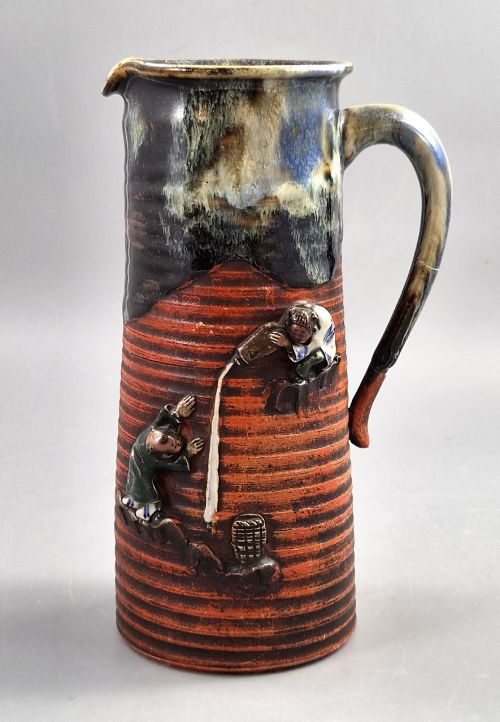
Several vases come populated with small ceramic sages, children and stags climbing the exterior walls.
What varies in quality
Quality depends on the precision of the hand-painted detail in the figures, foliage and borders, alongside the balance of the ceramic form.
The richness of the enamel colours and the application of gold leaf or gilt distinguish standard production from finer workshop output.
Signed pieces by recognised makers or workshops demonstrate a higher level of artistic execution in both the modelling and the painted surface.
Maruni Kobe·Shozan·Inoue Ryosai·Ban-ni·Hichozan Shinpo·Kinzan·Hotoda·Makuzu Kozan
The Meiji Ceramic Vase Glossary
- Satsuma
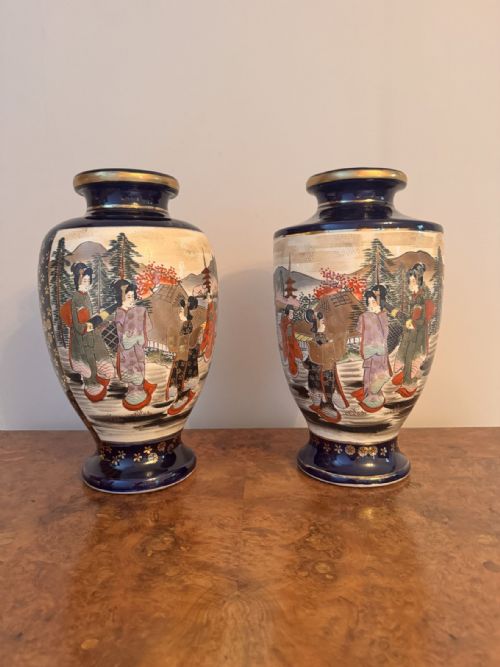
- A type of Japanese earthenware featuring a crackle-glaze and elaborate enamel and gilt decoration depicting figures and nature.
- Imari
- A traditional style of Japanese porcelain decorated in underglaze blue, iron red, gold and additional colours.
- Kutani
- A style of Japanese porcelain known for bold polychrome enamel designs and intricate patterns.
- Sumida Gawa
- A type of Japanese pottery characterised by heavily textured flambé glazes and applied sculptural figures.
- Baluster
- A vase form with a rounded body that tapers toward the neck and base.
Meiji Ceramic Vase: Frequently Asked Questions
What is a satsuma vase?
A satsuma vase is a Japanese earthenware vessel characterised by a creamy, crackled glaze. These pieces typically feature dense enamel and gilt decoration showing human figures, historical scenes or floral motifs.
Such vases were produced extensively during the Meiji period for export and domestic display, often bearing workshop signatures on the base.
How do I identify an imari vase?
An imari vase is made of porcelain and decorated in a distinctive palette dominated by underglaze blue and iron red. Artisans frequently added gold leaf and additional enamel colours to create complex floral and geometric panels.
These pieces date across the nineteenth and early twentieth centuries, reflecting traditional Japanese porcelain manufacturing methods.
What is Sumida Gawa pottery?
Sumida Gawa pottery consists of vessels featuring heavily textured flambe glazes and distinctive sculptural figures applied directly to the exterior. Artisans modelled sages, children, animals and landscapes in high relief against lavender or multicoloured backgrounds.
This ware originated in workshops near Tokyo during the late Meiji and Taisho periods.
How do I live with antique Japanese vases?
These vases suit placement on side tables, mantelpieces or floors depending on their scale. Pairing them with stands or incorporating them as table lamps extends their utility in modern interiors.
Placing them away from direct sunlight protects the enamel and gilt surfaces from fading over time.