





Meiji Carved Cabinet
These meiji carved cabinet pieces are intricate Asian export display furniture offering exceptional woodcarving and lacquerwork that elevate any room.
Meiji Carved Cabinet
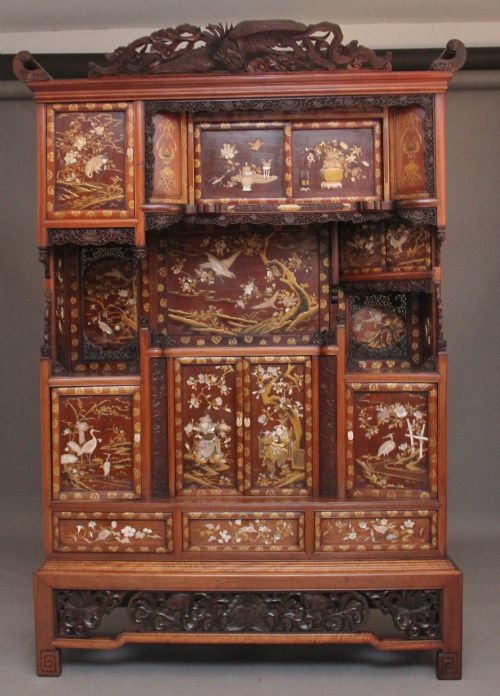
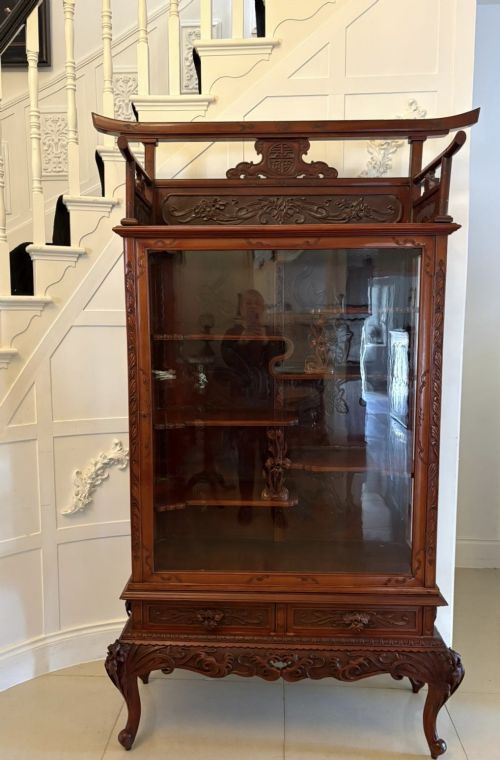
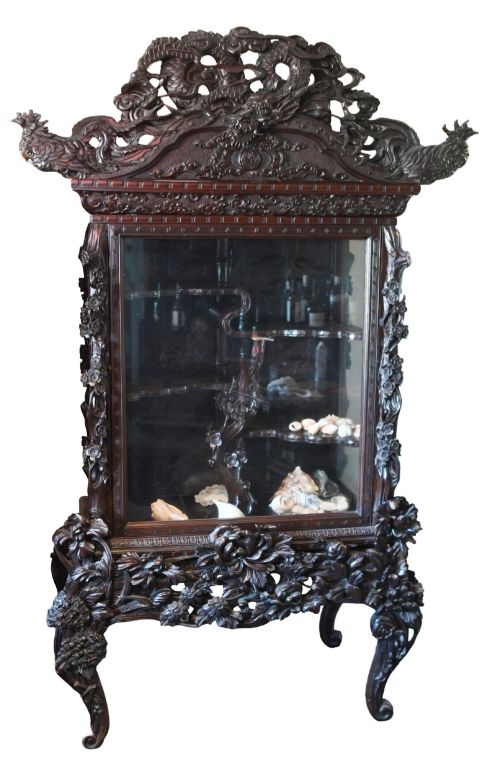
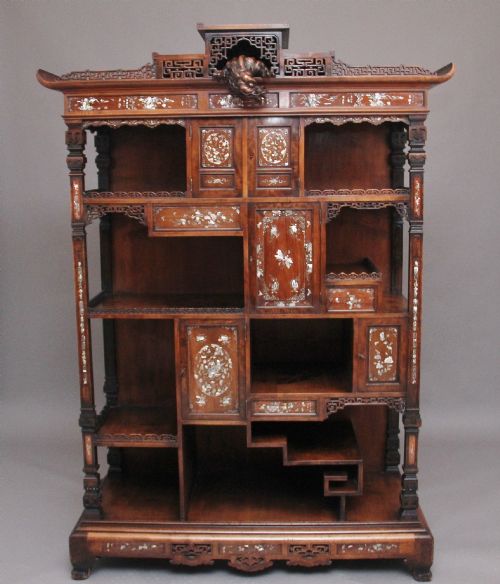
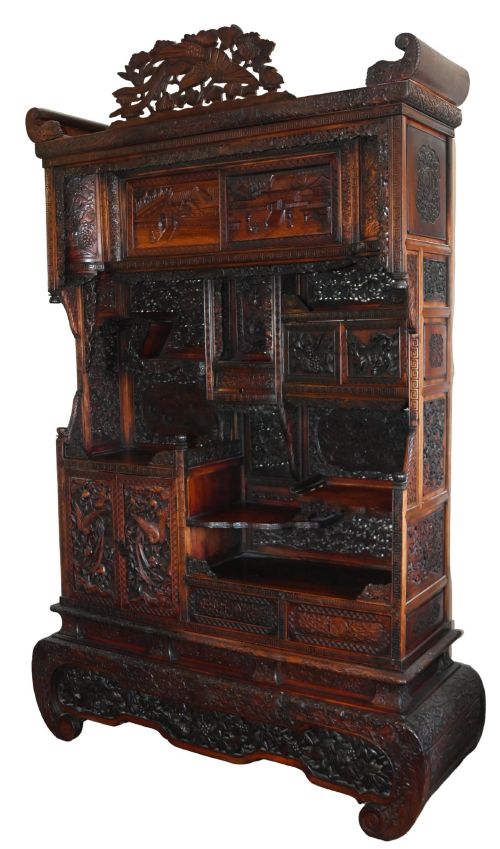
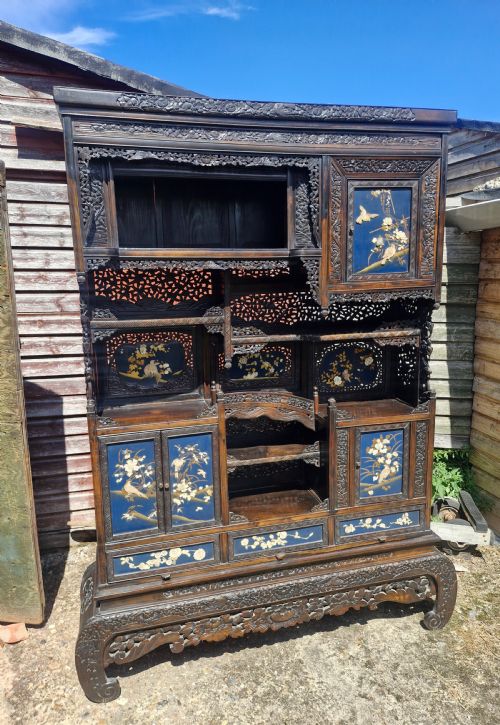
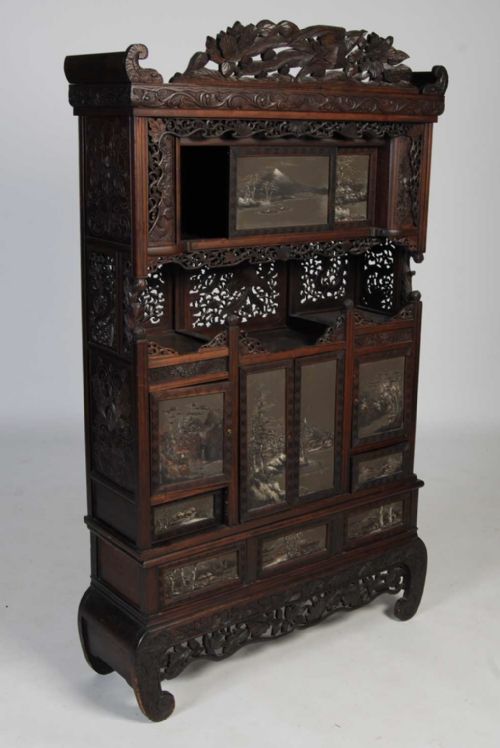
When you search for a meiji carved cabinet, you encounter highly decorative display furniture designed primarily for export during the late nineteenth and early twentieth centuries. These pieces encompass intricate shodana display cabinets, cabinets on stands, and occasional desks originating from Japan.
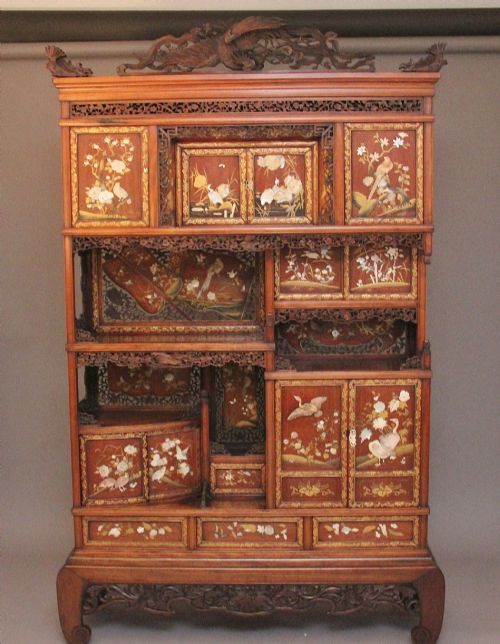
The version you are most likely to meet on this page is the traditional Japanese shodona, featuring multi-tiered shelving and carved compartments. Alongside these, the listings include specialised forms such as red lacquer display cabinets, corner cabinets, and cylinder desks from the Meiji and Taisho periods.
Makers and workshops of this era constructed these items to satisfy Western demand for exotic Asian craftsmanship. The resulting forms blend structural practicality with elaborate surface ornamentation, making them distinctive focal points for displaying small objects of vertu.
How they were made
Craftsmen utilised dense hardwoods, notably rosewood and ebonised timber, as the primary structural foundation for these elaborate cabinets. Artisans then applied intricate hand-carving directly into the wood grain, often supplementing the relief work with layered red and black lacquer.
Surface decoration frequently incorporated delicate inlays of mother-of-pearl and bone to render floral motifs and figurative scenes with contrasting textures. Glazed panels and specialised joinery completed the construction, uniting structural timber with meticulous decorative arts.
Meiji Carved Cabinet Retail Price Guide 2026
Typical asking prices for meiji carved cabinet among the pieces listed under this phrase on Sellingantiques today, from the lower quarter to the upper quarter. They describe what is for sale here now, not the wider market.
Tiny bone flowers hide in plain sight on the cabinet doors, waiting for a stray ray of afternoon light to reveal them.
What varies in quality
The distinction between ordinary export furniture and exceptional exhibition pieces lies entirely in the depth and precision of the hand-carving. Superior examples display crisply undercut relief work and flawless lacquer surfaces where the wood grain remains stable beneath the finish.
Quality also rests on the intricacy of the inlay work, particularly the tight integration of mother-of-pearl and bone into the panels. Cabinets retaining their original stands and uncompromised glass panels demonstrate greater integrity than those altered over time.
The Meiji Carved Cabinet Glossary
- Shodana
- A Japanese multi-tiered display cabinet designed for exhibiting ceramics, bronzes, and other treasured objects. These pieces typically feature asymmetrical shelving and enclosed cupboards.
- Shibayama
- A decorative technique utilising delicate inlays of shell, ivory, bone, and horn to create pictorial panels of flora and fauna. The style gained immense popularity during the late nineteenth century.
- Yosegi
- A traditional Japanese method of intricate wood mosaic work, combining various natural wood species without painting to produce geometric patterns. Cylinders and desk surfaces frequently employ this technique.
- Cinnabar
- A carved lacquer technique involving numerous layered coats of red pigment applied to a wooden core before being deeply carved. This labor-intensive process yields rich, textured surface relief.
- Japonisme
- A Western artistic movement reflecting the profound influence of Japanese art and design on European decorative arts from the mid-nineteenth century onward. The aesthetic shaped the production of export cabinets for foreign markets.
Meiji Carved Cabinet: Frequently Asked Questions
What is a shodona cabinet?
A shodona is a traditional Japanese display cabinet characterised by multiple asymmetrical shelves, sliding doors, and carved compartments.
Craftsmen built these pieces to exhibit decorative objects, combining functional storage with elaborate artistic expression.
How do I date a meiji carved cabinet?
Dating relies on stylistic markers, historical periods such as the Meiji or Taisho eras, and the specific combination of carving and inlay techniques.
Examining the construction methods and material types helps establish whether a piece originates from the late nineteenth or early twentieth century.
How do I care for lacquer furniture?
Lacquer surfaces require protection from direct sunlight and extreme humidity fluctuations to prevent the wooden core from expanding and cracking.
Dusting gently with a soft, dry cloth preserves the finish without abrasive cleaning agents.
What is shibayama inlay?
Shibayama inlay involves embedding delicate pieces of mother-of-pearl, bone, and ivory into a lacquered or wooden ground to form raised pictorial scenes.
This meticulous technique creates a vivid, tactile surface across panels and doors.