



Dark Timber Display Shelf
A dark timber display shelf brings rich grain and practical staging into a room, holding books and ornaments with quiet authority.
Dark Timber Display Shelf
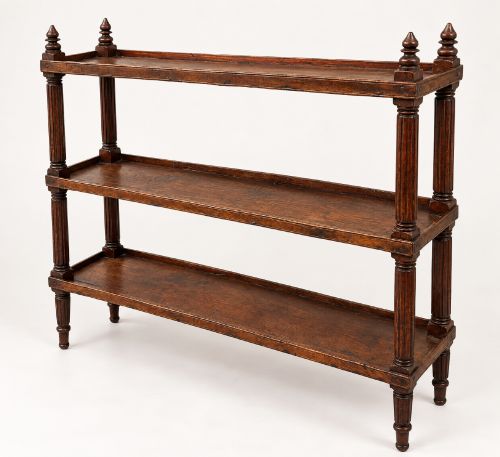
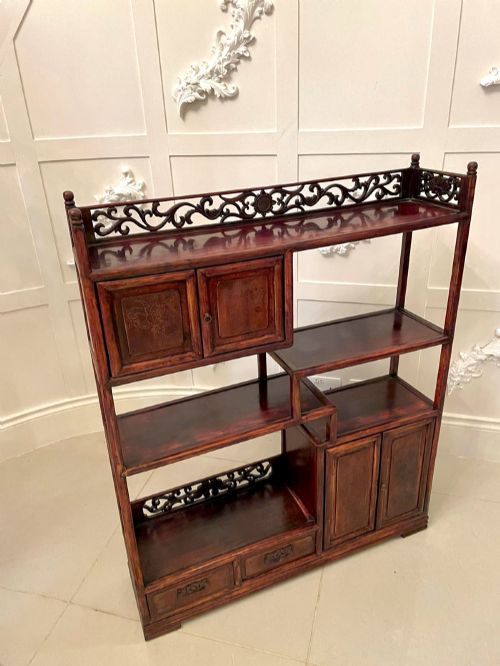
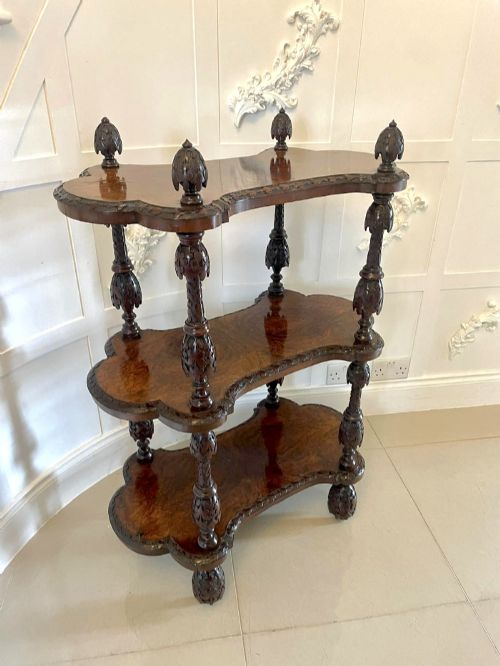
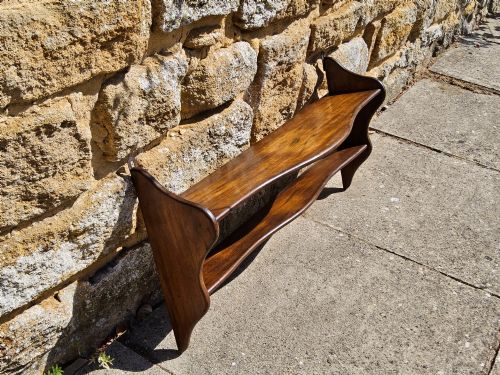
A dark timber display shelf encompasses wall-mounted units, open bookcases, standing cabinets, and tiered whatnots designed to hold books and decorative objects. These pieces bring functional storage and rich visual weight into a room through deep wood tones.
The selections on this page span the 18th century, Victorian era, Edwardian period, and Regency styles, alongside pieces originating from Chinese Qing and Japanese Meiji traditions. Mahogany, rosewood, oak, walnut, teak, padauk, and pine provide the foundational structure for these varied forms.
Materials and construction
Makers utilised dense hardwoods such as mahogany, rosewood, walnut, padauk, and oak to build durable frames capable of supporting heavy rows of books and collections. Pine served as a secondary timber for internal elements or simpler constructions like stained pine bookcases.
Joinery methods varied according to regional traditions, ranging from European mortise and tenon construction to the intricate, profuse carving seen on Chinese hardwood and Japanese Shodana cabinets. Brass hardware frequently accented these pieces on hinges, handles, and mounts.
Surface treatments relied on traditional polishing and oiling techniques that deepened the natural colour and grain pattern of the dark timbers. Hand-carving defined specific Asian and Anglo-Indian variants, adding textural relief to the structural framework.
Dark Timber Display Shelf Retail Price Guide 2026
Typical asking prices for dark timber display shelf among the pieces listed under this phrase on Sellingantiques today, from the lower quarter to the upper quarter. They describe what is for sale here now, not the wider market.
Some shelves have survived centuries of reading habits, still bearing the faint ghost outlines where heavy volumes rested for decades.
Assessing quality in dark timber pieces
The calibre of a dark timber display shelf rests upon the selection of the timber and the depth of its grain. Superior examples exhibit tightly grained rosewood, mahogany, or padauk that has aged gracefully over the centuries.
Construction integrity distinguishes the finest pieces, where structural joints remain tight and shelves support weight without sagging. The crispness of hand-carved detail on Qing Dynasty or Anglo-Indian items similarly separates masterwork examples from standard production.
Proportion and form dictate the visual success of the piece, whether dealing with diminutive wall shelves or expansive freestanding bookcases. Items that maintain balanced proportions and harmonious design elements hold greater presence in an interior.
The Dark Timber Display Shelf Glossary
- Shodana
- A traditional Japanese display cabinet featuring asymmetrical shelving and compartments. These pieces often originate from the Meiji period and showcase intricate woodwork.
- Chiffonier
- A low cabinet or sideboard developed in the 19th century, frequently incorporating shelving on the top surface. It combines enclosed storage below with display space above.
- Plate Rack
- A wall-mounted wooden frame designed to hold plates upright on slatted shelves. Earlier examples often employ oak and date to the 18th century.
- Padauk
- A dense, heavy tropical hardwood prized for its deep reddish-brown colour. It frequently appears in Anglo-Indian furniture production of the 19th century.
Dark Timber Display Shelf: Frequently Asked Questions
How do I style a dark timber shelf?
Pair a dark timber display shelf with light-coloured walls to let the rich grain and deep tones of the wood stand out clearly. Balance heavy rows of books with ceramic vessels, framed prints, or glassware to break up the visual weight.
Allow breathing room between objects on each shelf to avoid clutter and highlight the craftsmanship of the piece. Coordinating the wood tone with other furniture items in the room creates a cohesive interior scheme.
Where should I place wall shelves?
Mount wall shelves securely into structural wall studs to safely support the weight of heavy timber and books. Position them above a desk, sideboard, or seating area at a comfortable eye level for daily viewing.
Ensure the surrounding wall space allows the dimensions of the shelf to breathe without feeling cramped by adjacent furniture. Avoid areas exposed to direct sunlight or rapid temperature fluctuations to protect the antique wood.
How do I care for antique wood?
Dust antique timber regularly with a soft, dry lint-free cloth to prevent surface dirt accumulation. Apply appropriate natural beeswax or specialised furniture polish sparingly to maintain the moisture and lustre of the wood.
Keep pieces away from direct heat sources, radiators, and damp environments to prevent the timber from warping or splitting over time. Gentle, consistent maintenance preserves both the finish and structural integrity of the piece.