




Carved Hardwood Display Cabinet
A carved hardwood display cabinet brings intricate craftsmanship and rich timber tones into a room, holding precious objects with quiet authority.
Carved Hardwood Display Cabinet
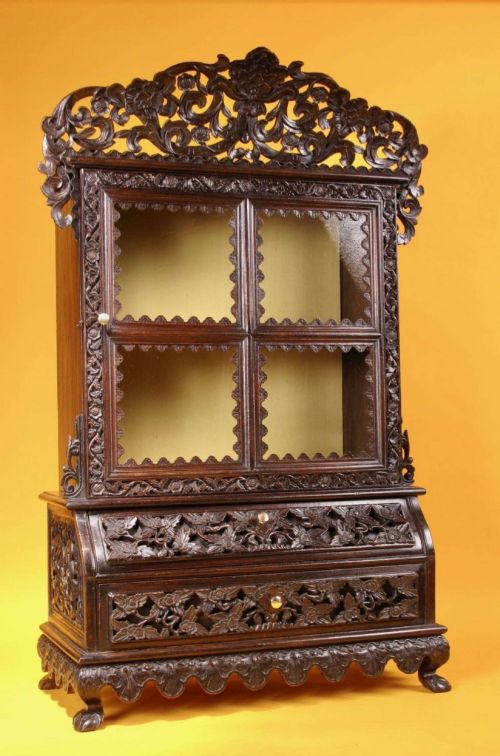
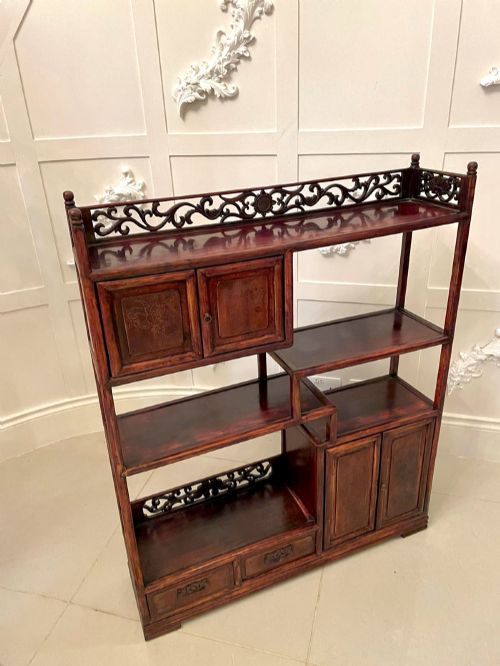
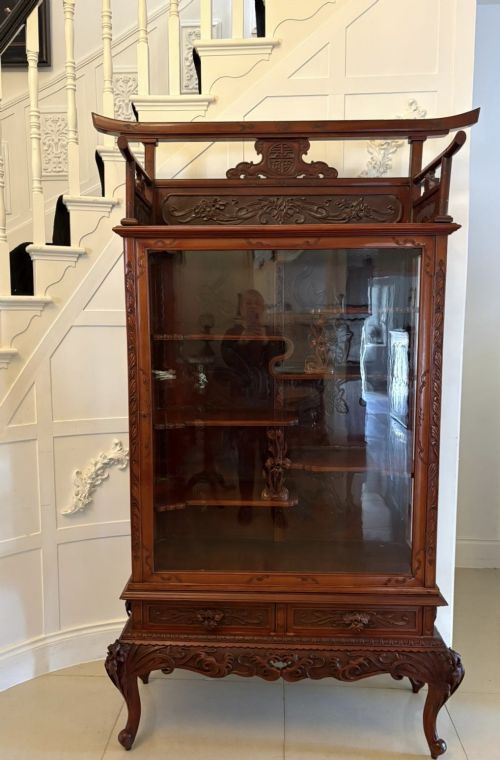
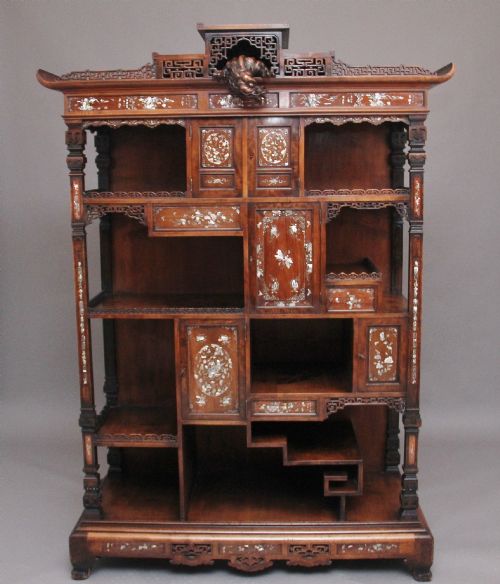
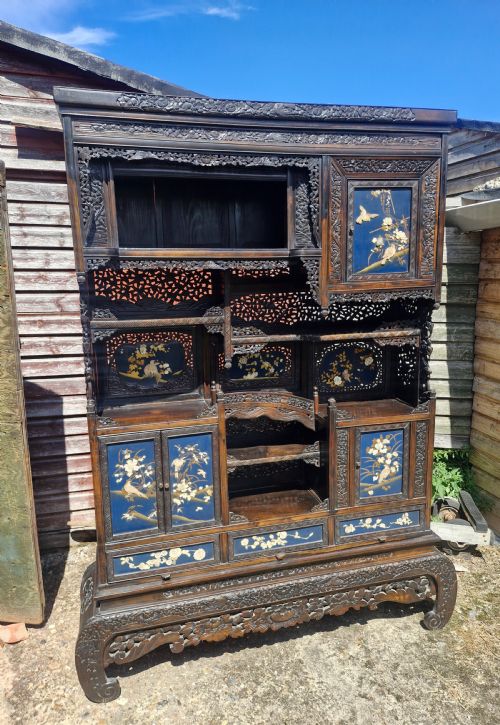
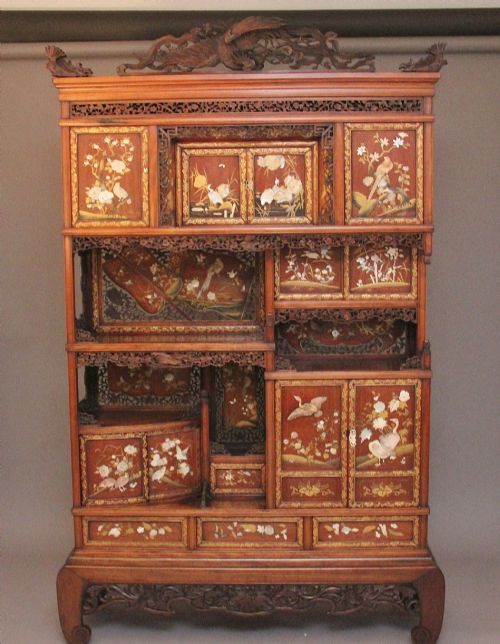
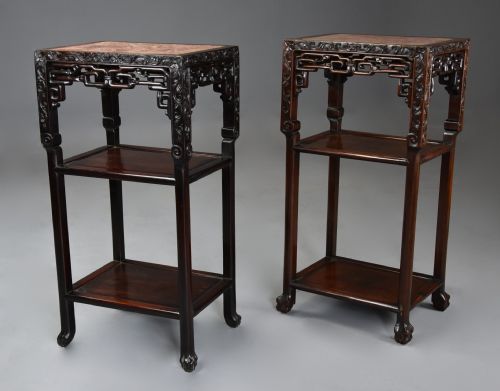
A carved hardwood display cabinet is a storage piece designed to showcase porcelain, curios and ornaments behind glass or within open shelving. These items emerge primarily from nineteenth-century workshops in China and Japan, spanning styles such as Qing Dynasty, Chinese Export and the Japanese Meiji period. Pieces range from tabletop occasional stands and dwarf side-cabinets to tall compound cupboards and multi-tiered shodona.
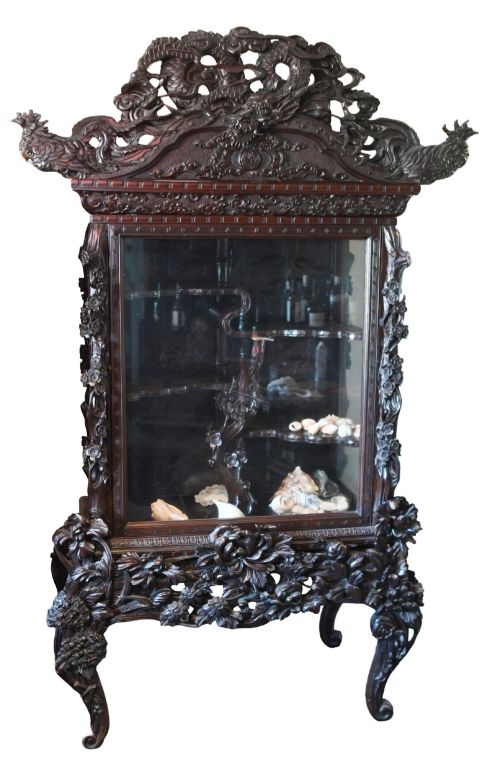
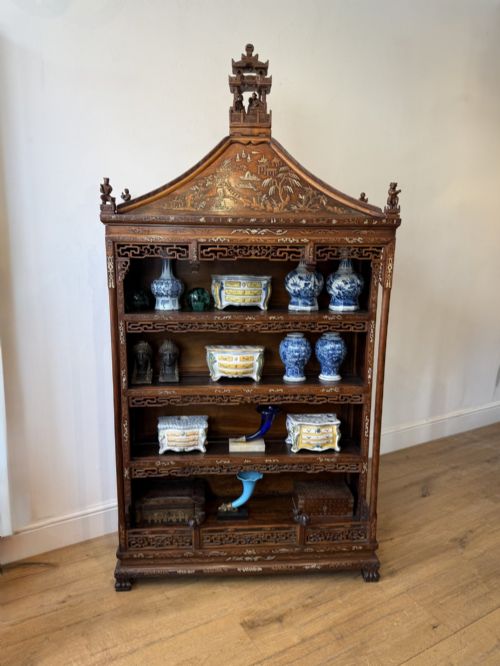
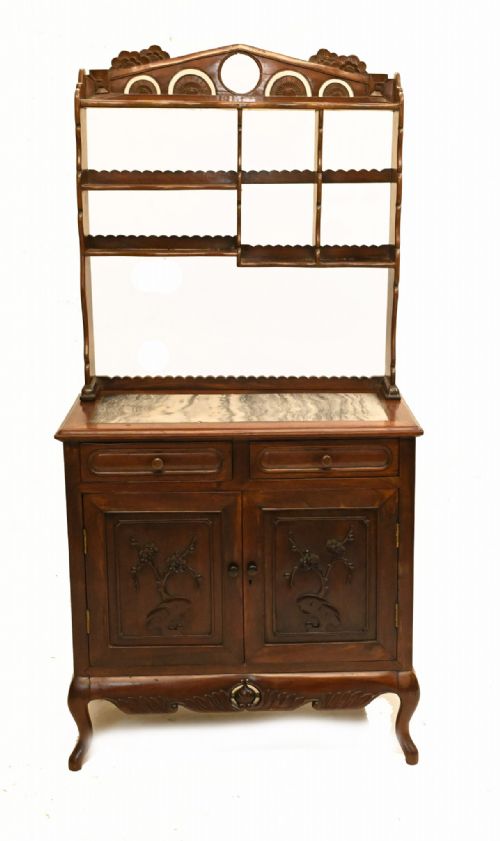
The selection frequently includes pieces featuring complex architectural forms like pagoda tops alongside structural frames in dense timbers. Alongside dedicated display cabinets, buyers encounter related items such as side tables, plant stands and dressers sharing identical material traits. The majority date across the nineteenth and early twentieth centuries, reflecting distinct Asian craftsmanship traditions.
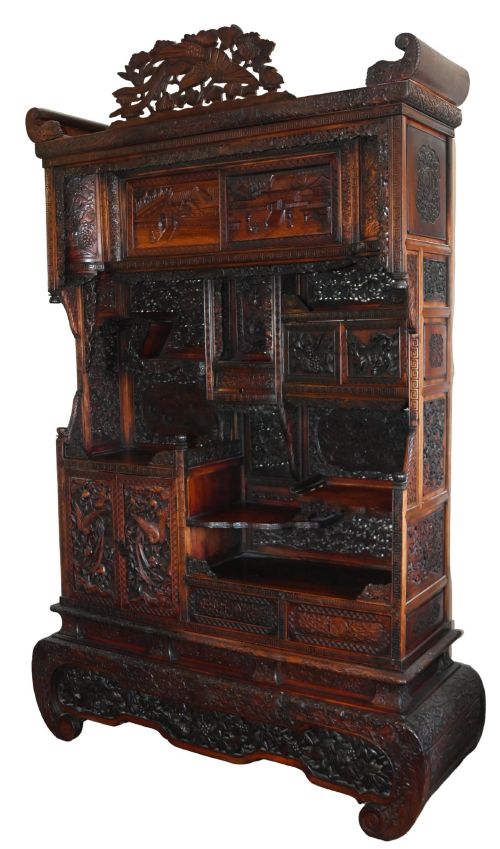
Each cabinet presents specific regional characteristics, from the carved dragons of Chinese zitan and hongmu pieces to the asymmetrical shelving of Japanese shodona. The inventory spans straightforward glazed storage units and highly decorated compartments incorporating varied woods. A buyer navigates distinct aesthetic lineages originating from Qing Dynasty traditions and Meiji period revival work.
Materials and construction methods
Construction relies upon dense hardwoods such as hongmu, rosewood, zitan and cherrywood, chosen for their weight and grain stability. Artisans shaped these heavy timbers using traditional joinery methods that accommodated complex carving without metal fasteners. Frames support glazed panels, open display tiers and enclosed cupboards tailored for decorative containment.
Surface ornamentation integrates diverse materials into the hardwood structure, including marble inserts, bone, mother of pearl inlay and red lacquer. Japanese pieces frequently employ intricate shibayama inlay techniques, while Chinese examples showcase deep relief carving depicting dragons, foliage and architectural motifs. Glazing protects the interior compartments while allowing ambient light to reach stored artefacts.
Carved Hardwood Display Cabinet Retail Price Guide 2026
Typical asking prices for carved hardwood display cabinet among the pieces listed under this phrase on Sellingantiques today, from the lower quarter to the upper quarter. They describe what is for sale here now, not the wider market.
Materials recorded across the inventory include marble inserts, bone, mother of pearl, brass hardware and red lacquer.
Assessing quality in construction and ornament
Quality rests upon the depth, crispness and precision of the wood carving, distinguishing fluid relief work from shallow, mechanical execution. The choice of timber dictates foundational value, with dense native Asian hardwoods and heavier gauge rosewoods sitting above softer or substituted varieties. Structural integrity in joints, drawers and hinged doors determines how well a cabinet withstands continuous use.
The integration of secondary decorative elements separates standard production from exceptional examples. Finely cut mother of pearl inlay, intact marble tops, detailed bone elements and undamaged lacquer surfaces elevate a piece. The harmony between architectural elements, such as pagoda crests or balanced shelving tiers, reveals the maker's mastery over proportion.
Gabriel Viardot
The Carved Hardwood Display Cabinet Glossary
- Shodana
- A Japanese multi-tiered display cabinet featuring asymmetrical shelving, sliding doors and small cupboards. These cabinets were designed to exhibit delicate ceramics and scholarly objects.
- Hongmu
- A traditional Chinese term denoting dense, dark red-hardwoods used in fine cabinetry. The wood possesses a natural lustre that deepens with age and handling.
- Shibayama
- A Japanese decorative technique utilising inlaid shell, ivory, bone and metal to create pictorial panels. These elements are set flush into the hardwood ground to depict flora, fauna and figures.
- Chinoiserie
- European artistic interpretation of Chinese and East Asian artistic traditions. This style influenced decorative furniture produced for Western export markets during the nineteenth century.
Carved Hardwood Display Cabinet: Frequently Asked Questions
How do I care for hardwood furniture?
Hardwood furniture requires stable environmental conditions away from direct heat sources and strong sunlight to prevent timber movement. Regular dusting with a soft, dry cloth preserves the polished surface.
Avoid liquid polishes and wax build-up, allowing the natural grain of the timber to breathe.
Were these cabinets made for export?
Many nineteenth-century pieces were manufactured specifically for Western markets through Chinese Export and Japanese Meiji trade channels. These items often adapted traditional forms to suit European domestic interiors.
At the same time, numerous cabinets reflect domestic tastes within Asia before finding their way into international collections.
What is the difference between hongmu and rosewood?
Hongmu translates literally as red wood, encompassing several dense, dark tropical timbers used in traditional Chinese furniture making. Rosewood is a broader botanical category covering similarly heavy and figured timbers.
Both materials share exceptional weight and durability, making them ideal for intricate relief carving.