




Meiji Bronze Urn Pair
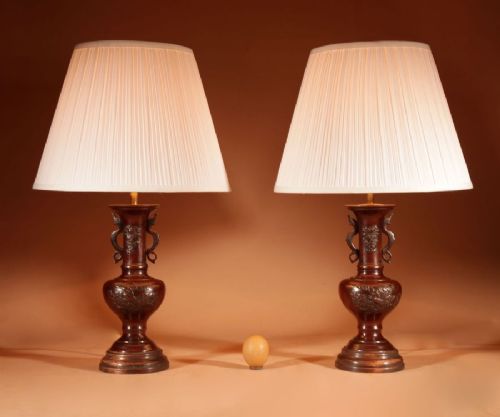
A meiji bronze urn pair brings the sculptural weight and intricate surface detail of late nineteenth-century metalwork straight into a room.
Meiji Bronze Urn Pair
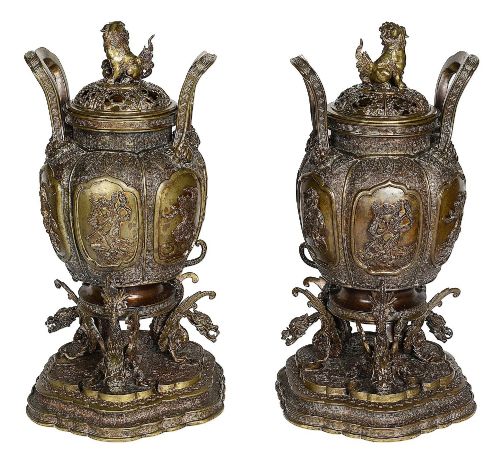
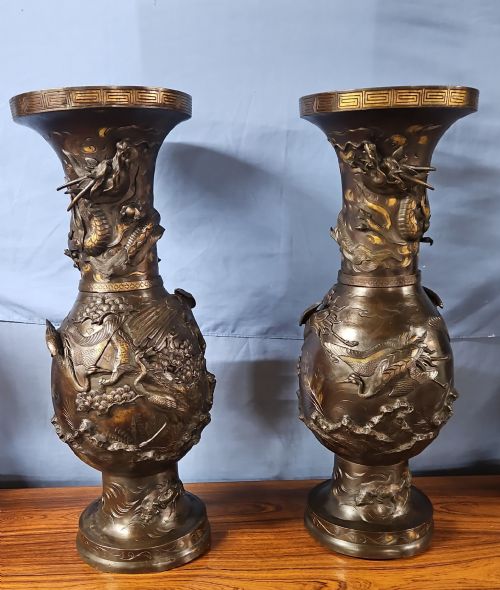
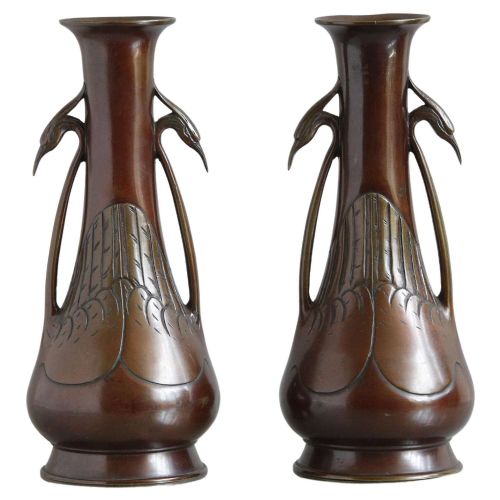
When searching for a meiji bronze urn pair, collectors encounter matched dual vessels originating from Japan during the nineteenth century and the early decades of the twentieth century. These works appear in forms such as baluster vases, lidded vessels, garden urns, and incense burners.
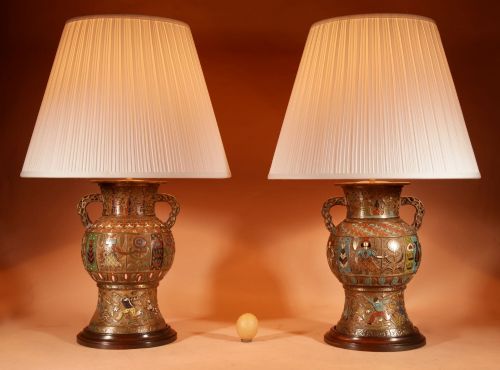
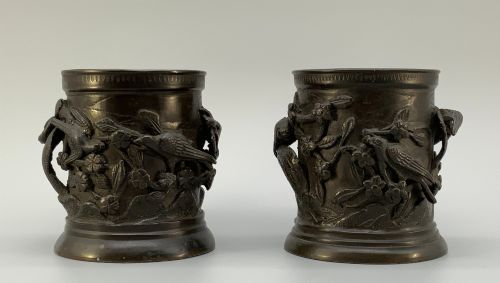
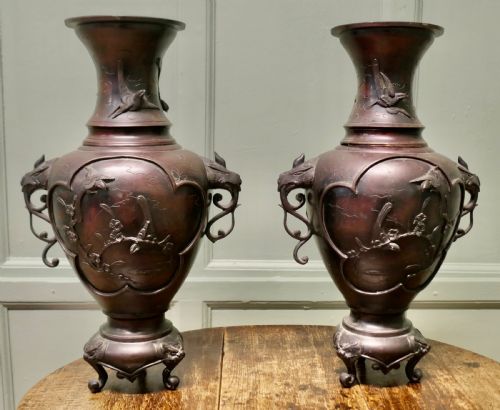
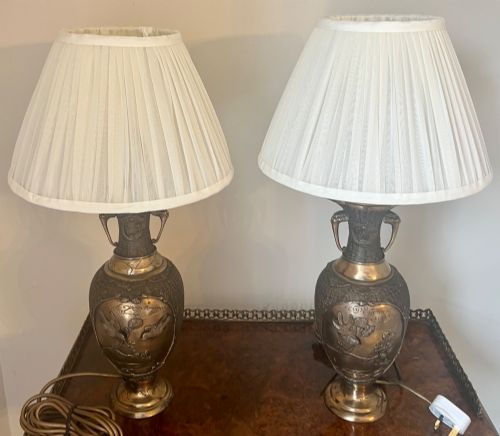
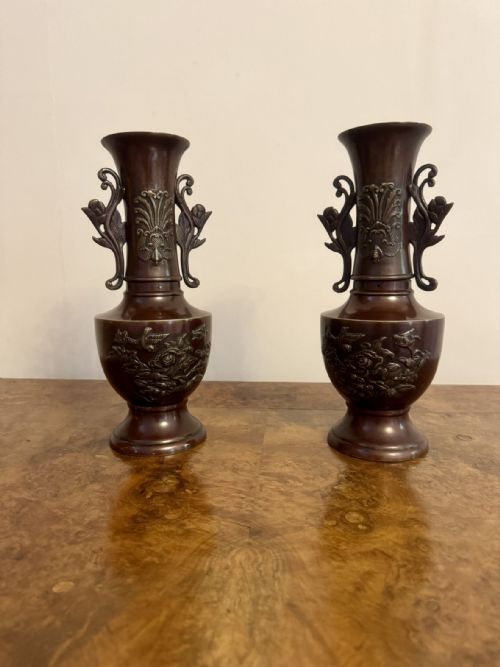
The objects frequently take the shape of twin-handled vases or large decorative containers featuring motifs like birds, blossoms, and raised floral detailing. Many examples adapt successfully into table lamps while retaining their original patinated bronze surfaces.
How they were made
Artisans utilised casting techniques in bronze, brass, and copper to create the foundational structure of each vessel. Mixed metal elements, champlevé enamel, and inlaid details were then applied to enrich the exterior surfaces.
The process often involved patination to darken the metal, alongside relief work where birds, flowers, and figures stand proud of the body. Skilled metalworkers combined these decorative layers to achieve depth and texture.
Listings feature pieces spanning the 1860s through the 1920s, with a strong concentration of 19th-century Meiji period production in bronze and patinated bronze.
What varies in quality
Quality rests in the crispness of the chased and raised detail and the harmony between the two matched pieces. Superior examples display meticulous hand-finishing on handles shaped as birds or elephants rather than generic or blunt casting.
The depth of the patination and the integration of mixed metal or enamel elements distinguish finer workshops from standard production. Weight and physical presence also signal ambition, particularly in large garden urns and substantial baluster forms.
The Meiji Bronze Urn Pair Glossary
- Meiji Period
- The era in Japanese history spanning from 1868 to 1912, characterised by opening trade and exceptional metalwork. Pieces from this time frequently incorporate traditional motifs alongside refined casting methods.
- Champlevé
- An enamel technique where troughs are dug into the bronze surface and filled with vitreous paste before firing. This method creates colourful decorative patterns across the body of the vessel.
- Usubata
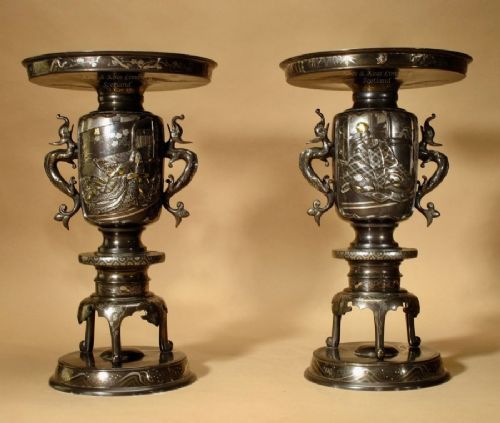
- A specific type of Japanese bronze vessel traditionally utilised for flower arrangements, featuring a broad top basin and a distinct pedestal base. These often appear in larger garden or floor formats.
- Koro
- A Japanese incense burner typically fitted with a lid, often modelled as an animal or featuring perforated panels for smoke release. These vessels frequently form matched pairs in archival records.
- Patinated Bronze
- Metal treated with chemicals, heat, or natural agents to produce a stable surface colour ranging from deep brown to dark green. This finish protects the alloy and defines the visual tone of the piece.
Meiji Bronze Urn Pair: Frequently Asked Questions
What is a meiji bronze urn pair?
A meiji bronze urn pair comprises two matching Japanese metal vessels created during the late nineteenth or early twentieth century. These objects include lidded urns, incense burners, and decorative vases.
They reflect the artistic output of the Meiji era, combining traditional casting with complex surface decoration. Collectors value them for their symmetry and sculptural presence.
How were these urns used originally?
Japanese households and temples utilised these vessels for decorative display, burning incense, or holding floral arrangements. Garden urns and large planters defined courtyards and interior reception spaces.
Over time, many of these pieces transitioned into decorative ornaments for Western interiors, and some were later converted into table lamps.
How do I care for bronze urns?
Bronze requires minimal intervention to maintain its stable surface and patina. Dusting with a soft, dry cloth prevents particulate build-up.
Avoid using abrasive metal cleaners or chemical polishes, as these can strip away the historic patination and enamel work. Keeping them away from excessive moisture preserves the metal integrity.
How can I tell the period?
Dating relies on stylistic markers, casting methods, and the specific decorative motifs typical of late nineteenth-century production. The Meiji era spanned from 1868 to 1912, a window defined by trade expansion and advanced mixed metal techniques.
Examination of the base, handling marks, and the quality of patination often helps contextualise the manufacturing timeframe.